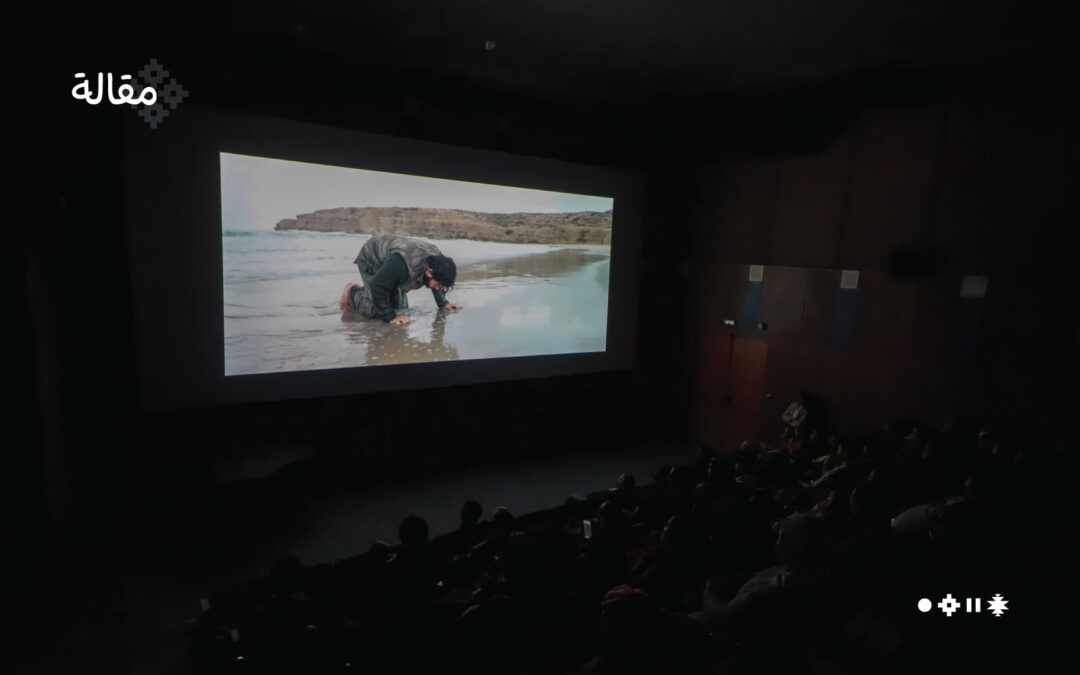
Our Articles section offers behind-the-scenes insights, filmmaker interviews, cultural reflections, and updates on LFI’s programs and events. Discover how Libyan storytellers are using cinema to challenge narratives, preserve identity, and inspire change—from Tripoli to the global stage. Whether you’re a filmmaker, artist, or advocate for social justice, you’ll find stories here that inform, uplift, and connect.
Libya, a country with rare visual features: vast desert touching the blue sea, Roman cities that still bear witness to history, mountains and oases that gush oddities. This land, which has dazzled the world, never truly found its place in cinema, even though Hollywood cameras once poised here.
For decades, international production teams have come to Libya to shoot films that later became classics. However, these encounters were never the product of a local industry or a long-term vision, rather temporary stops for filmmakers who found Libya’s visual environment serving to their stories.
The setback isn’t that they came, filmed, and left, but that we weren’t the ones telling the story. Every film shot here was an opportunity to engrave our image into the world’s cinematic memory, but it remained a transient moment that never translated into an industry or a future vision.
Actual films shot in Libya:
1- The Black Tent (1956):
The Black Tent was filmed in Sabratha, Libya, and is one of the first English-language films actually shot in Libya.
The film tells the story of a British officer who believes his brother has died in war. He travels to Libya to search for his brother, only to discover that his brother is alive and living with a local tribe. Despite its critical success in Britain, the film did not spark any sustainable cinematic movement in Libya. Alongside Benghazi (1955), it remains one of the few dramas set in the twilight of British military administration in Libya (1945–1951).
2- Bitter Victory (1957):
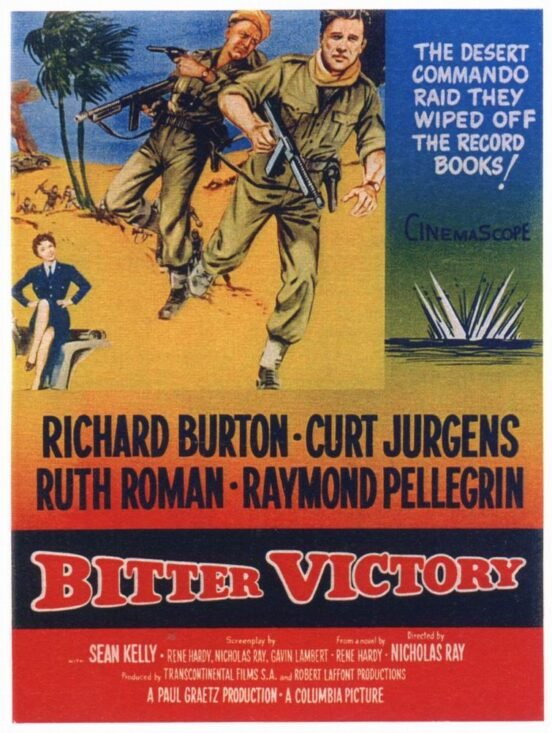
A French-American production on a commando mission lead in Benghazi, filmed in the Libyan desert with the support of the British Army. The story revolves around two allied officers carrying out a mission behind enemy lines, entangled in their personal and psychological conflicts whilst being in a real Libyan environment.
3- Legend of the Lost (1957):
This film was shot in Ghadames, Leptis Magna and Zliten, mostly in the ruins of Leptis Magna.
The film tells the story of a treasure hunt, staring Oscar-winning Western legend John Wayne and the famous Italian actress Sophia Loren. Director Robert Siodmak exploited the harsh terrain to heighten the psychological tension between characters, cementing Libya’s desert and shoreline into the global cinematic imagination.
4- Sea of Sand (1958):
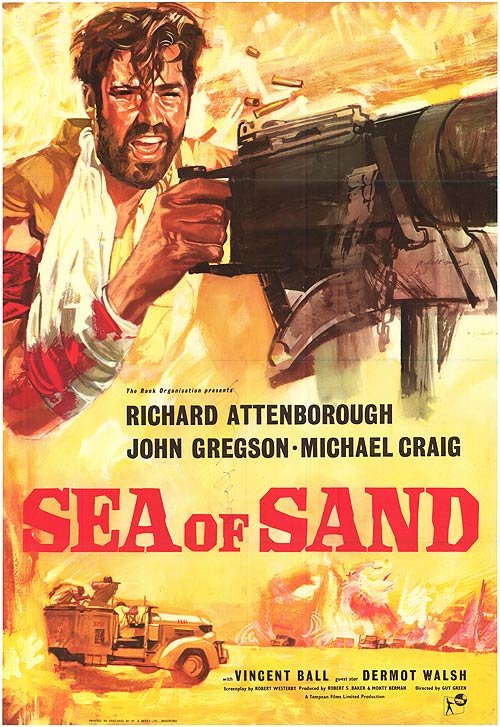
A British war drama filmed in Tripoli and its southern deserts. It portrayed the harsh, unfiltered reality of reconnaissance units during World War II. Nominated for BAFTAs in Best Film and Best Actor, it remains a humane and enduring portrait of desert warfare.
5- Ice Cold in Alex (1958):
The film was shot in Tripoli and the southern desert, telling the story of a British ambulance crew trying to return to Alexandria during World War II. It presents a vivid, humane portrayal of the soldiers’ suffering. The film was critically acclaimed and held a 96% rating on the international critics’ website Rotten Tomatoes.
6- The Message (1976):
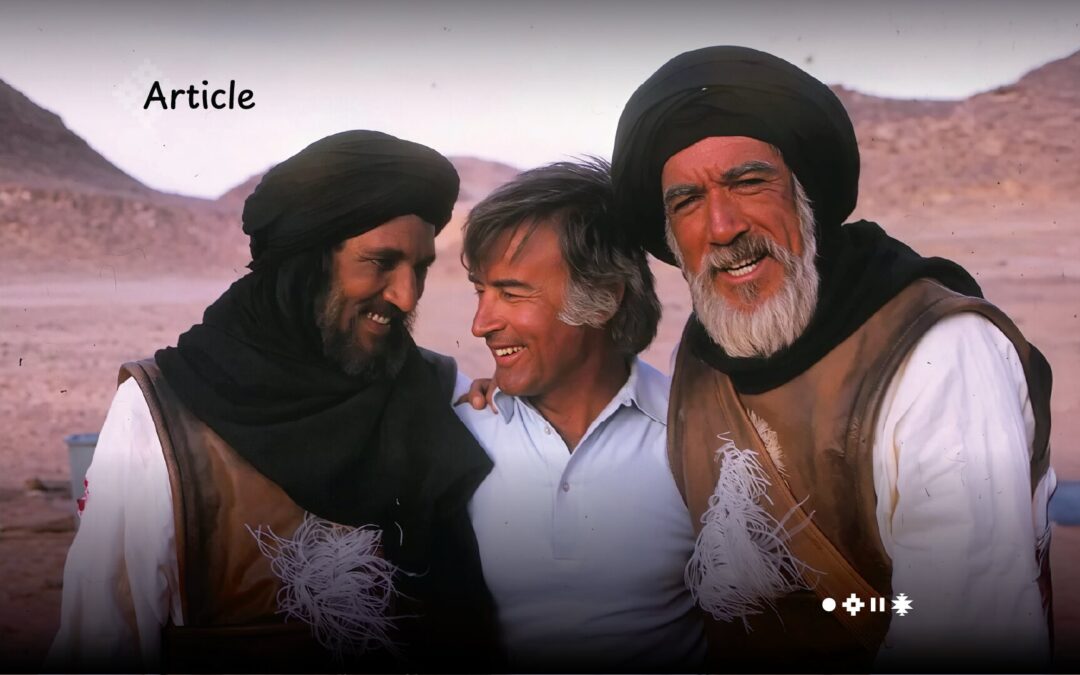
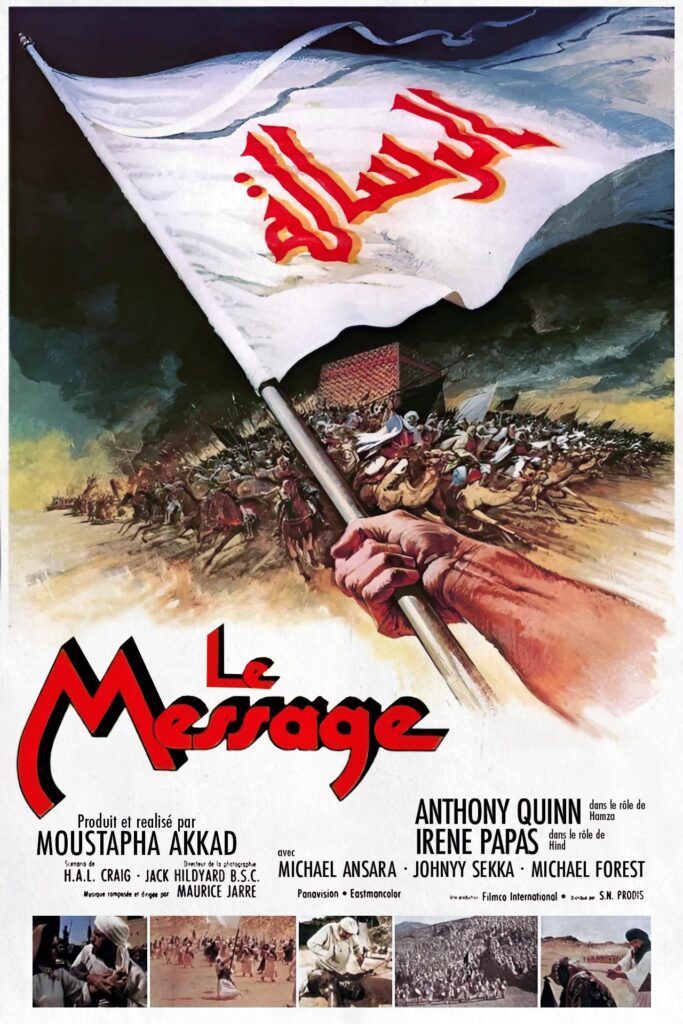
“The Message” directed by the late Moustapha Akkad shot across multiple locations in Libya, depicting the dawn of Islam. Starring the legendary Anthony Quinn and a host of Arab actors, the film was screened internationally and proved its cultural impact. It was also nominated for an Academy Award for Best Original Score. Despite its striking global portrayal of Libyan sites on screen, it failed to establish a sustainable local industry.
7- Lion of the Desert (1979–1981):
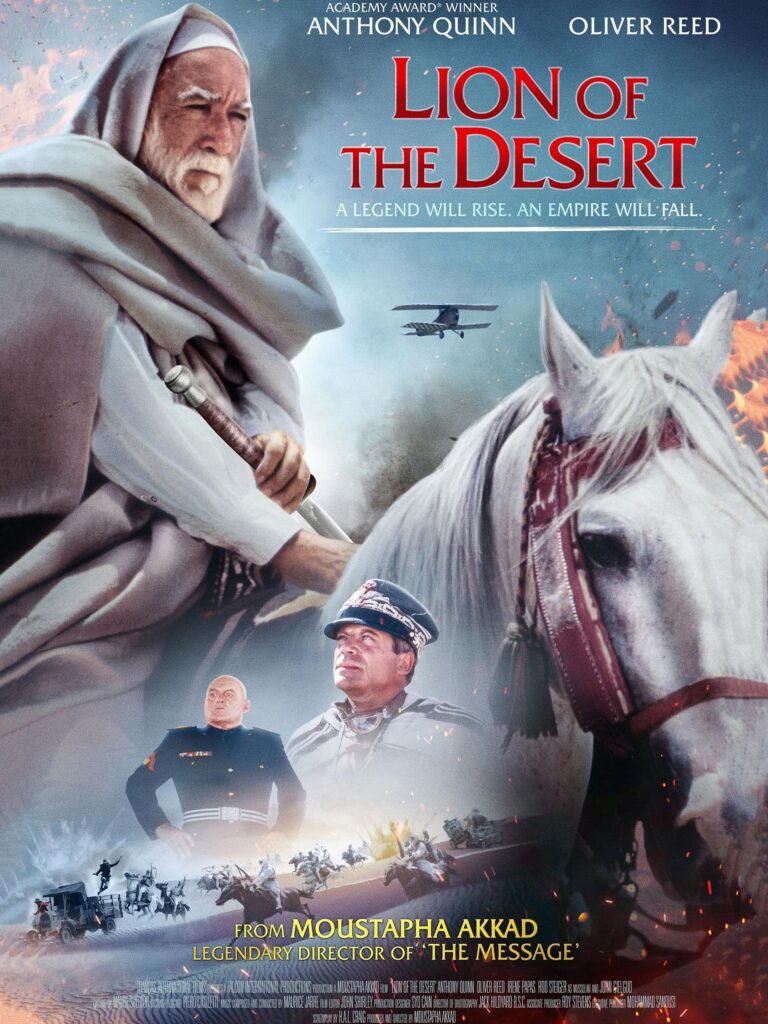
“Lion of the Desert” directed by the late Moustapha Akkad, tells the epic story of Omar Mukhtar’s rebellion against the Italian occupation. Filmed between March and October 1979 in the Green Mountains and eastern Libya, the production took place in massive camps with a $35 million budget—a staggering sum at the time. The film featured a stellar international cast, including Anthony Quinn, Oliver Reed, and American actor Rod Steiger. It was banned in Italy for decades due to its uncompromising portrayal of fascist crimes. The film remains proof that cinema can transcend politics and convey a universal message.
Between Image and Reality: Where do we stand?
What’s the point of having these international films shot in Libya if they don’t contribute to building a local film industry? Our country has become a backdrop for other’s stories, without us investing in creating a national production movement. No archive was established to preserve them, thus the history of those films shot is now stored in foreign archives, forcing us to search foreign records for fragments of our own past.
On the other hand, Arab countries like Morocco and Jordan have proven that having world-class filming locations can serve as an economic and cultural lever. Morocco has invested in infrastructure to attract film productions, creating jobs and enhancing its international standing. Similarly, Jordan has established a film commission and leveraged natural sites like Wadi Rum to become a destination for blockbuster films like The Martian and Star War.
Libya, despite its unparalleled beauty and history, has yet to adopt any coherent vision for a sustainable cinema industry. It remains a transient backdrop—an echo rather than a voice—on the world’s silver screen.
Conclusion:
Cinema is not just strips of light projected in a dark hall, rather memories of people and their means of telling their story to the world.
Every historical site that we haven’t framed ourselves will be narrated by others in their context, and every undocumented scene will gradually fade from our memory. Libya doesn’t lack beauty, history, or stories worth telling; it only lacks the conviction that its image is too important to be left for others to define.
The question today is not about the past, rather the future: Will we stand behind the lenses or will we hold it to tell our own story?
From the curiosity about Arab productions to the news of “Freedom Fields”
In recent years, I’ve become interested in Arab production especially after the international recognition of some, entering major competitions and nominations at the Oscars and Venice Film Festivals. There were films from Egypt, Lebanon, Jordan, and other countries that got nominated as well which made me curious to learn more about the Arab institutions and companies producing this type of cinema, a genre that—even with grants—maintains its independence, where the director can bring their ideas to life, without restrictions.
In 2018, the Doha Film Institute announced the films to be featured at the Ajyal Film Festival. Among them, a Libyan documentary titled ‘Freedom Fields’ directed by Naziha Arebi was selected to open the festival. This was news worth celebrating—not only for the story itself but also because it reflected a long-held dream of mine: for a Libyan film to reach the world, with characters and struggles that resemble our own.
I contacted my friend Sufian Arara, a member of the film’s cinematography team to share my joy. He conveyed the director’s greetings, who thanked me for my support. Since then, we’ve been eager to watch the film.
Libyan Girls Playing Football Resisting Barriers
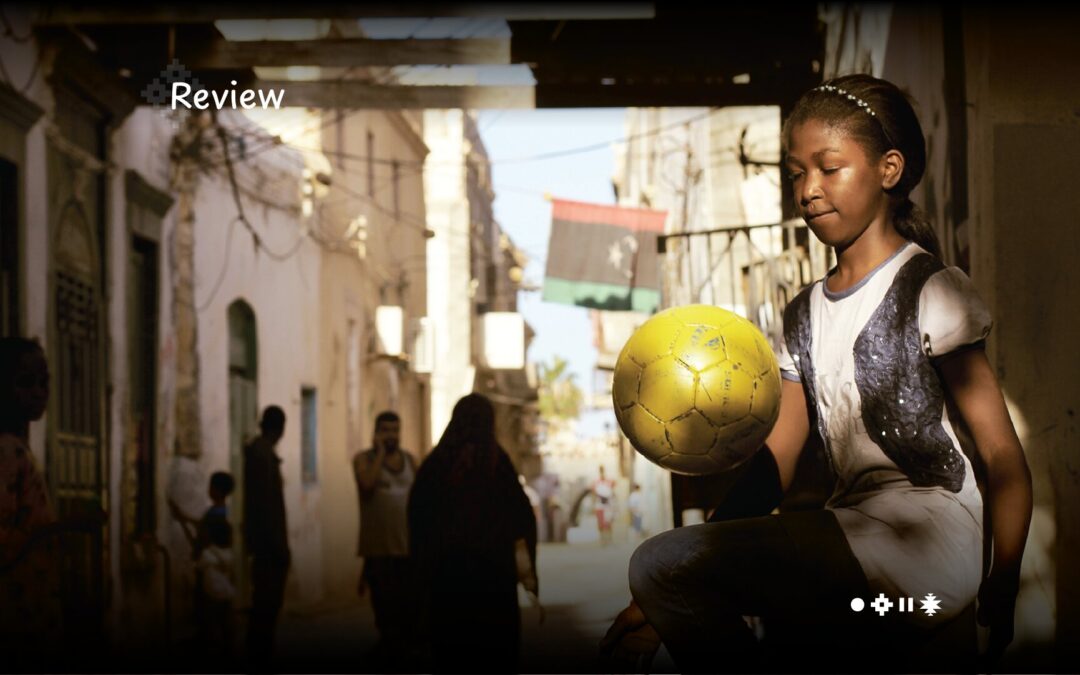
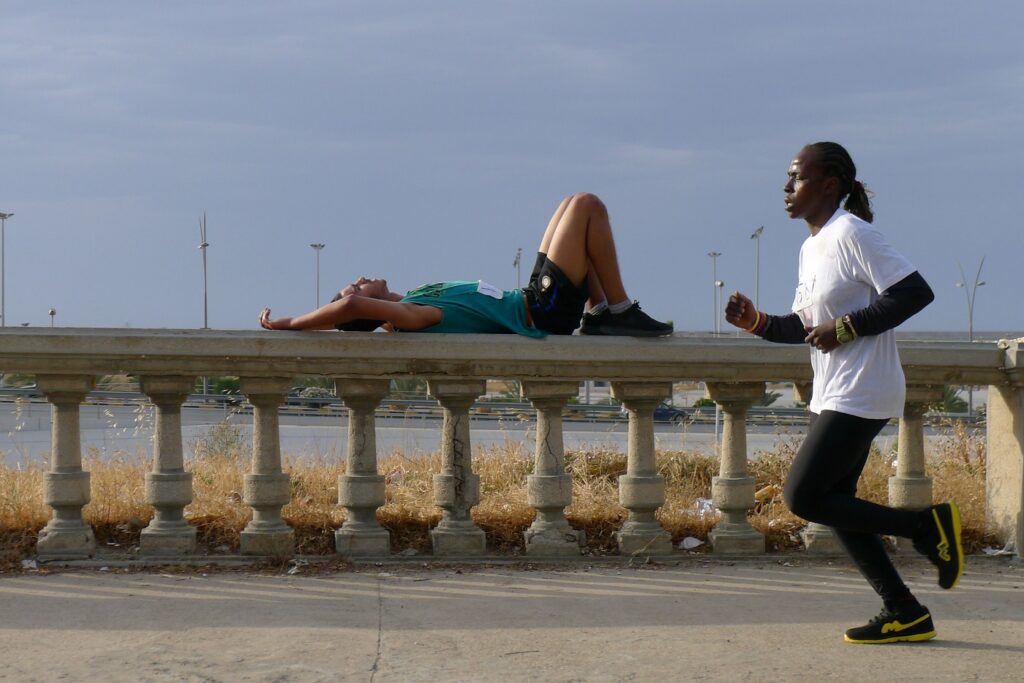
The film is about Libyan girls united by the dream of forming Libya’s first women’s national football team post revolution. However, this dream faces multiple social and security obstacles. The films narrative is divided into three separate storylines of Fadwa, Halima, and Namaa, along with the story of the team’s formation.
The documentary captures this story during a sensitive and transformative period in Libya, addressing a subject often overlooked or dismissed by society.
Three stories… three battles…
Each girl fights her own battle:
Fadwa struggles with the tension between wearing a hijab and the pressure of marriage, saying, “We are born and then grow up just to get married!” Her family’s support ends at the threshold of marriage, which her mother believes every girl must go through.
Halima, a goalkeeper and doctor, has a sincere passion for football, inspired by stars such as Lionel Messi and Xavi. She strives to balance her profession and her love for the sport, demonstrating immense dedication and sacrifice for what she loves.
Namaa, from Tawergha, faces the misfortune of displacement while raising a child, despite her struggles she continues to play football to express her resistance, while lacking many rights, including returning to her city.
These three stories portray the struggles of Libyan girls upon choosing their own paths in life.
When a Documentary Is Told Like a Narrative
Naziha Arebi distinguished herself in the storytelling approach, making some dialogues and scenes feel as if they were scripted, or at least crafted intentionally. This gives the film a narrative quality, enhanced by cinematic photography and strong performances, particularly by Fadwa, who seems chosen as the voice of the film and its core messages.
The dialogues were honest and moving, including one of the players’ lines to Halima after the loss: “Don’t be upset. We Libyans are always unlucky!” This type of narrative loads the film with an internal message that transcends the time of its production while remaining relevant to Libya’s current reality, given the changing times.
Exceptional documentation and Well-deserved success.
Freedom Fields has won several awards, including Best Film at the 2018 Joburg Film Festival and the Feather Award for Best Feature Documentary at the 2018 Karama Human Rights Film Festival. It was also screened at major festivals including Toronto and is part of the Criterion Collection. One remarkable event was the film’s screening at the invitation of Spanish club Atlético Bilbao, where the director attended to discuss the film.
To conclude, the film delivers a Libyan experience in depth and professionalism, encouraging Libyan filmmakers to convey a message with their work.
Running in Barren Fields
It seems that director Naziha Arebi didn’t enter filmmaking by coincidence or merely to experiment. Rather, she’s a cinephile. Some scenes of Namaa running recall moments from Frances Ha and Forrest Gump. These cinematic touches enrich the film, transforming it beyond mere documentation into a work of art with a true cinematic spirit.
Freedom Fields, a space that isn’t easily accessible, embodies the truth of freedom in our country and its high cost, forcing a person to sacrifice their dreams, or what remains of life.
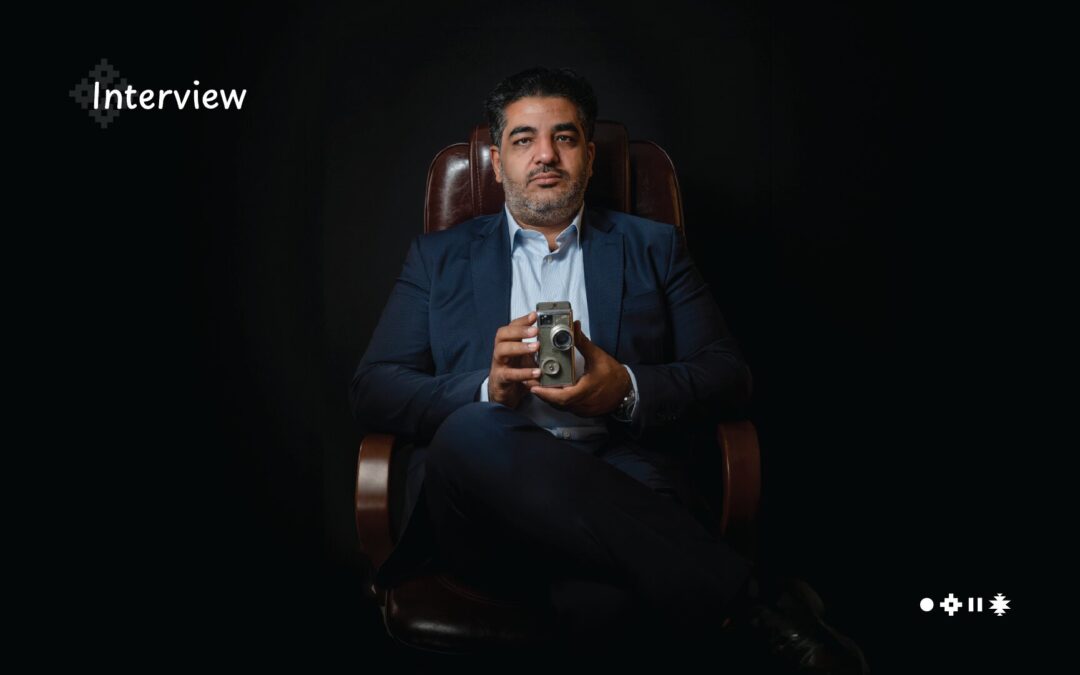
Today, we will talk about art and cinema, with the creative Libyan director Osama Rezg, who has acclaimed around 14 drama series and many short and feature films. He began his career studying filmmaking and presented his first documentary ‘Al Nihom’ (Master of Words) in 2008, followed by several dramas that got high views. One of the most prominent of these is the series ‘Banat Al-Am,’ which aired on the leading platform Shahid. His name has become a powerful presence in the Libyan and Arab drama scene despite the difficulties he faced.
We will be exploring his cinematic credits and discuss his diverse artistic career, delving into the reality of cinema in Libya, which he described to Libya Film Institute as “a bleak present, but an optimistic future.” In this interview, Rezg discusses the importance of artistic production and the actual challenges faced by Libyan filmmakers.
1- Could you tell our readers about your cinematic experience?
My first cinematic experience was through a series of documentaries. At first, it was more of reporting films than documentary films, as it was documentation of public projects but I tried scripting them in the style of documentary films, while using an interesting dialect to engage viewers. Moreover, I was amongst the first that used voiceovers by celebrities like Jihad Al-Atrash and Mahmoud Saeed.
In 2008, I directed Al-Nihom (Master of Words), about the Libyan writer Al-Sadiq Al-Nihom. It was filmed between Tripoli, Benghazi, and Beirut, and it was my first documentary film.
After that, I worked on the short film The Random, which was featured in 16 international festivals, winning the bronze award at the Gabes Maghreb Film Festival, a special mention from the jury at the Oujda Arab Film Festival, and the Best African Film award at the “Art” Festival in Cameroon.
I directed “Al-Barony” in 2021, a biopic of a Libyan activist Suleiman Al-Barony. It was the first feature- historical film. It won Best Director, Best Screenplay, and Best Actor at the Oujda Film Festival in Morocco, but only shown in a few festivals, perhaps due to the film’s historical nature.
My latest experience was my second short film, “Rise,” which is 16 minutes long and discusses the issue of administrative corruption in Arab countries, and how officials are chosen based on personal contacts. The film criticizes the theme of favoritism and corruption in Arab countries. The film first participated in the Khouribga African Film Festival, where we won the African Film Award from the African Federation of Filmmakers. The film will be participating in other festivals soon. I wish my cinematic portfolio was larger, but certainly, future opportunities will expand it.
Behind the scenes of the series ‘Banat Al-Am’, Libyan director Osama Rezg appears with actors Ahmed Ammar and Aya Shou
2- Do you have any new film projects?
Yes, I do have projects that are under study and are seeking support, trying to establish a large cinematic base. Unfortunately, the situation in Libya isn’t favorable for filmmakers.
3- Is the diversity of your work between drama and cinema a deliberate approach, or is it due to the reasons and difficulties crossing film production in Libya?
I hate repetition. I do not like redoing the same style and parts and it’s obvious in my work. I only have the ‘Al-Saraya’ series in two parts, because my plan along with Siraj Al-Hawaidi, and producer Walid Al-Lafi – was for a trilogy. However, the second part featured a difference in the directorial vision, the cinematography, even the series’ style.
Ultimately, I don’t want to stick to the same tone but sometimes the decision is or isn’t yours, rather the circumstances. That’s why I try to present diversity in terms of story, cinematography, and even editing. I don’t want to be remembered as a director with a “one-size-fits-all” style.
4- Are there particular subjects you can address in cinema but not in drama?
Absolutely! Drama reaches every household and various social groups, so one must be cautious in addressing topics, whether social or political. Cinema, however, has a selective audience. The moviegoers chose to go and watch a film; they must accept the director’s vision, even if they disagree. Cinema allows you to present topics globally, unlike drama, which is more confined. In cinema, you are freer to express your perception without being influenced by other opinions.
A shot from the film ‘Rise’ by director Osama Rezg, featuring actors Abdel Baset Abouqanda and Mohamed Ben Nasser.
5- How can intellectuals and directors contribute to addressing societal issues?
Frankly, my opinion is contradictory. I believe that art plays the role in addressing the issue and presenting it in an artistic way. It is my duty to present an issue using my creative vision in an attempt to probe it, but addressing it is on the other parties, including the state, institutions and society.
6- How do you assess the current state of Libyan cinema?
It is poor. The current reality is rough, but I am optimistic about the youth who are eager to create films in Libya. Most efforts are individual, as the state provides no financial support for cinema. Arab and international funding agencies largely ignore Libyan cinema. While young directors apply for grants and festival support, Libya rarely receives funding, unlike countries like Tunisia, Morocco, Sudan, or Egypt. Nonetheless, I remain hopeful for the future, the youth, and creators with a vision, and I am optimistic that state support will come soon.
7- What are the most prominent challenges facing Libyan filmmakers, given the absence of institutional support and the weak infrastructure?
Honestly, the infrastructure isn’t just weak, it is nonexistent in Libya. There isn’t a single movie theater in the entire country. Before 2011, there were around 15 movie theaters. We lack comprehensive cinematic equipment, whether public or private. For instance, if we decided to produce a full-length film in Libya, we would have to ship in equipment. Moreover, there aren’t enough skilled technicians to produce a film with a full Libyan crew. The state should establish theaters and a supportive production environment.
8- How do you see the development of film production in Libya in recent years?
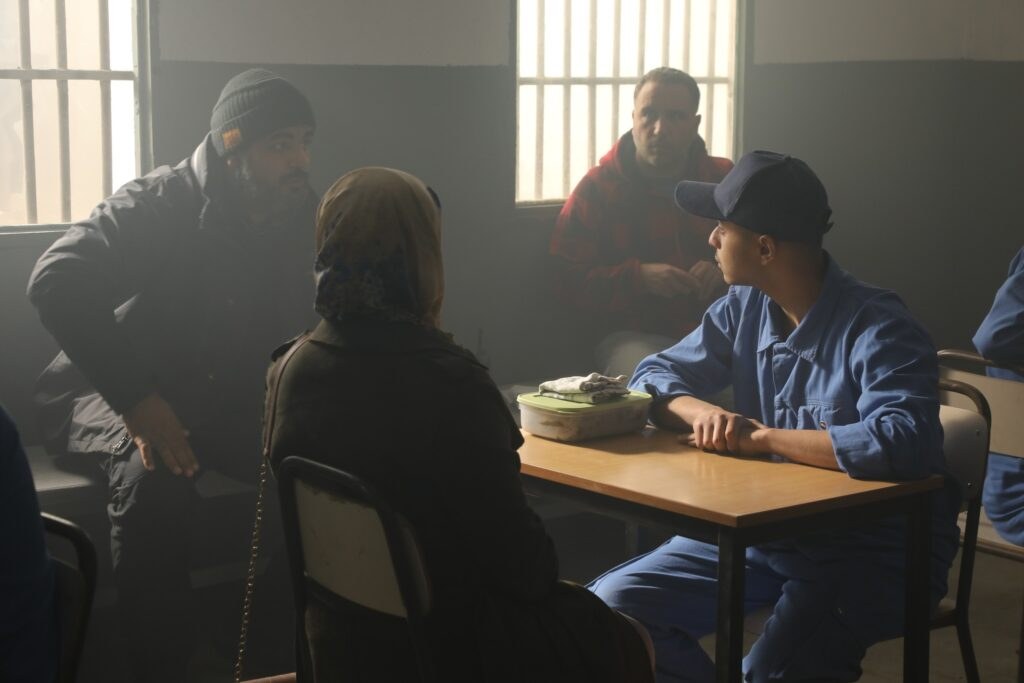
There are few successful projects, including the film ‘Prisoner and Jailer’ by director Muhannad Lamin, a remarkable film that participated in the Carthage Film Festival, along with the film ‘Athar’ by director Faraj Maayouf, director Mouayed Zabtia’s film called Emirate,’ the short documentary ‘Champion’ by Mohamed Masli, and ‘Freedom Fields’ by Naziha Arebi. Yet these remain small steps in establishing Libyan cinema.
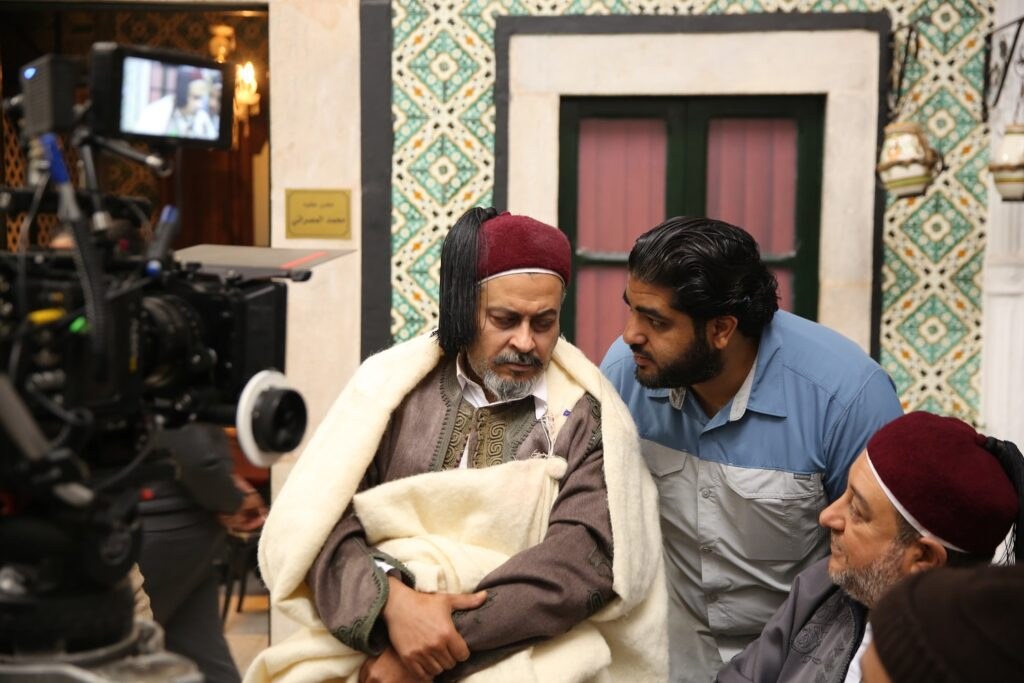
Behind the scenes of ‘Zanqat Al Reeh’: Osama Rezg with Mohamed Othman and Khaled Kafo
9- Is it possible to transform a society by influential cinema?
At the present it is almost impossible as there aren’t any screening venues that welcome citizens to watch and discuss the issues raised in films. This is where the problem lies: we are raising issues and topics that touch us and express who we are. Unfortunately, we cannot convey them to the audience.
10- Who is your targeted audience?
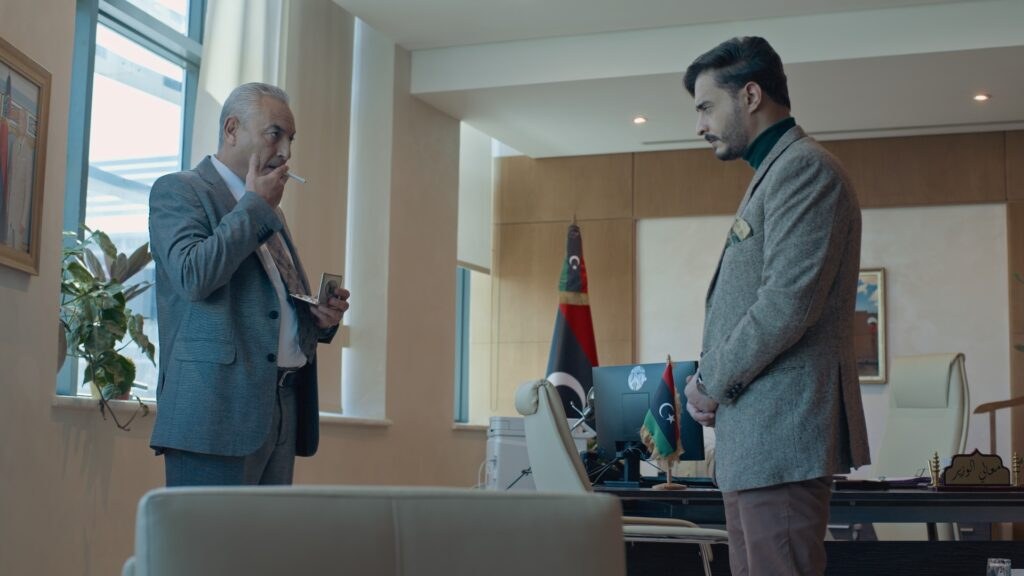
I focus on universal human issues, not only Libyan viewers. For instance, the protagonist in ‘The Random’ could exist anywhere in the world where rights are denied. Similarly, the minister character in Rise represents officials found in many developing countries. Our themes are human, addressing both Libyan and international audiences.
11- Can Libyan cinema regain its status and effectiveness in society?
The real problem we face is the lack of cinemas. A film must be screened under excellent technical conditions to ensure its impact. But I hope for a flourishing film sector, with support from inside and outside Libya. I also hope that you play a role in raising awareness about the importance of cinema, so that cinema culture can grow and screening venues in the country can once again showcase our work.
I don’t really know how writing can be separated from the writer’s emotions; I’ve always found objectivity as the end line of the human narrative, otherwise, essentially endless and open to all possibilities. In this article, I tend to signify the importance of cinema, with a less objective but rather a passionate approach. I dream of cinema to become a significant part of Libyan society and an industry that is acclaimed since we are so behind that cinema’s global relevance is at stake. Will we arrive in time? Or will the train leave us behind forever? Or maybe there was never a train to catch at all.
Here is my attempt to introduce, shed light, and raise questions that may not be answered, but rather serve as a catalyst for future in an attempt to form theoretical and intellectual engagements about the philosophy and sociology of cinema.
The silver screen or the seventh art as it’s called isn’t just for entertainment. It has become a tool for influencing society, change and imposing stereotypes altogether, influencing values, behaviors, and aspirations.
Maurice Merleau-Ponty once said: Cinema, or film, is a form of embodied perception. It reflects how we see the world (1945).
Often, from my personal experience in the world of cinema and viewing, I find myself juggling with ideas, and sometimes acting impulsively leads to feelings of human perspectives of other cultures, or the depth of others feelings that we knew not of just by watching a film. The greater the cinematic experience, the more you become part of it and experience its overpowering aesthetic.
Slavoj Žižek states: Cinema is more realistic than reality itself because it unveils our desires, fantasies, and anxieties.
Cinema… a Public Space
Public space is defined as: “A social space that allows individuals and groups to engage in dialogue, exchange opinions, and discuss public issues freely and thoughtfully.”
Cinema is, in a way, a space that enables people – like filmmakers that face limitations due to the industry itself, while others engage through cinema forums, or even a session in a public café’s to discuss a particular issue, concerning public affairs. The outcomes vary: free discussions can turn into public opinion or spark conversations that bring light to overlooked issues. Over the past decade, some issues have even been artificially created and solidified through community discussions focused on cinema.
Thus, cinemas are places for public gatherings such as the Tanarout Cinema Club in Benghazi or places where groups of friends with mutual interest for films to exchange ideas, and hold key discussions on fundamental issues such as justice, freedom, power, social status, violence against women, discrimination, and even the credibility of historical narratives.
So, shouldn’t cinema be a part of shaping the collective consciousness of societies? The question remains: To what extent can these discussions be effective if a society is culturally weak and lacks critical analytical capabilities and intellectual expertise? Perhaps we can say that the vocabulary of the pioneers of the public sphere is reflected in its output, which ranges from casual, ineffective discourse to a form of coercive power.
Jürgen Habermas describes public space as the connection between authority and civil society, whose impact relies on citizens’ understanding of public issues. Cinema can help develop this awareness, creating a cycle of influence and being influenced.
“If cinema is used against mass negligence, it can turn passive viewers into Critics.” – Theodor Adorno.
There is no good cinema without good perception, and good perception leads to good cinema.
One should keep in mind the contradiction, that cinema in particular is misleading and that it distances people from their reality as stated by the Frankfurt School. I will be discussing this later in the series.
The Flourishing of the Private Sector and the Beginnings of Cinema’s Golden Age
Libyan historical researcher Murad Al-Houni notes that between the mid-1920s and the 1930s, Libya witnessed a boom in the proliferation of cinemas, driven primarily by the private sector, which was dominated by Italians. Among the most prominent names of that period was Giuseppe Salinos, who established the Miramare Theater and used it for cinematic screenings. The Italians also operated the Politeama Theater and the Al Hamra Super Cinema. In 1932, the Bernice Theater was established, which later transformed into an upscale cinema that became a cultural destination for the elite of Benghazi.
According to Al-Houni, the true golden age of Libyan cinema began after the end of British administration and the country’s independence in December 1951. During this phase, Libya witnessed a qualitative expansion in the number of cinemas, and some Libyans began entering the film industry sector as investors, capitalizing on their prior experience in distribution and production companies.
Several local pioneers in this field emerged during this phase, including Suleiman and Awad Al-Zani, Mohamed Bashir Al-Farjani, Mustafa Bin Sreiti, Ali Bin Othman, Al-Hadi Al-Mshareqi, Al-Shaali Al-Kharraz, Helmi Tatanaki, and Khalil Al-Jaouni.
Even after independence, cinematic screenings in Libya remained under the Italian influence. The country had around 30 cinemas at the time, screening approximately 50 Egyptian films, 40 Italian films, and 10 American films. Some cinemas were catered exclusively to foreigners, and the Italian authorities imposed a regulation requiring every theater to show an Italian film every Sunday.
Al-Houni describes this period as a remnant of what he calls “foreign privileges,” which persisted even after independence. For instance, in 1966, the capital Tripoli had 13 cinemas, nine reserved for foreigners, compared to only four for Libyan citizens.
Despite these challenges, cinema gradually began to weave itself into the fabric of Libyan life, with the opening of commercial cinemas showcasing both Arab and foreign films, though the country still lacked genuine local film production.
Cinema as a Soft Power
“Film is a political tool” it has becomes more evident with historical events on how cinema was used as a discourse to reinforce the ideas of a state or society, whether toward the outside world during war or its people during times of internal crisis. Scattering ideas and controlling the masses is an easy task for cinema. As an audiovisual medium, it is one of the most important mass media outlets and a tool of soft power. It’s worth noting the definition of soft power:
Defined as: The ability to influence others’ actions without force, but through persuasion.
Doesn’t cinema do that? Indeed, it has done it before (the image of the heroic American soldier, the Muslim terrorist, Russian cinema and the Bolshevik Revolution, German propaganda for the Third Reich, the Nazi threat from the other side, the Holocaust, the struggle of occupied peoples, neoliberalism, and even political correctness).
In other words, awareness of this soft power often leads to fear, censorship, and restrictions. Cinema can be a tool of repressive authoritarian regimes, or means for states to maintain cultural identity, civilization, and existence.
Cinema and Societal Educational Impact
I know that all these concepts may seem similar and single sourced, and this is what it means to highlight the importance of the source of cinema, which branches into streams and tributaries in all of life’s aspects. Hence, its unique charm.
In his book, “The Sociology of Cinema and Its Audiences,” Emmanuel Etesse demonstrates the social and educational aspects of cinema. He argues that in some cultures, watching films on different platforms alongside group or family is a common social activity. He also discusses what is known as the “sociality viewing”, where “The child learns how to sit and watch, train their body for the duration of the show, “ look at the screen and the screen only” and contain their various reactions, which sometimes are excessive.
Going to the cinema means sharing an experience together and this is what society is all about. The decision to participate and hear different perspectives on the film’s making and from here begins cinema’s amazing ability to lead and empathize. This empathy helps in contributing to build a compassionate society.
Just like ideologies imposed by politics, filmmakers can reinforce certain values and present abhorrent behaviors even more horribly, in an attempt to mitigate them and encourage noble ideals, although sometimes this leads to overly simplistic narratives of absolute good and evil that may seem outdated to today’s audiences.
Is there any point today?
I conclude by raising the concerns of a cinema lover living in a country where the film industry has virtually ceased to exist. Its beautiful efforts amounted to nothingness. I sense the bluntness of my sentence, but the comparison is global. Number wise, we have nothing. The question is, do the society, decision-makers, statesmen, thinkers, and theorists sense the importance of cinema in shaping perspective, Its importance in restoring social ties, confronting our civil wars head-on, addressing our weaknesses, and reconnecting with our roots. Isn’t cinema an indispensable part of the revival we’ve been struggling to achieve?
Alternatively, seen merely as entertainment, isn’t cinema a vast area for economic growth, job creation, and market development? This parallels many development plans.
If we look at it from a third perspective, doesn’t a Libyan crushed by reality deserve art and beauty to restore some of the balance in life, to confront the harshness of life specifically in Libya, and the world in general? Cinema is a way to express emotions and ideas, an endless source of creativity. Here, we are simply trying to discover the right path for a delayed start in an era dominated by home-viewing platforms
In my country, I was deprived of the cinematic experience, as an entire generation was deprived of a darkened hall, a voice that seeps into my soul, and a giant screen. I only discovered the pleasure of the experience when I traveled outside Libya.
Thus, I began tracing the history of Libyan cinema to understand the reasons behind its absence, the transformations and changes that Libyan society underwent, and why Libya transformed from a pioneering cinematic nation to having such a faint presence.
According to Libyan film researcher Madghis Oumadi, the early introduction of cinema to Libya wasn’t a mere coincidence. But rather it was primarily due to two factors: the Ottoman presence and the country’s openness to the outside world. Together, these two factors contributed to bringing Libyans closer to the artistic and cultural developments taking place beyond their borders.
Tograph Bab Al-Bahr Cinema
The first beginnings of cinema in Libya (1908–1947 AD)
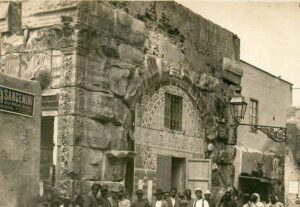
Cinematic screenings in Libya began early, with the first movie theater in the Old City of Tripoli dating back to 1908. It was known as “Tograph Bab Al-Bahr“; it presented silent shows, using the ancient Arch of Marcus Aurelius as its entrance. Just two years later, in 1910, the first documentary film shot inside Libya, titled “The Inhabitants of the Libyan Desert,” was produced, reflecting the camera’s early visual presence in documenting the local environment and landscape.
In 1947, Libyan cinema recorded its first local contribution to documentary production through Libyan director Fouad Al-Kaabazi, who produced a documentary about the Zawiya of Sheikh Abdul Salam Al-Asmar in collaboration with Italian director Enrico. The film received attention and critical acclaim, winning several awards at film festivals in Italy.
Some sources indicate that prior to the Italian invasion in 1911, Tripoli had more than 18 movie theaters. By 1966, the capital had 13 theaters, nine catering to foreigners and only four serving Libyan citizens. Overall, the number of cinemas in Libya at that time was estimated at around 30, reflecting a notable cultural activity in hosting cinematic screenings from abroad.
The Flourishing of the Private Sector and the Beginnings of Cinema’s Golden Age
Libyan historical researcher Murad Al-Houni notes that between the mid-1920s and the 1930s, Libya witnessed a boom in the proliferation of cinemas, driven primarily by the private sector, which was dominated by Italians. Among the most prominent names of that period was Giuseppe Salinos, who established the Miramare Theater and used it for cinematic screenings. The Italians also operated the Politeama Theater and the Al Hamra Super Cinema. In 1932, the Bernice Theater was established, which later transformed into an upscale cinema that became a cultural destination for the elite of Benghazi.
According to Al-Houni, the true golden age of Libyan cinema began after the end of British administration and the country’s independence in December 1951. During this phase, Libya witnessed a qualitative expansion in the number of cinemas, and some Libyans began entering the film industry sector as investors, capitalizing on their prior experience in distribution and production companies.
Several local pioneers in this field emerged during this phase, including Suleiman and Awad Al-Zani, Mohamed Bashir Al-Farjani, Mustafa Bin Sreiti, Ali Bin Othman, Al-Hadi Al-Mshareqi, Al-Shaali Al-Kharraz, Helmi Tatanaki, and Khalil Al-Jaouni.
Even after independence, cinematic screenings in Libya remained under the Italian influence. The country had around 30 cinemas at the time, screening approximately 50 Egyptian films, 40 Italian films, and 10 American films. Some cinemas were catered exclusively to foreigners, and the Italian authorities imposed a regulation requiring every theater to show an Italian film every Sunday.
Al-Houni describes this period as a remnant of what he calls “foreign privileges,” which persisted even after independence. For instance, in 1966, the capital Tripoli had 13 cinemas, nine reserved for foreigners, compared to only four for Libyan citizens.
Despite these challenges, cinema gradually began to weave itself into the fabric of Libyan life, with the opening of commercial cinemas showcasing both Arab and foreign films, though the country still lacked genuine local film production.
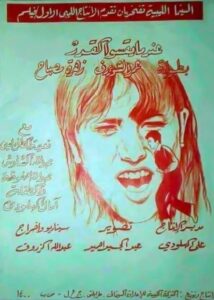
When Destiny is Cruel Film Poster
The General Institute for Cinema: A Lost Hope
Libyan cinema went through two main phases in its history. The first was marked by the establishment of the the General Institute for Cinema on December 13, 1973, a step that represented the beginning of the second phase in Libyan cinema and a turning point toward a professional film industry.
The organization was equipped with advanced infrastructure in terms of technology and equipment. It established a modern sound laboratory fitted with sophisticated recording devices, alongside a state-of-the-art cinema hall, film and sound editing equipment, as well as world-class filming and lighting equipment.
Between April 1974 and April 1979, the corporation produced 134 diverse documentary films, in addition to several issues of “Al-Khayala” illustrated magazine. Seven feature-length films were also produced, some co-financed with other partners, several of which won awards at international film festivals.
By June 1979, work began on the first fully Libyan-financed feature film, created with entirely local artistic talent. On July 21 of the same year, a decree was issued to establish the General Cinema Company as the official body overseeing and supervising film production, with exclusive control over screenings, distribution, import, and marketing, in addition to bringing all cinemas under its management.
The first feature-length film to be screened in Libya was titled “When Destiny is Cruel,” or (‘Indama Yaqsu Al-Qadar), shown at Al-Zahra Cinema in Tripoli on August 1, 1973. Directed by Abdullah Al-Zarrouq and produced by Ali Al-Fallahoudi, it starred Zahra Misbah and Omar Al-Shuwairif, telling a love story set against harsh social circumstances.
In 1976, the first co-production film with Arab-Libyan financing was released under the title “The Green Light,” or (Al-Daw’ Al-Akhdar), directed by Abdullah Al-Misbahi.
With the nationalization of the cinema sector and the establishment of the General Authority for Cinema, support shifted toward certain documentary and political films. Major national-themed cinematic projects emerged, such as “The Message,” or “AL-Resala” in 1976, and “Lion of the Desert,” or “Omar Mukhtar” in 1981, both directed by Mustafa Al-Akkad. Yet, despite the symbolic importance of these works, they didn’t lead to the creation of a sustained local film industry.
Isolation and Stagnation (1990-2010)
By the 1990s, as the escalation of international isolation against Libya intensified, cinema entered a near-complete state of stagnation. Many of them closed, some were converted into commercial shops, and screening halls gradually disappeared from the cultural scene.
By 2010, only a very limited number of cinemas remained in Libya, mostly state-owned and operating at minimal capacity. Public attendance in cinema had sharply declined due to the spread of satellite TV and the internet, and the dream once started by the General Cinema Corporation decades earlier had all but faded.
The Libyan director Abdullah Al-Zarrouq believes that the nationalization decision placed cinemas under the authority of the General Authority for Cinema, which prohibited the import of foreign films. The halls became tools or subjects under the control of the authority, which controlled everything that was screened, whereas, in the past, private companies had competed to bring in the latest Egyptian, Syrian, and foreign films, where films were sometimes shown in Libya even before their release in their producing countries, as happened with “Lawrence of Arabia”, which was screened in Libya before any other Arab country.
He added: “Those private companies were Libya’s gateway to world cinema, with their high-quality halls, their precise organization, and the beautiful promotional campaigns that accompanied the films. But after nationalization, everything collapsed. The cinemas turned into deserted spaces showing poor-quality films that fell far short of even the minimum cultural aspirations or ambitions.”
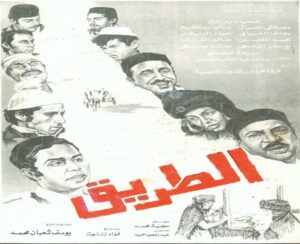
Altariq Film Poster
From Dream to Setback
Director Abdullah Al-Zarrouq recounts part of his personal and professional experience during the early formation of Libyan cinema. He says: “In early 1969, we began working on the film “A Message from Libya,” or (Resala from Libya), a tourism film featuring the late artists Khadija Al-Jahmi, Mohamed Haqeeq, Halima Al-Khodri, Omran Al-Madnini, and Ali Atiya. It was directed by Egyptian filmmaker Ahmed Al-Toukhi, but unfortunately, it was never completed.”
Abdullah Al-Zarrouq continues: “In 1973, I directed and produced the film “When Destiny is Cruel”, or (‘Indama Yaqsu Al-Qadar), which is considered the first feature-length film in the history of Libyan cinema. After that came the film “The Road,” or “Altariq”, directed by Palestinian filmmaker Youssef Shaaban Mohamed.”
A Pioneering Nation, But…
The activity of private companies during that period included:
Mohsen Al-Tamzini Company, which produced two films about Leptis Magna and Sabratha.
Al-Sharq Company, which produced the films “Abu Rabee” and “A Word of Honor”.
Director Abdullah Al-Zarrouq stated, “This momentum was an indication that Libya was on its way to becoming one of the pioneering nations in the field of cinema, especially with the emergence of private companies and visits from Arab producers to the country. But fate reared its ugly head! With the establishment of the General Cinema Corporation at the end of 1973, all the private companies, which had represented the true hope for building a national cinema, ceased operations. The public sector took over everything, and production became bound by a rigid official mindset. The dream of Libya becoming a cinematic competitor to Egypt, Syria, Lebanon, and Algeria was lost.”
“The decision to nationalize cinemas in 1979 marked the beginning of the cinematic setback.”
Frame From Al-Shadiyya Film
Bright Milestones
The film “Rain Melody,” or “Ma‘zoufat Al-Matar”, produced in 1981 and directed by Abdullah Al-Zarrouq, is considered one of the most significant Libyan cinematic works, offering a profound vision of Libyan society.
The film “The Shrapnel,” or “Al-Shadiyya,” produced in 1986, addresses the issue of landmines in Libya as remnants of World War II. Which was adapted from a story by renowned Libyan novelist Ibrahim Al-Koni and directed by Mohamed Ali Al-Farjani. Despite challenges related to budget and production conditions, the importance of the issue it tackled helped it win awards and recognition at Arab and international festivals. So “The Shrapnel” stands as a right milestone in Libyan cinema history and an example of the potential of Libyan filmmaking.
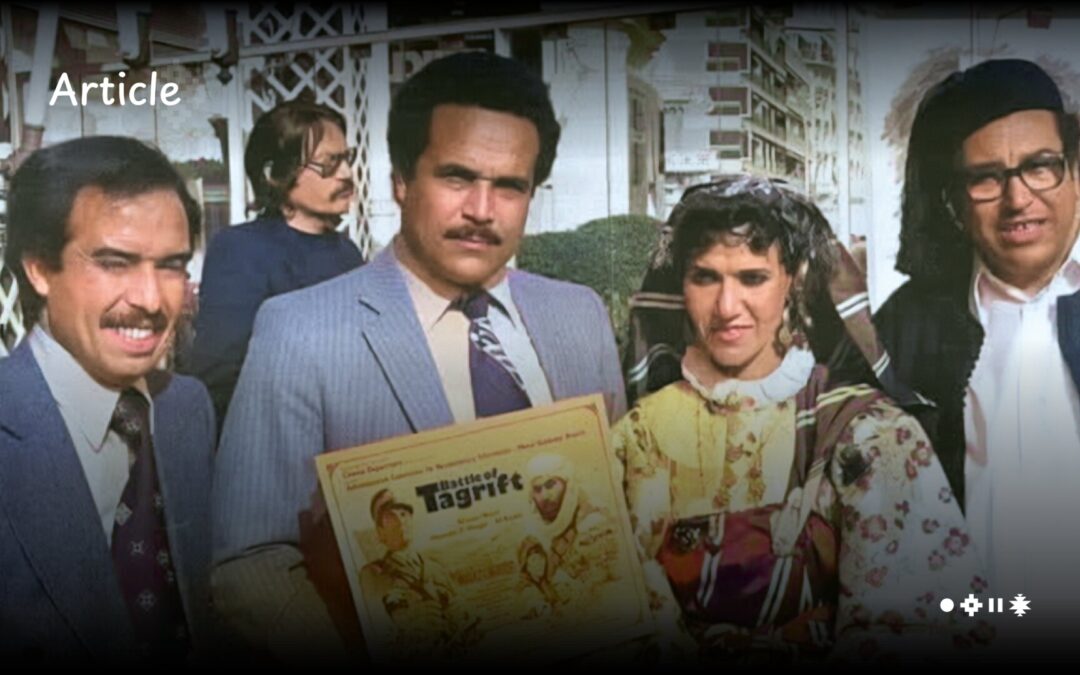
Another notable Libyan production from 1981 is the documentary film “Tagrift”, which portrays the Battle of Tagrift, one of the important battles of the Libyan resistance against the Italian invasion in 1928. Although the battle ended in an Italian victory, it holds great significance in Libya’s history. The film was directed by Khaled Mustafa Khusheim and Mahmoud Ayad Drayza, with the story written by Mohamed Ahmed Al-Zawi and Khaled Mustafa Khusheim, and the script and dialogue by Mahmoud Ayad Drayza.
From Libya Film Institute Initiatives
Individual Cinematic Initiatives
After 2011, several independent youth-led cinematic experiments emerged in an attempt to revive the long-absent Libyan cinema. These took the form of documentary and narrative films, both feature-length and short, addressing issues of war, identity, and memory. However, they remained individual efforts in the absence of institutional support. Nevertheless, a number of festivals dedicated to these independent works were organized, such as “ERATO Human Rights film festival”, “Libya Film Awards”, “the Benghazi Short Film Festival”, “the Mobile Film Festival”, and “the Made in Libya Local Cinema Festival”. These young initiatives have struggled with a lack of funding and the absence of private production companies, hindering the development of a genuine film industry.
Unfortunately, many cinemas in Libya have been damaged or repurposed (into military facilities, commercial shops, or demolished entirely) due to the country’s turbulent circumstances. After the demolition of Al-Rasheed Cinema in 2021, one of the oldest cinemas in Libya, dating back to the royal era, was demolished. As a historical landmark, Libya lost an artistic landmark in its own right, which had already suffered years of neglect before the demolition began.
The last functioning cinema was “ALFEEL House” Cinema, which ceased operations in 2012 due to ongoing security unrest. The last film it screened was “X-Large” starring Egyptian actor Ahmed Helmy. Recently, in the city of Benghazi, “Vox Cinema” at the Golden Palm Resort is currently operational, showing recent Arab films.
Arts and literature, including cinema, have never been a priority for successive governments, which has negatively impacted support for the sector, even with the existence of the General Authority for Cinema, Theatre, and Arts. This authority organized the “Libya International Short Film Festival” and the “Libya-European Cinema Festival” in Tripoli in 2024.
Will Libyan Cinema Come Back to Life?
From the silent screenings in the early 20th century, through the beginnings of a private sector that sought to shape the outline of a distinctly Libyan cinematic identity, to the experience of the General Cinema Corporation, cinema in Libya once went through a period of growth and flourishing, only to end in the disappointment of an entire generation of filmmakers.
In the early days of cinema in Libya, the hope was for continuity and a promising cinematic movement. But the state’s policies in establishing and restructuring film institutions, creating one organization only to dissolve another, ultimately crushed the cinematic dream!
Libya still lacks a functioning cinematic infrastructure, where no active cinemas, no stable local production, and no independent institutions to support young talent. While modern technologies, such as the internet and independent filmmaking, have opened new horizons, the absence of infrastructure and institutional support continues to stand in the way of this art’s revival.