I don’t really know how writing can be separated from the writer’s emotions; I’ve always found objectivity as the end line of the human narrative, otherwise, essentially endless and open to all possibilities. In this article, I tend to signify the importance of cinema, with a less objective but rather a passionate approach. I dream of cinema to become a significant part of Libyan society and an industry that is acclaimed since we are so behind that cinema’s global relevance is at stake. Will we arrive in time? Or will the train leave us behind forever? Or maybe there was never a train to catch at all.
Here is my attempt to introduce, shed light, and raise questions that may not be answered, but rather serve as a catalyst for future in an attempt to form theoretical and intellectual engagements about the philosophy and sociology of cinema.
The silver screen or the seventh art as it’s called isn’t just for entertainment. It has become a tool for influencing society, change and imposing stereotypes altogether, influencing values, behaviors, and aspirations.
Maurice Merleau-Ponty once said: Cinema, or film, is a form of embodied perception. It reflects how we see the world (1945).
Often, from my personal experience in the world of cinema and viewing, I find myself juggling with ideas, and sometimes acting impulsively leads to feelings of human perspectives of other cultures, or the depth of others feelings that we knew not of just by watching a film. The greater the cinematic experience, the more you become part of it and experience its overpowering aesthetic.
Slavoj Žižek states: Cinema is more realistic than reality itself because it unveils our desires, fantasies, and anxieties.
Cinema… a Public Space
Public space is defined as: “A social space that allows individuals and groups to engage in dialogue, exchange opinions, and discuss public issues freely and thoughtfully.”
Cinema is, in a way, a space that enables people – like filmmakers that face limitations due to the industry itself, while others engage through cinema forums, or even a session in a public café’s to discuss a particular issue, concerning public affairs. The outcomes vary: free discussions can turn into public opinion or spark conversations that bring light to overlooked issues. Over the past decade, some issues have even been artificially created and solidified through community discussions focused on cinema.
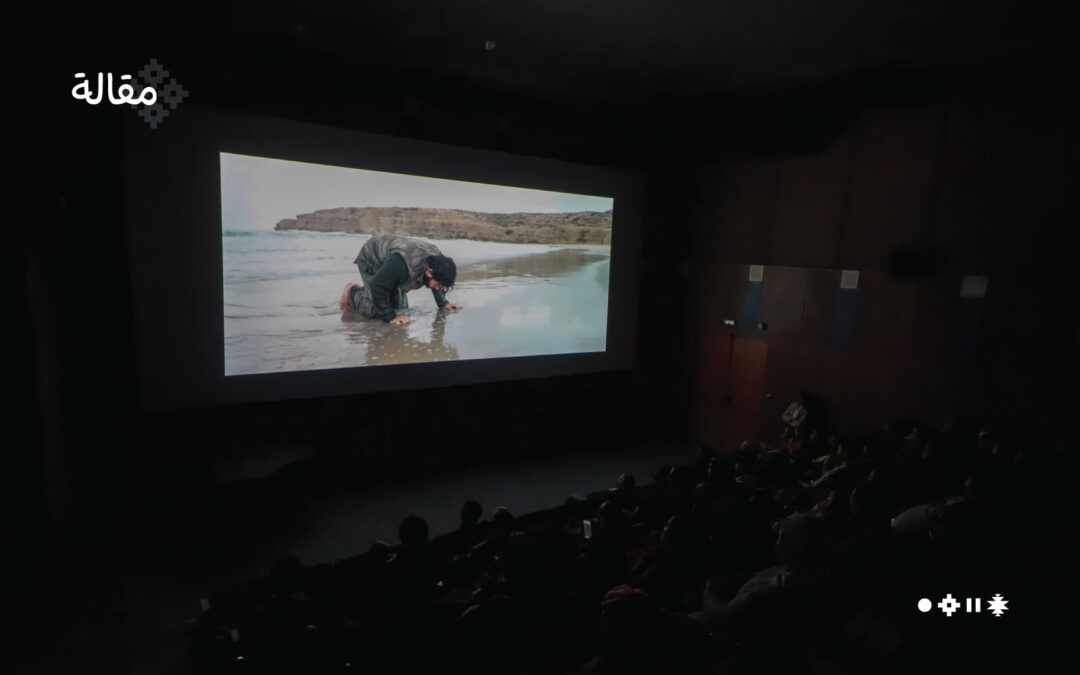
Thus, cinemas are places for public gatherings such as the Tanarout Cinema Club in Benghazi or places where groups of friends with mutual interest for films to exchange ideas, and hold key discussions on fundamental issues such as justice, freedom, power, social status, violence against women, discrimination, and even the credibility of historical narratives.
So, shouldn’t cinema be a part of shaping the collective consciousness of societies? The question remains: To what extent can these discussions be effective if a society is culturally weak and lacks critical analytical capabilities and intellectual expertise? Perhaps we can say that the vocabulary of the pioneers of the public sphere is reflected in its output, which ranges from casual, ineffective discourse to a form of coercive power.
Jürgen Habermas describes public space as the connection between authority and civil society, whose impact relies on citizens’ understanding of public issues. Cinema can help develop this awareness, creating a cycle of influence and being influenced.
“If cinema is used against mass negligence, it can turn passive viewers into Critics.” – Theodor Adorno.
There is no good cinema without good perception, and good perception leads to good cinema.
One should keep in mind the contradiction, that cinema in particular is misleading and that it distances people from their reality as stated by the Frankfurt School. I will be discussing this later in the series.
The Flourishing of the Private Sector and the Beginnings of Cinema’s Golden Age
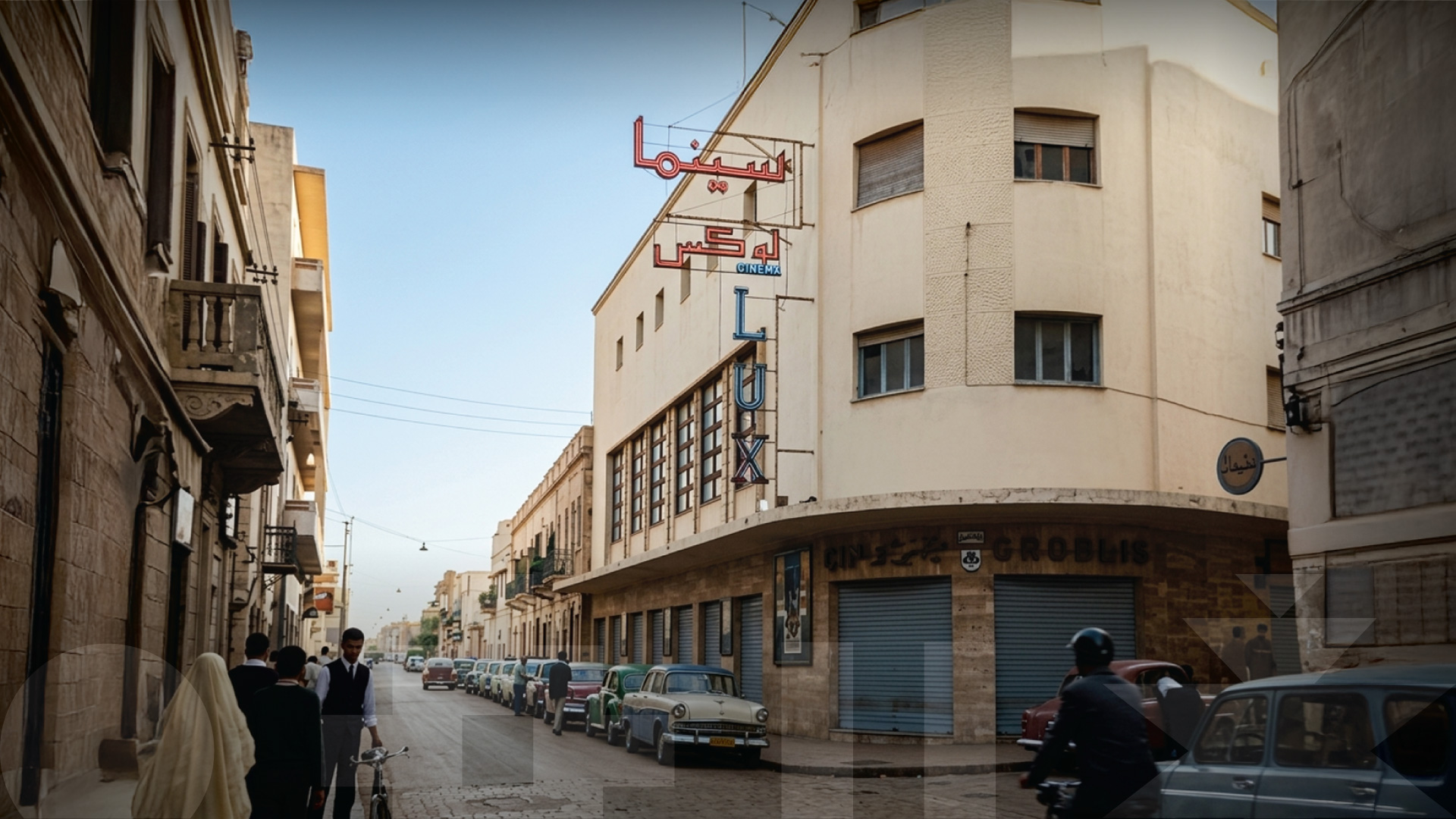
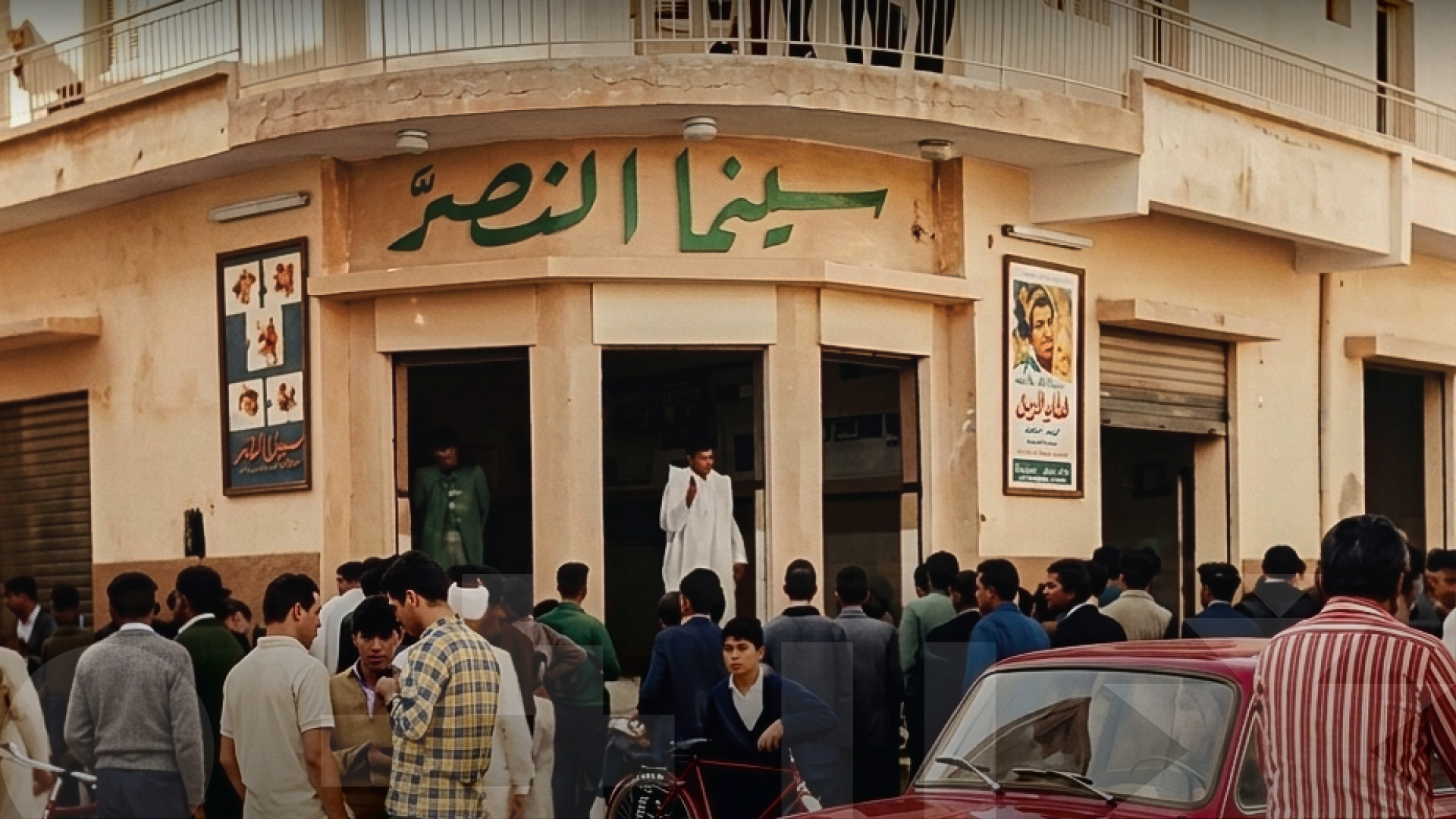
Libyan historical researcher Murad Al-Houni notes that between the mid-1920s and the 1930s, Libya witnessed a boom in the proliferation of cinemas, driven primarily by the private sector, which was dominated by Italians. Among the most prominent names of that period was Giuseppe Salinos, who established the Miramare Theater and used it for cinematic screenings. The Italians also operated the Politeama Theater and the Al Hamra Super Cinema. In 1932, the Bernice Theater was established, which later transformed into an upscale cinema that became a cultural destination for the elite of Benghazi.
According to Al-Houni, the true golden age of Libyan cinema began after the end of British administration and the country’s independence in December 1951. During this phase, Libya witnessed a qualitative expansion in the number of cinemas, and some Libyans began entering the film industry sector as investors, capitalizing on their prior experience in distribution and production companies.
Several local pioneers in this field emerged during this phase, including Suleiman and Awad Al-Zani, Mohamed Bashir Al-Farjani, Mustafa Bin Sreiti, Ali Bin Othman, Al-Hadi Al-Mshareqi, Al-Shaali Al-Kharraz, Helmi Tatanaki, and Khalil Al-Jaouni.
Even after independence, cinematic screenings in Libya remained under the Italian influence. The country had around 30 cinemas at the time, screening approximately 50 Egyptian films, 40 Italian films, and 10 American films. Some cinemas were catered exclusively to foreigners, and the Italian authorities imposed a regulation requiring every theater to show an Italian film every Sunday.
Al-Houni describes this period as a remnant of what he calls “foreign privileges,” which persisted even after independence. For instance, in 1966, the capital Tripoli had 13 cinemas, nine reserved for foreigners, compared to only four for Libyan citizens.
Despite these challenges, cinema gradually began to weave itself into the fabric of Libyan life, with the opening of commercial cinemas showcasing both Arab and foreign films, though the country still lacked genuine local film production.
Cinema as a Soft Power
“Film is a political tool” it has becomes more evident with historical events on how cinema was used as a discourse to reinforce the ideas of a state or society, whether toward the outside world during war or its people during times of internal crisis. Scattering ideas and controlling the masses is an easy task for cinema. As an audiovisual medium, it is one of the most important mass media outlets and a tool of soft power. It’s worth noting the definition of soft power:
Defined as: The ability to influence others’ actions without force, but through persuasion.
Doesn’t cinema do that? Indeed, it has done it before (the image of the heroic American soldier, the Muslim terrorist, Russian cinema and the Bolshevik Revolution, German propaganda for the Third Reich, the Nazi threat from the other side, the Holocaust, the struggle of occupied peoples, neoliberalism, and even political correctness).
In other words, awareness of this soft power often leads to fear, censorship, and restrictions. Cinema can be a tool of repressive authoritarian regimes, or means for states to maintain cultural identity, civilization, and existence.
Cinema and Societal Educational Impact
I know that all these concepts may seem similar and single sourced, and this is what it means to highlight the importance of the source of cinema, which branches into streams and tributaries in all of life’s aspects. Hence, its unique charm.
In his book, “The Sociology of Cinema and Its Audiences,” Emmanuel Etesse demonstrates the social and educational aspects of cinema. He argues that in some cultures, watching films on different platforms alongside group or family is a common social activity. He also discusses what is known as the “sociality viewing”, where “The child learns how to sit and watch, train their body for the duration of the show, “ look at the screen and the screen only” and contain their various reactions, which sometimes are excessive.
Going to the cinema means sharing an experience together and this is what society is all about. The decision to participate and hear different perspectives on the film’s making and from here begins cinema’s amazing ability to lead and empathize. This empathy helps in contributing to build a compassionate society.
Just like ideologies imposed by politics, filmmakers can reinforce certain values and present abhorrent behaviors even more horribly, in an attempt to mitigate them and encourage noble ideals, although sometimes this leads to overly simplistic narratives of absolute good and evil that may seem outdated to today’s audiences.
Is there any point today?
I conclude by raising the concerns of a cinema lover living in a country where the film industry has virtually ceased to exist. Its beautiful efforts amounted to nothingness. I sense the bluntness of my sentence, but the comparison is global. Number wise, we have nothing. The question is, do the society, decision-makers, statesmen, thinkers, and theorists sense the importance of cinema in shaping perspective, Its importance in restoring social ties, confronting our civil wars head-on, addressing our weaknesses, and reconnecting with our roots. Isn’t cinema an indispensable part of the revival we’ve been struggling to achieve?
Alternatively, seen merely as entertainment, isn’t cinema a vast area for economic growth, job creation, and market development? This parallels many development plans.
If we look at it from a third perspective, doesn’t a Libyan crushed by reality deserve art and beauty to restore some of the balance in life, to confront the harshness of life specifically in Libya, and the world in general? Cinema is a way to express emotions and ideas, an endless source of creativity. Here, we are simply trying to discover the right path for a delayed start in an era dominated by home-viewing platforms
Maysoun Saleh