Nov 27, 2025
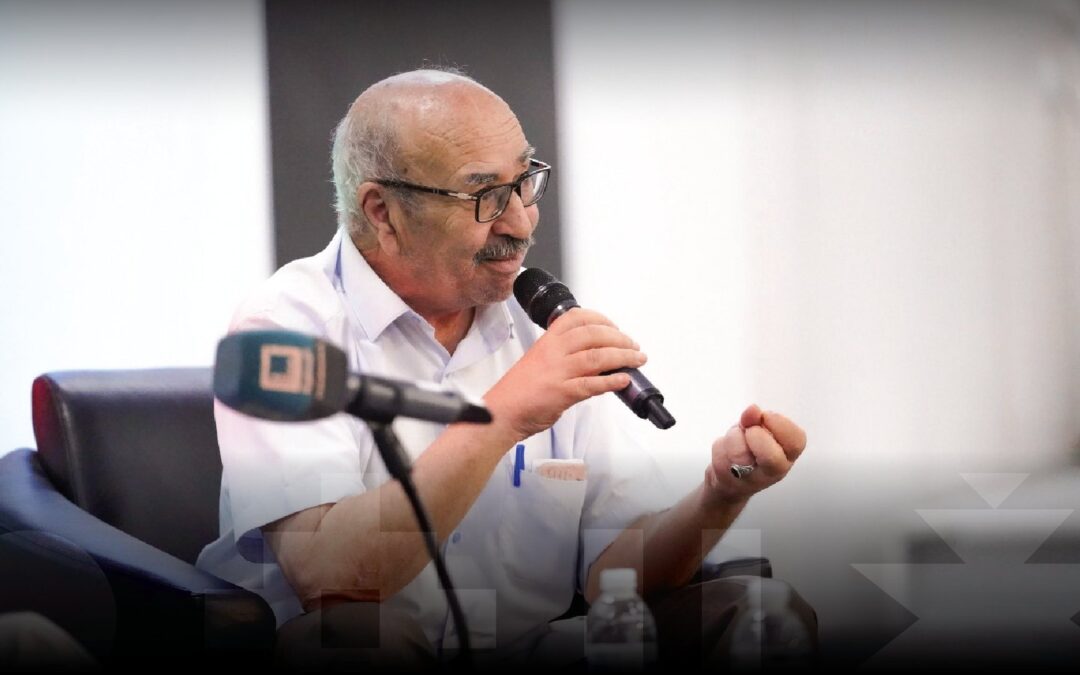
Abdellah Al-Zarruq is one of the foundational pillars of film directing in Libya. Born in Tripoli in 1952, he began his career as a theater prompter before joining the Libyan Theater Troupe. He later worked at the General Cinema Organization and then served as the director of the National Center for Cinema, under the General Authority for Cinema, Theater, and Arts. He has contributed numerous films to Libyan cinema, in addition to many television series.
In a conversation with the Libya Film Institute blog, Al-Zarruq spoke about his journey in filmmaking and how the encouragement of his supporters raised the ceiling of his ambitions, helping him become one of Libya’s most prominent directors. He has produced more than 20 films despite significant challenges and a lack of financial support, driven by his belief in cinema’s impact on society—an art form that, regardless of ideas or ideologies, fights for a better world.
1- How did you take your first steps into cinematography?
Ever since I was sixteen years old in 1967, I have been practicing cinematography with a Super 8mm camera. I would film all the events in the city of Tripoli and show them to my neighbors, family, and friends. It became my life’s dream to be a filmmaker. In 1968, I founded the Arab Amateur Cinematographers’ Union within the Libyan Theater Troupe, and that was the real starting point of my journey.
2- What do you consider the most significant milestones in your life?
When the producer Ali al-Haloudi offered me the chance to work with him on the film When Fate Becomes Hard, starring Omar al-Shwerif, Zahra Mesbah, and Abdullah al-Shawash. I was overwhelmed with joy to take that first professional step, which I consider a bold and crucial leap for my dreams. The encouragement and solidarity from my fellow artists were incredibly important and effective, and they raised my ambition to produce a purely Libyan cinema.
3- How many films have you directed?
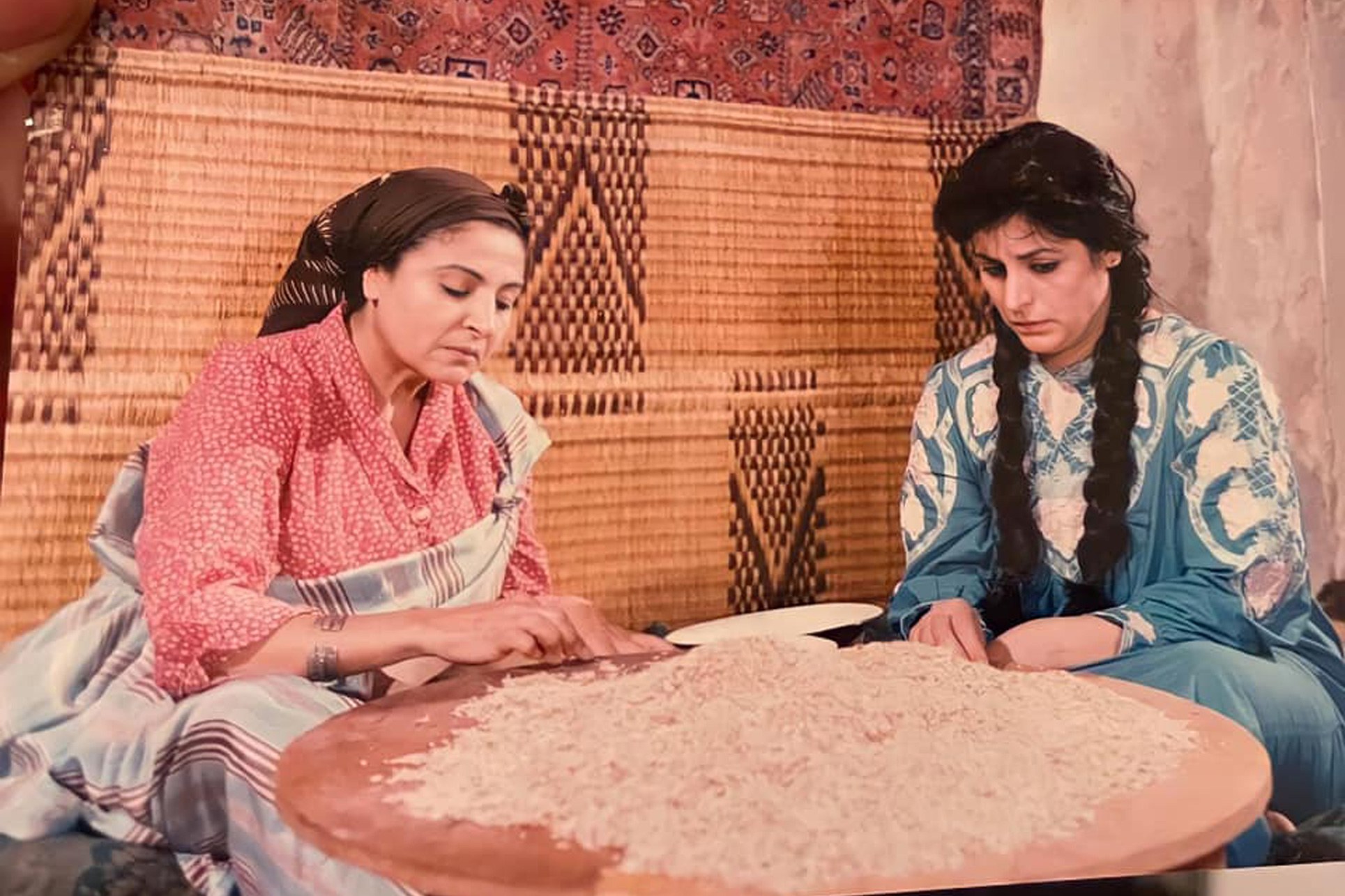
I have directed 22 films for Libyan cinema, including: Defeat of Darkness, Autobiography of a Cigarette Seller, The Exiles, The Sun Will Not Set on My City, Verses from an Epic of Love, The Wings, Little Dreams, and Symphony of Rain, among others. I have also directed television series like And Fate Willed It and Certainty, as well as television films such as The Wall, The Other Side of the Moon, Scent of the Night, The Ceremony, and Jasmine Flower. In these works, I explored women’s struggles for a better life, social problems, and dreams for the future.
4- How do you describe art and cinema?
Cinema is the weapon of the century; it is the most powerful art form of our time. There is no other art that can penetrate the world, spread ideas, and fight for a better world—regardless of differing ideas and ideologies—as cinema can.
5- Some people see cinema as an art form with no real impact. What is your response to that?
That is incorrect. If you look at global cinema, you’ll find that it generates profits exceeding those of massive factories, thanks to the technology used to produce films. I was honored that my film When Fate Becomes Hard was one of the first drama films in my country. We did it to open all doors for our creators to reach the world and present our ideas, because we are an important part of the world, and the world must get to know our culture, traditions, and customs.
6- What is required to advance Libyan cinema?
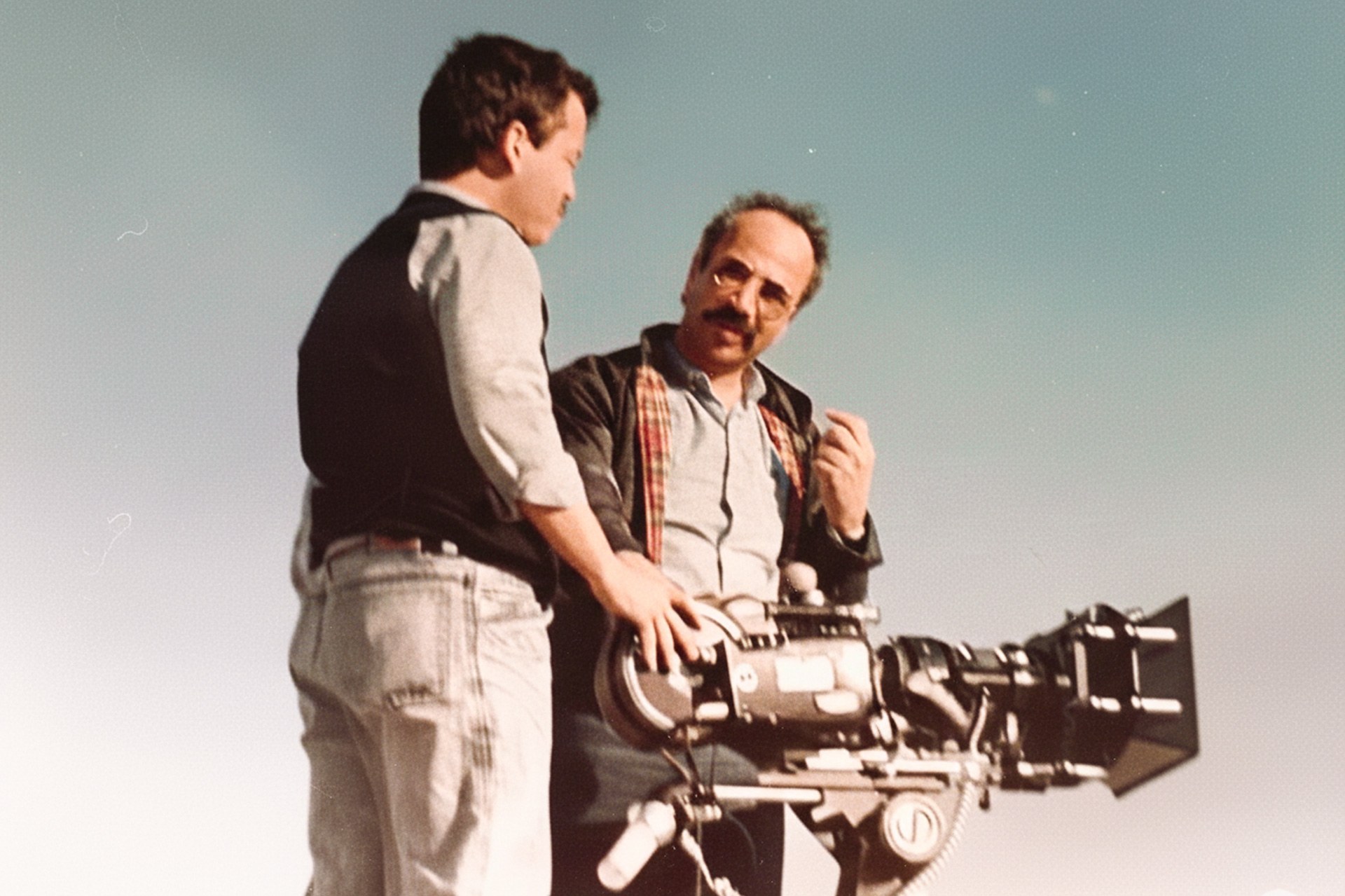
Film production requires large budgets for equipment, whether renting or buying. This is what has been behind the delay in Libyan film production for so many years, especially after Libya once possessed the latest technology in the 1970s. Now, with technological advancements, renting equipment has become extremely expensive. The role now falls to the General Cinema Authority to provide modern equipment and contribute budgets to elevate the seventh art.
We were fortunate in the old days to be able to produce our films and achieve our dreams. Now, things have become much more difficult.
7- Does Libya have real movie theaters?
Cinema worldwide is about two things: production and exhibition. But we are without an exhibition. We live in a country with no movie theaters because they were seized, and this is a heartbreaking situation. Our productions are left with little value except for participating in festivals abroad, without the presence of the Libyan viewer who wishes to see the work of their own artists.
8- What is your message to the new generation of aspiring filmmakers?
We have a group of young people who have presented cinematic works that have been met with acceptance and admiration at festivals. A filmmaker presents their work to their homeland before they present it to festivals. I am proud of these young people. I have seen their work, which they produced with their own money, and they have fought for a purely Libyan cinema.
Nov 20, 2025
Year of Production: 1981
Running Time: 167 minutes
Genre: Historical / War / Biographical
Directed by: Moustapha Akkad
Evaluation: Worth Watching
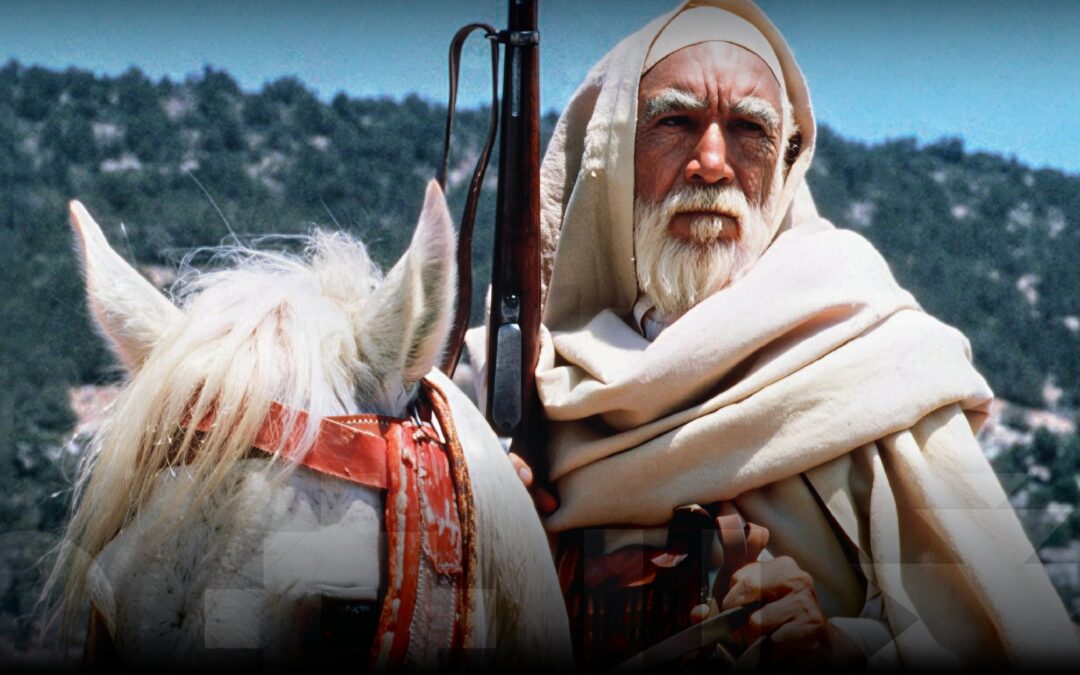
It is difficult to speak of Arab cinema without pausing at the legacy of Moustapha Akkad, the Syrian director whose ambitions transcended the limits of the Arab film industry of his time. He sought to create films with profound human and historical depth. Omar Mukhtar – Lion of the Desert (1981) will forever remain a unique work, not only in Akkad’s career but in both Libyan and Arab memory. It documented a pivotal era of the Libyan national resistance against Italian colonialism, articulating it in a universal language with Western cinematic tools, but with a purely Eastern spirit.
The Film: Between History and Cinema
The film is a cinematic biography of Omar Mukhtar, the “Sheikh of Martyrs” and leader of the Libyan resistance against the Italian occupation in the first half of the 20th century.
Akkad presented the story with a cohesive narrative structure, adhering to a linear, historical timeline without the leaps or narrative manipulations that might confuse the viewer. This choice gave the film a documentary-like stability, positioning it as a classic historical epic. At the same time, however, it lent a certain monotony to some of its dialogue-driven scenes.
Dramatically, the director balanced Mukhtar’s heroic dimension with the human side of his character. Mukhtar is not a static legend but a man of faith, convinced of the justice of his cause, who faces death with unshakable conviction. This balanced portrayal allowed the character to transcend his local context and become a universal symbol of the struggle against colonialism.
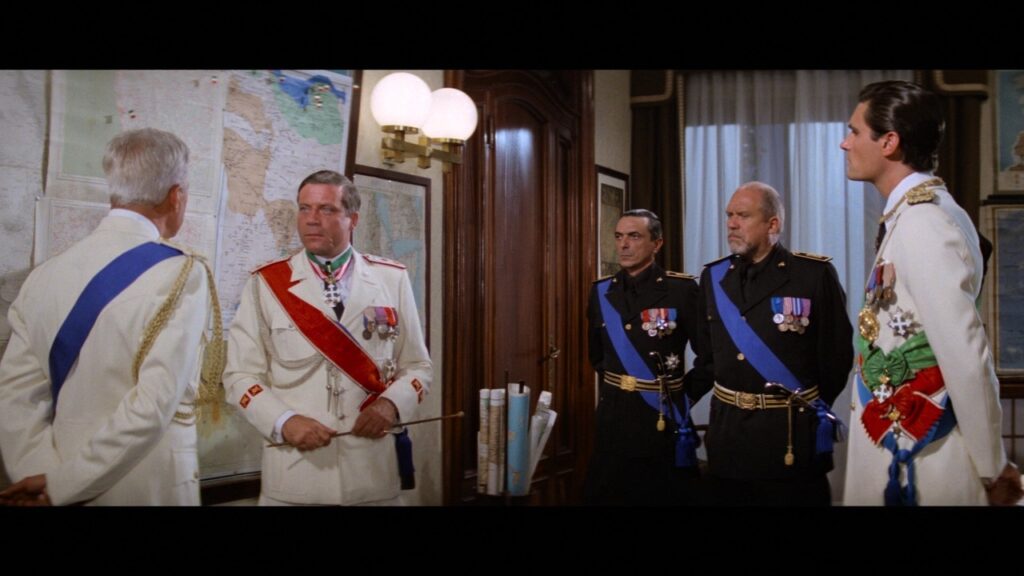
Performance and Acting
Akkad cast Anthony Quinn in the role of Mukhtar, a choice that sparked controversy but proved to be an artistic success. Quinn conveyed the image of the stoic sheikh with a quiet dignity, free of exaggeration. He relied on his gaze and an internal rhythm rather than overt emotion, which gave the character a rare authenticity in historical cinema.
Alongside him, Oscar-winner Rod Steiger excelled as Mussolini, and Oliver Reed as General Graziani, embodying the arrogance of European power and its condescending view of colonized peoples. However, some of the secondary characters appeared to lack depth, their dialogue written to serve a documentary function rather than a dramatic one.
Directorial Vision and Technical Aspects
Akkad deserves credit for delivering a work that rivaled Hollywood productions in its technical scale, at a time when Arab cinema’s resources were limited. The film’s budget reached approximately $35 million, funded directly by Libya, while its box office revenue barely exceeded $1 million due to being banned in some countries and its poor distribution in the United States.
The entire film was shot on location in Libya, specifically in Jebel Al-Akhdar, Benghazi, and the desert of Sirte. Hundreds of Libyan extras were used to depict the resistance battles, lending the work a high degree of visual authenticity.
Technically, Akkad assembled a world-class crew:
- Director of Photography: Jack Hildyard, an Oscar winner for The Bridge on the River Kwai.
- Musical Score: Maurice Jarre, the composer behind the music of Lawrence of Arabia.
- The camera moves slowly in moments of contemplation and accelerates in battle scenes, while the score complements the sense of heroism tinged with sorrow.
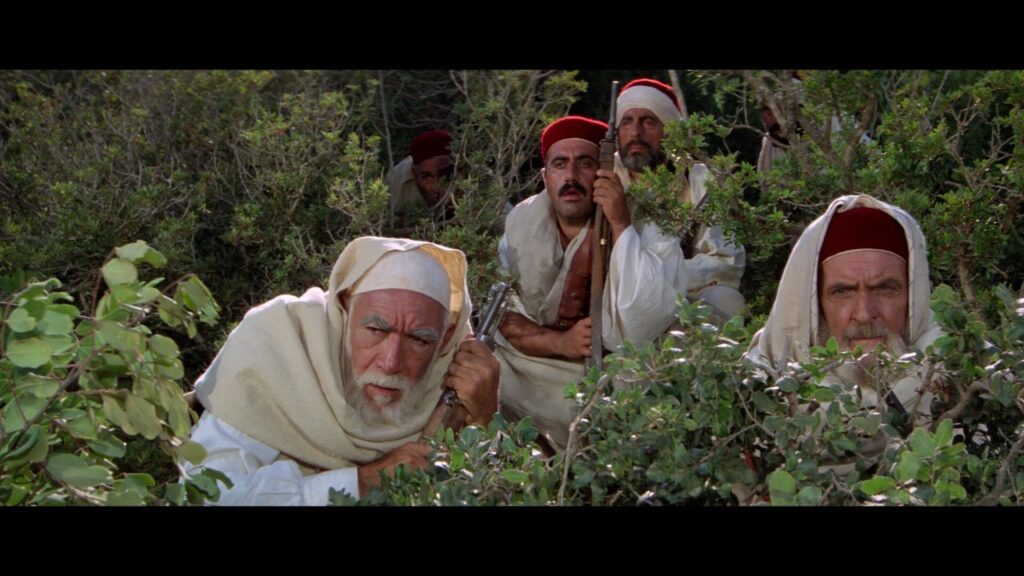
Historical Accuracy vs. Dramatic Representation
The film sparked considerable debate over its historical accuracy. While Arab historians praised its precision in conveying the suffering of Libyans under occupation, some Italian historians criticized what they described as an “exaggeration of the brutality of Italian forces.” These criticisms, however, did not undermine the film’s core, as it is a work that seeks to show the truth from the perspective of the victims, not the invaders. I must also mention the talk among some about the film’s portrayal of certain historical Libyan figures as traitors, framed within a particular political vision.
Premiere and Reactions
The film premiered in Tripoli in 1981 at an official ceremony attended by Akkad and several senior Libyan officials. It was met with a wide popular reception in Libya and across the Arab world. In contrast, some Western entities expressed reservations due to its anti-colonialist tone, which only enhanced its symbolism as a voice for the oppressed.
Political Controversy and the Ban in Italy
In 1982, the Italian government issued a decision to ban the film, deeming it “an insult to the honor of the Italian army.” The ban remained in effect for over 25 years. The film was not shown in Italy until 2009, on the Sky Italia channel, coinciding with a diplomatic visit by Muammar Gaddafi to Rome.
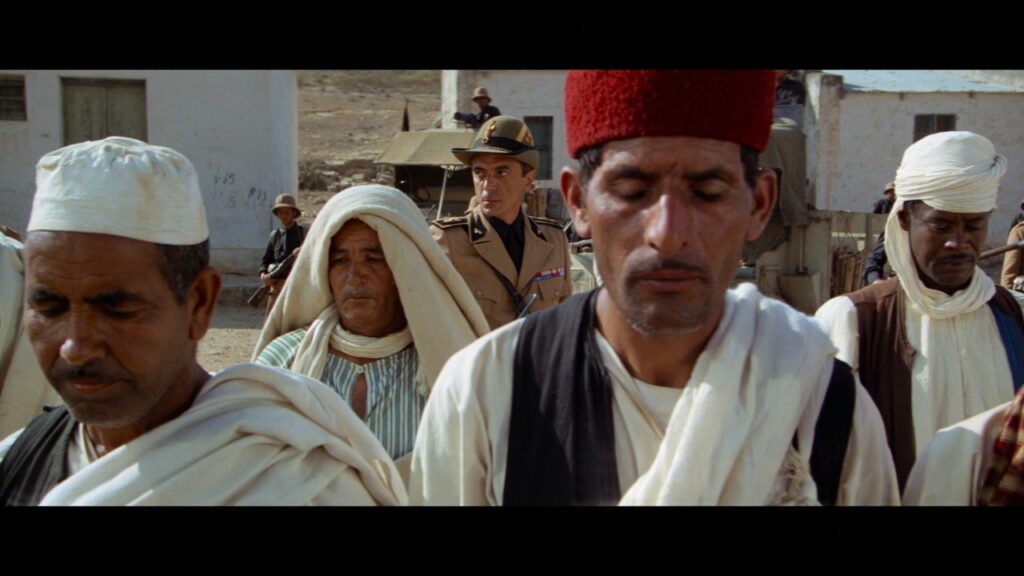
National Significance and Libyan Symbolism
Although the film was an international production with foreign actors, its spirit is purely Libyan. Akkad managed to capture the essence of the Libyan resistance character—a blend of faith, dignity, and stubbornness in the face of oppression. Here, the desert is not merely a backdrop but a living entity that embraces the battle between freedom and colonialism.
The film provided Libyans with a rare visual memory of their ancestors’ struggle at a time when a national cinema was virtually non-existent. It elevated Omar Mukhtar into a universal human symbol, even with the controversy surrounding political interventions in some details of the historical script.
A Balanced Critical Reading
The film has high artistic value but is not without its flaws. The dialogue often felt weak, and the film’s length (nearly three hours) caused the pacing to lag in the middle. Furthermore, Akkad’s focus on the epic scale sometimes came at the expense of developing the psychological depth of the secondary characters. Nevertheless, these observations do not diminish the film’s importance as a unique cinematic achievement.
At the time, international critics praised the quality of the direction and cinematography, but the film was a commercial failure at the box office, grossing only $1 million due to the ban in Italy and its limited distribution in the United States. Over time, however, the film has transcended its financial losses to become one of the most important historical films in the Arab world, maintaining a high rating on specialized websites.
The Film’s Legacy and Relevance
What distinguishes Lion of the Desert is that it was not just a film about the past but a visual document that remains present in the Libyan consciousness. Through it, the meaning of resistance is renewed as a moral value that goes beyond weapons to the defense of dignity and identity. The film has been selected for inclusion in IMDb and Arab Cinema Classics lists as one of the most prominent Arab historical films.
After Moustapha Akkad’s death in the 2005 Amman bombings, interest in the film was renewed as a tribute to his artistic legacy. It is now screened annually on Libyan national occasions and is studied in some media and cinema curricula.
Akkad succeeded in crafting a universal human discourse from Mukhtar’s story without losing its national authenticity. As much as the film carried a global directorial vision, it remained a voice from the Libyan desert, telling the world that freedom cannot be conquered, and that glory is forged not only by victory, but also by steadfastness.
Omar Mukhtar – Lion of the Desert remains an exceptional work in Arab cinematic history because it combined artistic craftsmanship with national depth. Even more than four decades after its release, it still serves as a model for how to transform a national biography into a cinematic work that respects the truth without sacrificing art.
It is not just a film about a hero, but about an entire nation that stood firm in the face of tyranny.
And though Akkad is gone, his legacy endures, reminding us that a camera can be another kind of rifle, and that honest cinema is capable of immortalizing what history sometimes fails to preserve.
Writer:
Muhammad Ben Saoud

Nov 13, 2025
Country: Libya
Year: 2017
Running Time: 11:15 minutes
Genre: Drama
Written and Directed by: Faraj Meayouf
Screenings: Alexandria International Film Festival for Mediterranean Countries, Oran International Arab Film Festival, Luxor African Film Festival, Middle East & North Africa Film Festival in the Netherlands.
Evaluation: Worth Watching
1
It is with the most profound regret that we, as cinephiles, are unable to watch most modern Libyan films, while the cinema of the entire planet, from all eras, is readily accessible. And on the rare occasion one of us gets lucky and snags a film here or there, these works often leave us disappointed when viewed in the context of a “global” cinema that draws from a creative spirit concerned only with relentlessly exploring the boundaries of the medium and what lies beyond.
We care deeply about the historical achievement of the event itself; the mere production of a film in Libya is a miracle that appears two or three times a year. These miracles almost always follow the straight and narrow path of the short film. It is relatively easier and cheaper.
In the aftermath of COVID-19, I became acquainted with the work of the young director Faraj Meayouf, who entered the world of cinema through its narrowest door: immediate, on-the-spot experimentation, filming whatever could be filmed with little regard for the future of his footage.
During the 2011 uprising, most Libyan filmmakers turned to documenting the war in long and short documentaries, or in narrative shorts. (As I’ve discussed with my colleagues at the Libya Film Institute, the production of a feature-length narrative film has become an event awaited with the same anticipation some have for the Mahdi and Godot combined). Our film here, however, is not concerned with current headlines, nor with “educating” the world about Libya’s recent history, a path many Libyan filmmakers now take. And I say “filmmakers” to emphasize those who take it upon themselves to write, film, and edit their own work.
Instead, this film exposes a deep wound in the body of Libyan society. In doing so, it aims to raise awareness without resorting to guidance or preaching, using a simple directorial approach that doesn’t ask much of its actors, shot in the natural light of day.
Regarding the film’s production, Faraj tells me it took shape after he read the memoirs of Abdullah Saleh (From School to the Battlefield). Mr. Abdullah is a Libyan citizen from Murzuq who, in the 1980s, was taken from his high school with his classmates to the front lines of the war with neighboring Chad. (We hear a different dialect in the film, not that of Murzuq, for death does not recognize dialects). We are not concerned here with the book’s many details or Abdullah’s harsh story, that is for another article. What matters here is the film’s work, over the course of nine minutes, on flashes from the lives of these doomed youths and the echoes left behind by the survivors.
Fair warning, spoilers ahead!

2
In the opening shots, we hear a young man on the phone with his lover. He tells her he is about to finish high school and will then ask her family for her hand in marriage. But if her family is in a hurry, he says, then everything is in the hands of fate. It’s an old story, one we’ve seen on late-night television and read in the pages of “social” literature. But this conversation is taking place in a different orbit, one we come to understand in installments, sometimes through image, sometimes through sound.
We move from the sound of melodrama to the image of realism: a dilapidated boys’ school, a game of football, a mathematics class. A school guard watches over every movement in the courtyard, and sometimes, over a few stray thoughts. The sound of the radio in the guard’s room accompanies the math lesson: a citizen calls in, asking about the fate of his son who disappeared a year ago. Then, news arrives from the administration for the math teacher: tell the students to prepare for a school trip.
Sound and image finally merge in a scene where the trip’s bus driver reads a newspaper featuring the “battles of Nasser’s revolution,” while a radio announcer declares news of supposed victories on the front lines after playing the Jamahiriya’s national anthem. In my opinion, this is the film’s weakest scene; Anachronisms are concocted (Nasser’s presence in the 1980s) in a shot already saturated with symbols (the fervor of the state media versus its eventual defeat).
But we understand that short filmmakers are keen to condense meaning, and in that condensation often lies the empty symbolism I mentioned in the title. Film 205 transcends this symbolism. It leaps over its own misstep and gives more space to the teenagers’ chatter, from the secrets of their love lives to their football games – This is an approach Gus Van Sant took in his 2003 masterpiece, Elephant, which depicted the lives of high school students just before they were murdered by a classmate – by focusing on this, Meayouf places his teenagers at the center of attention, before the news of the war and its circumstances. This focus is paralleled by a shot of the teenagers’ parents, standing at the school gate like someone at a prison gate, begging for a visit through connections.
The guard plays cards alone, accompanied by the radio, which shifts from the violence of war propaganda to the weariness of families suspended in the purgatory of receiving news, not knowing the fate of their sons who were alive only yesterday. Their only aim is to know their fate for certain, even if it comes in the form of bones that point to a missing body.
The guard locks up the school, in the presence of abandoned notebooks, while we see the students sitting in a military plane.
The lightness of memory can be as bearable as its weight. With its lightness, we might obscure the truth of our emotions, especially towards the dead. With its weight, we are sometimes dragged into sanctifying them. And while we set aside the obvious literary reference to Kundera’s masterpiece, we consider the substance of Film 205: a modest film that thinks of its dead as it thinks of its living, without sanctifying or judging them.

If we are to conclude by speaking of sanctification and judgment, we can also speak of great films that did not adopt “neutrality” in their content—from Godard’s Maoist films, to the provocations of Nagisa Oshima in the far east of Japan, to the revolutionary Cinema Novo of Glauber Rocha in Brazil, the far west of the globe. With these examples, we are reminded that neutral cinema is not necessarily great cinema. Many Libyan filmmakers have become obsessed with the idea of neutrality, producing political films with no political dimension, bland works that present symbols instead of people: the dyer and the tanner, the prisoner and the guard.
Critics have long debated the filmmaker’s intention: does the director’s intent in shooting this or that scene matter? We are not concerned with Meayouf’s intention in filming his students, but with the audience’s reception of the result.
This is how the contours of Film 205 appear, both before and after symbolism. The number 205 refers to the 205 students who were dragged into the war. Out of this tragedy, the script and directorial style struggle between austerity and saturation, stumbling at times and soaring at others. And this, under miserable filming conditions (in addition to relying on personal camera equipment, the elements of the school were gathered from various sources, not to mention the painstaking coordination with authorities).
At the end of the shoot, and at the end of the viewing, 205 reveals itself to be a necessary disruption in the system of Libyan cinematic expression. It is not necessarily a revolutionary film, but in its nine minutes, it creates a prelude to a “national” cinema that masters the many tools of filmmaking without preaching or wallowing in melodrama, using the simplest of words and the most straightforward of shots.
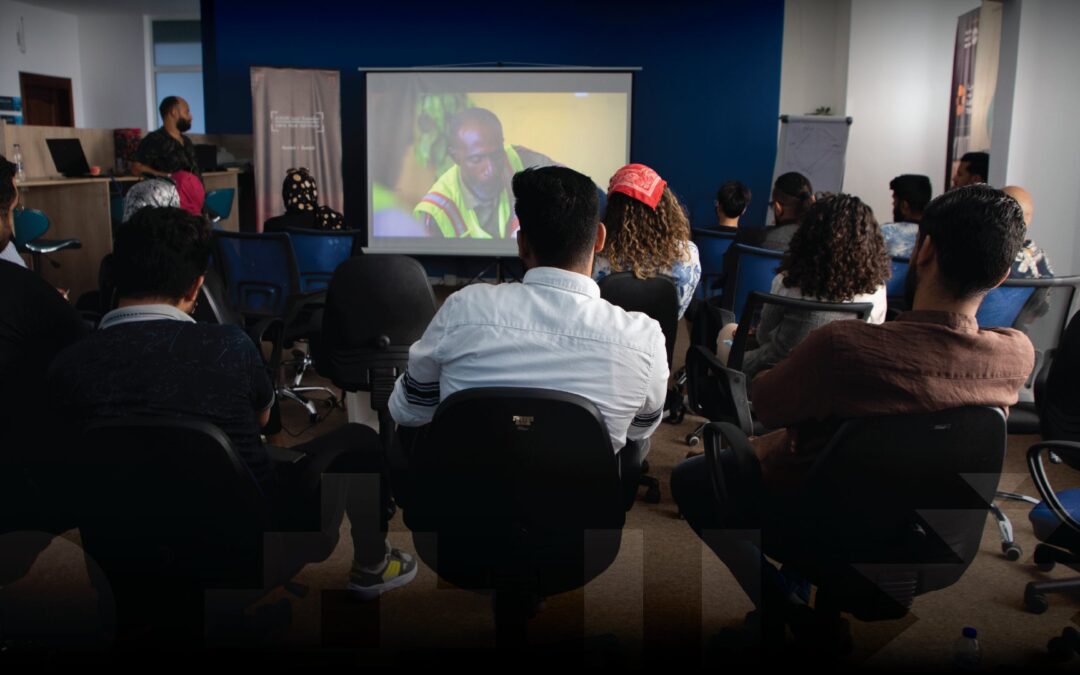
Nov 6, 2025
When we look at the Arab world’s relationship with cinema, we realize that this art form has never been merely a means of entertainment; it has been a mirror for society and a tool for shaping public discourse. Egypt turned its cinema into a grand school for debating social and political issues. Algeria transformed it into an instrument for preserving the memory of its resistance. Tunisia and Morocco have used it to explore questions of freedom and modernity.
In contrast, Libya has remained distant from this path, which raises a critical and unavoidable question: What does it mean for an entire society to be deprived of a screen that reflects its own identity and helps it rethink its past and present?
The absence of cinema in Libya cannot be reduced to a lack of theaters or weak production. It extends to depriving society of a tool for collective analysis and a cultural medium capable of turning big questions into living images. This absence forces us to reconsider cinema’s place within a national project that seeks to rebuild both the individual and society, even if a robust local industry doesn’t exist at this moment.
Cinema: A Force for Shaping Consciousness
At its core, cinema is not entertainment; it is a medium for collective thinking. In Egypt, Salah Abu Seif tackled issues of poverty and social justice, while Youssef Chahine became famous for his philosophical vision of the individual’s relationship with power and society. These films weren’t confined to theaters; they shaped public discourse and reached broad segments of the population.
In Algeria, the film The Battle of Algiers was not just a work of art but a historical document that introduced the entire world to the experience of a people resisting colonialism. Meanwhile, Morocco and Tunisia have invested in cinema to spark bold conversations about society, the individual, and identity, making their films part of an ongoing societal dialogue.
These examples show that cinema is not a luxury but a popular school that opens people’s eyes to their own issues and pushes them to re-evaluate their positions.
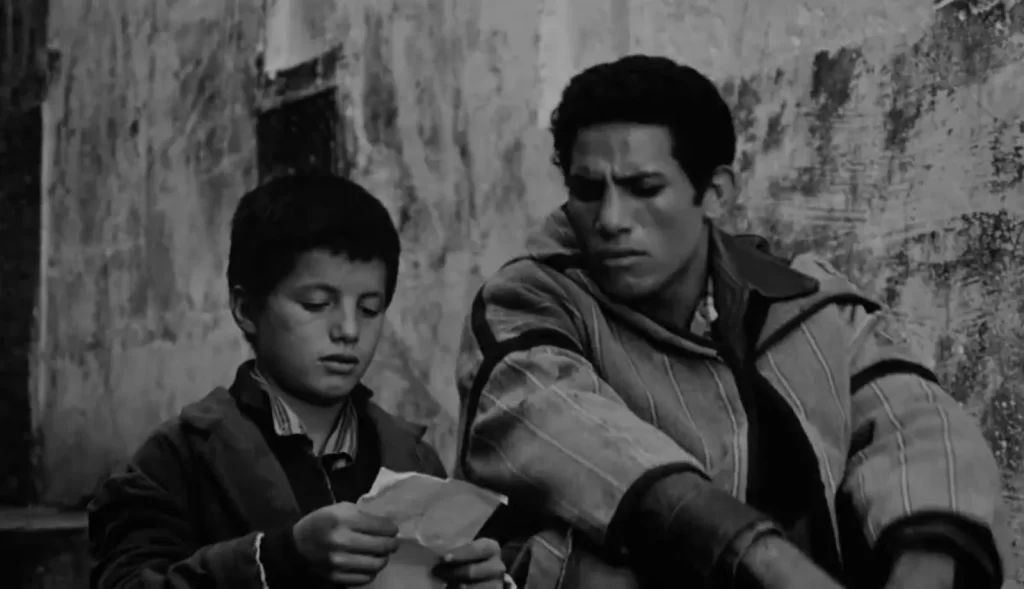
A frame from the film The Battle of Algiers (1966)
Libya and the Visual Void
In the Libyan case, this role has never been fully realized. Libyan society has relied on alternative means to tell its stories: poetry, popular councils, and, more recently, traditional media and social networks. But these mediums, however important, lack the power of the cinematic image, which combines artistic creativity with the ability to document.
The absence of cinema has meant that Libyans consume the narratives of others. They watch foreign or other Arab films that express the concerns of different societies, while their own story remains without a visual archive to preserve it. This means the national memory is built on written texts and political speeches, but it lacks the powerful visual dimension that makes an experience more present in the consciousness of future generations.
Cinema as a Tool for Analyzing Reality
For decades, Libyan society has been living through overlapping crises: political divisions, conflicts, and cultural shifts. In such contexts, cinema can play a pivotal role in bringing these issues into the public sphere and helping to build a collective critical consciousness. A film can pose questions of identity in a way that reaches audiences that academic research or political speeches cannot. It allows people to see themselves within a larger picture and contemplate their problems from a new angle.
The absence of this medium has kept debates on crucial issues confined to political or academic elites, without finding their way to the general public. This explains why many Libyans feel that their biggest challenges are discussed in closed-off spaces that do not directly touch their daily lives.
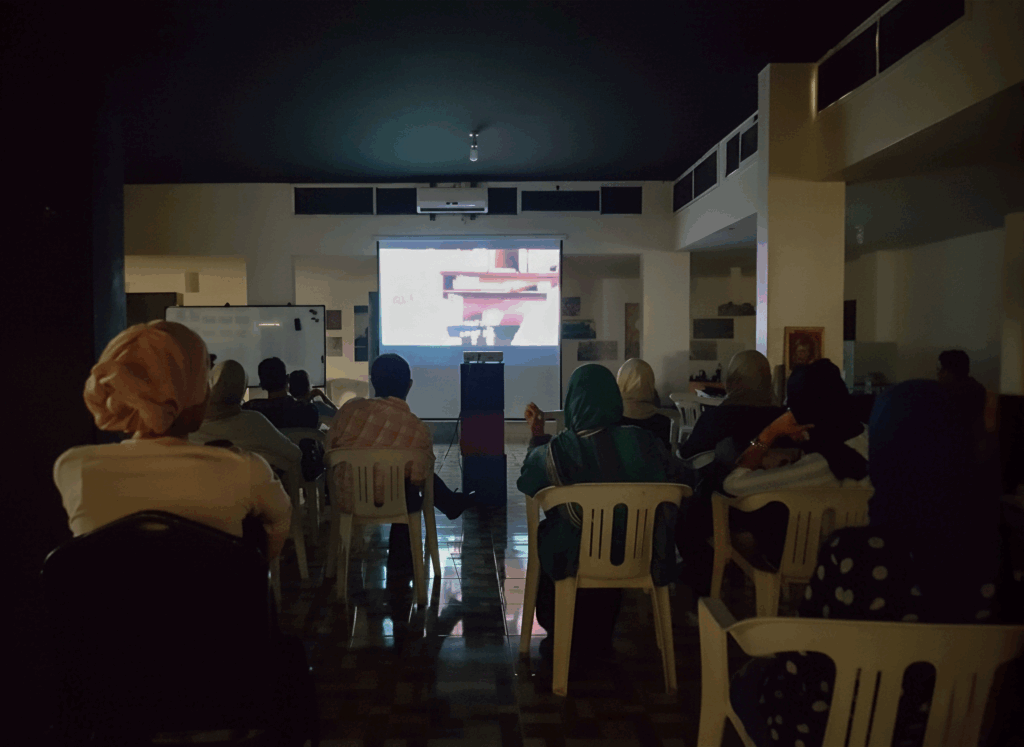
From one of the film screenings at the Tanarout Collective, Benghazi (2018)
Inspiring Arab Examples
When we return to the Algerian experience, we find that the film Chronicle of the Years of Fire, by director Mohammed Lakhdar-Hamina – the first Arab and African artist to win the Palme d’Or at the Cannes Film Festival – was not just a cinematic work but a message to the world that Algeria possesses a living memory that cannot be erased.
In Tunisia, the Carthage Film Festival evolved into a space that expresses and enables discussion of the entire region’s issues. In Egypt, cinema has addressed undocumented migration, poverty, and illiteracy, reaching villages and working-class neighborhoods and opening up conversations among the people. These models confirm that cinema is capable of reaching deep into a society and stirring its consciousness, in my opinion surpassing the role of literature or journalism.
Libyan Examples: “Freedom Fields” and “Champion”
Recent experiences confirm that Libyan cinema is about more than entertainment. The film Freedom Fields (2018), by director Naziha Arebi, documents the journey of three female football players in post-revolution Libya over years of transformation, revealing the intersection of athletic dreams and social constraints. The film received significant international attention and screenings.
Similarly, the short documentary Champion (2024), by director Mohamed Musalli, follows the story of Suad, a weightlifter with a disability from Tawergha. It shows how a film can have a direct social impact — solving problems related to her government benefits and securing transportation for her training — turning the screen into a space for civic action, not just storytelling. The importance of these two works lies in their ability to broaden societal awareness of issues facing women, sports, and people with disabilities. Their message was not limited to artistic documentation; it evolved into a contribution to tangible change.
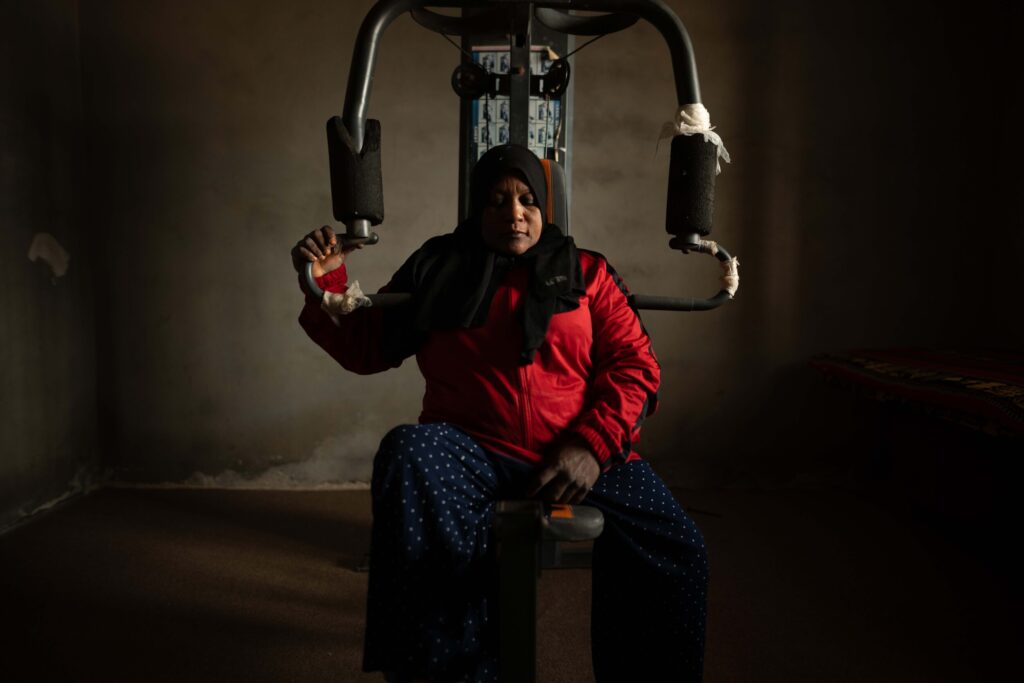
A frame from Champion (2024)
Thus, it can be said that depriving a society of cinema is, at its core, depriving it of a way to understand itself. Libya has lost more than just movie theaters; it has lost the opportunity to see itself in a unifying mirror that preserves its memory and debates its issues.
Cinema is not a luxury; it is a necessity for building awareness, documenting history, and shaping the future.
Perhaps future generations will keep asking: Why didn’t we have a visual archive to tell our story? Why was the screen that could have united us around a shared narrative so absent?
These are questions that carry the bitterness of our reality, but at the same time, they open the door to hope and reflection. They remind us that the absence of cinema in Libya was not inevitable, but the result of choices that could have been different, had we only believed in its power to build a collective consciousness.
Writer:
Muhammad Ben Saoud

Oct 30, 2025
In an interview with the Libya Film Institute, director Mohamed Masli confirmed that Libyan filmmakers today face numerous production and filming challenges amidst a near-total absence of financial support.
Masli discussed his beginnings in filmmaking and the vital role of documentaries in addressing human rights issues, exploring the Libyan audience’s appetite for the genre. The conversation also touched upon whether documentary cinema can truly impact Libyan society, his own future projects, and his assessment of the country’s cinematic landscape today.
1- How did you begin your journey in filmmaking?
Honestly, my journey began in the media field back in 2008. Then, in 2019, I received 10 months of training in documentary filmmaking from Germany’s Deutsche Welle Akademie, in addition to storytelling training with Zenith Magazine. From there, I launched my career in documentary filmmaking.
I currently have four short documentary films to my name. It started in 2021 with the film Tawergha’s Blacksmith, as part of the Libya Film Institute’s “Step” project.
In 2022, I made my second short documentary, To the Council, which was about the role of women in elections and society’s perception of women working in Libyan politics.
Then, in 2023, we collaborated with the Jusoor Organization to produce Lost Rights, a film that addresses the absence of the rule of law in Libya.
Finally, in 2024, we produced Champion, which deals with the rights of women with disabilities. I am currently working on several new projects.
2- Why did you start with documentaries rather than narrative films?
From my earliest days working in media and developing television programs, I was always searching for impactful and unique human stories. I truly enjoyed the time I spent speaking with participants to understand their lives and the details of their experiences. This is what led my programs to always focus on documentary-style storytelling.
I find myself more in the documentary form because I love meeting people directly and speaking with them without barriers or intermediaries. Some films take two or three months of preparation, and I enjoy this phase of the work, especially when there’s a challenge in interviewing one of the film’s subjects or convincing them to be filmed and have their story shared. For example, in Lost Rights, there were four women featured in the film. As you know, it is very difficult for women to appear on camera in Libyan society. But I didn’t give up, and I succeeded in including their perspectives in the film, shooting several scenes within their safe space.
I do have plans for narrative films in the future, but for now, my focus is on documentaries. Another primary reason for this is that the production cost of a documentary is significantly lower than that of a narrative film.
3- Did you face challenges during the production of your film projects?
While making my first feature-length documentary, I faced many difficulties related to the high production costs. Producing a long-form documentary that meets international standards turned out to be incredibly expensive. For instance, the project we are working on now requires a budget of around $60,000. This is because, with my short films, I relied on my own individual efforts for shooting, editing, and preparation, and the crew was never more than four people. In contrast, a feature-length film requires a crew of at least 15 people.
4- Have you ever received financial support from within Libya?
Unfortunately, no. The only thing I received was a small grant for Lost Rights, which was just to provide payments for the technicians working on the film. It wasn’t really support, just a token of appreciation.
5- What are the main funding difficulties Libyan filmmakers face?
Over the last 20 years or so, a real gap has formed in Libyan society. Generations have grown up without cinema, without films, without a single movie theater. This has made both the public and private sectors completely uninterested in cinema. You find that all sponsorship and support automatically goes toward Ramadan television dramas to meet audience demand, where artistic production is consumed just once a year. And even then, the state of television production is not much better off than the film scene.
In reality, on the ground, a film industry simply does not exist in Libya. All the attempts we see today are personal endeavors by individuals like Osama Rizk, Muhannad Lamin, Faraj Meayouf, Moayed Zabtia, Yousef Eljedabi, and Ayoub Ahmed, among others. But they remain isolated efforts, not an organized industry.
6- Is there any financial support from Arab or foreign entities for Libyan films?
Personally, I have tried to apply for more than one grant outside of Libya, but I am rejected every time.
During my participation in the Oran International Arab Film Festival last year, someone advised me that I needed to partner with a foreign producer to be able to secure foreign grants. I did contact two producers, one from America and one from Tunisia, and both gave me the same answer: “I am not prepared to apply for a grant to produce a Libyan film because Libya is an unstable country. If we get the grant and then a problem suddenly erupts in Libya that halts the project, I will lose my reputation with the funding bodies.”
Their advice was to secure initial funding from within Libya, work on producing the film locally, and then apply for completion or encouragement grants—not full production grants that cover a film from the initial idea and script phase.
Some people do manage to get foreign grants, but these are small, supportive funds, not the kind of grants that allow you to produce a feature film from start to finish according to international standards.
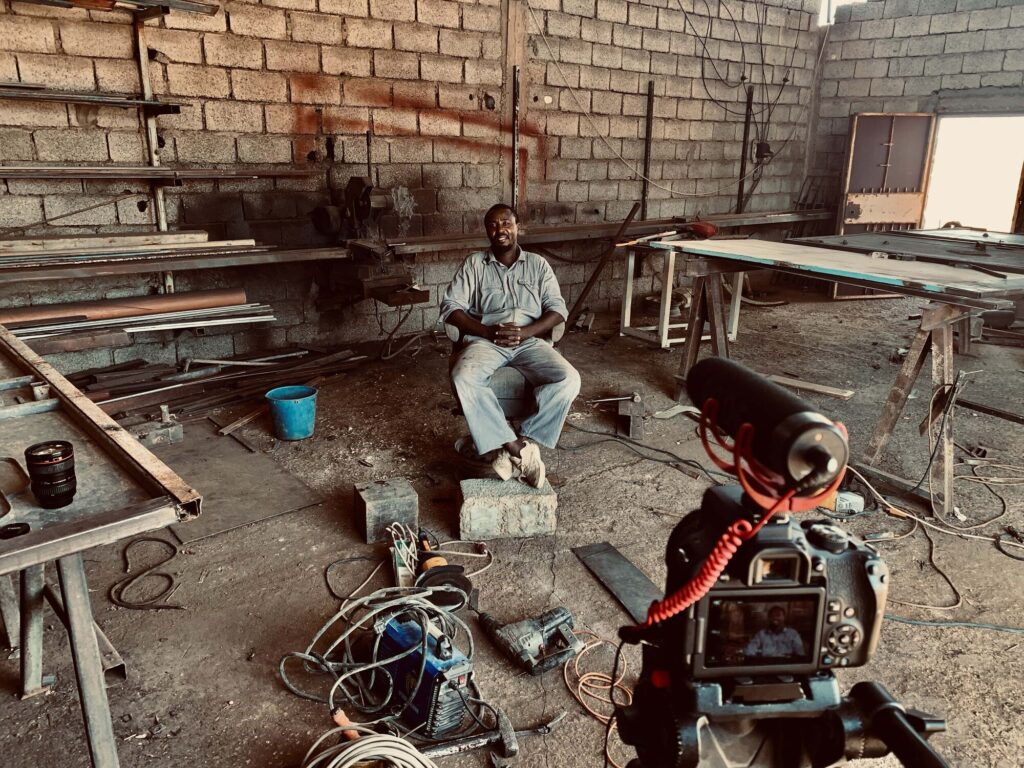
7- What are the real factors that have led to the absence of a film industry in Libya today?
We come back to the primary historical reason, which is the 20-year time gap between the last cinema screening in Libya and today. This is what caused people to drift further and further away from cinema and lose interest in film production. In addition to that, there are many other reasons, most notably the fragile infrastructure, the absence of film production companies or support funds, and the lack of theaters.
We conducted an experiment where we screened a collection of Libyan films in collaboration with the Misrata National Theater, which is a space equipped with a large screen and good technology, with a capacity of about 360 seats. We sent out invitations for free attendance, but the turnout never exceeded 100 people. This just confirms how little interest the average Libyan citizen has in films and cinema screenings.
In contrast, the first screening of Lost Rights was completely full. The reason was that we put up a large promotional banner a month before the screening, but it was very expensive and we paid for it out of our own pockets. This experience shows us that we must think seriously about rebuilding the foundational infrastructure for a film industry in Libya, from theaters to financial and media support.
8- How can documentary films contribute to changing the reality in Libya today?
The director Federico Fellini was once asked, “Why do you love making documentary films?” He replied, “There is nothing more magnificent than reality.”
Art is a mirror of society, whether it’s cinema, drama, or even folk songs. There is nothing more beautiful than expressing society through art. In cinema, when you tackle an issue with sound and image and convey real, human stories, your message reaches people faster. This is especially true when documentaries are about real people and real issues stemming from the community and the daily problems of its citizens.
When we screened Lost Rights, viewers couldn’t believe that the people in the film were real and that their stories were true events from Libya, not acting. They were shocked that the problems raised by the film actually exist in our society. This is why documentaries open the door for serious discussion about the issues facing marginalized groups — people who live among us but are neither seen nor heard.
I believe the great advantage of art is that it presents a beautiful artistic image that allows the viewer to enjoy their time, while simultaneously addressing critical human rights issues. In my film Champion, we highlighted some of the rights of people with disabilities in Libya, especially women. The film told the story of an athlete, Souad, who had to travel over 20 kilometers from her city for training and had her monthly disability benefit cut off because she got married. This caused her financial problems and stood in the way of her athletic dream. Thanks to the film, two of the many problems it highlighted were solved: a means of transportation was secured for the athlete, and her monthly benefit was reinstated.
For us filmmakers, that is the greatest achievement and the most valuable prize, when we can create change and inspire hope.

Oct 23, 2025
1
The title itself points to a paradox we see unfolding in our societies: How can we establish “alternative” cinema spaces if we haven’t first established recognized, commercial theaters that meet the standards for showing new films? The answer lies in our tendency to import terminology from the masters of cinema, the Euro-American and Asian worlds. A century ago, the narrative film was already a quarter-century old, a period in which the unique language of cinema was forged through editing experiments in the Soviet Union, Germany, America, and Japan. These experiments went beyond the self-absorption of experimental film, influenced by modernism in literature and theater. In this context, cinema clubs spread across the globe to preserve the “treasures” of the world of cinema and to discover distant voices alongside local productions.
While the landscape has become far more complex than this brief summary allows, it’s worth noting the most famous alternative screening space in our Mediterranean sphere: the French Cinémathèque. The term itself is so influential it has been adopted into English and other languages. (If we were to truly Arabize it, we might call it Al-Masnama, structured like al-Maktaba, our word for library). One of its founders, Henri Langlois, became a cultural legend in European film circles for his tireless work, beginning in the 1930s, to preserve films from every artistic movement on the planet.
In February 1968, the French Ministry of Culture issued an order dismissing Langlois from his post as director of the Cinémathèque. In response, the filmmakers of the French New Wave – who had educated themselves on the very films that Langlois had saved from oblivion by traveling the world to copy them – rose up in protest. These demonstrations would become the seed of the May 1968 revolution that swept through France, transforming its culture, labor, politics, and society.
The takeaway is this: small screenings for a handful of cinema fanatics are capable of creating societal shocks that can lead to cultural, social, and political revolutions. And since revolutions in our beloved society are often equated with civil strife, we will instead turn to our own experiences.
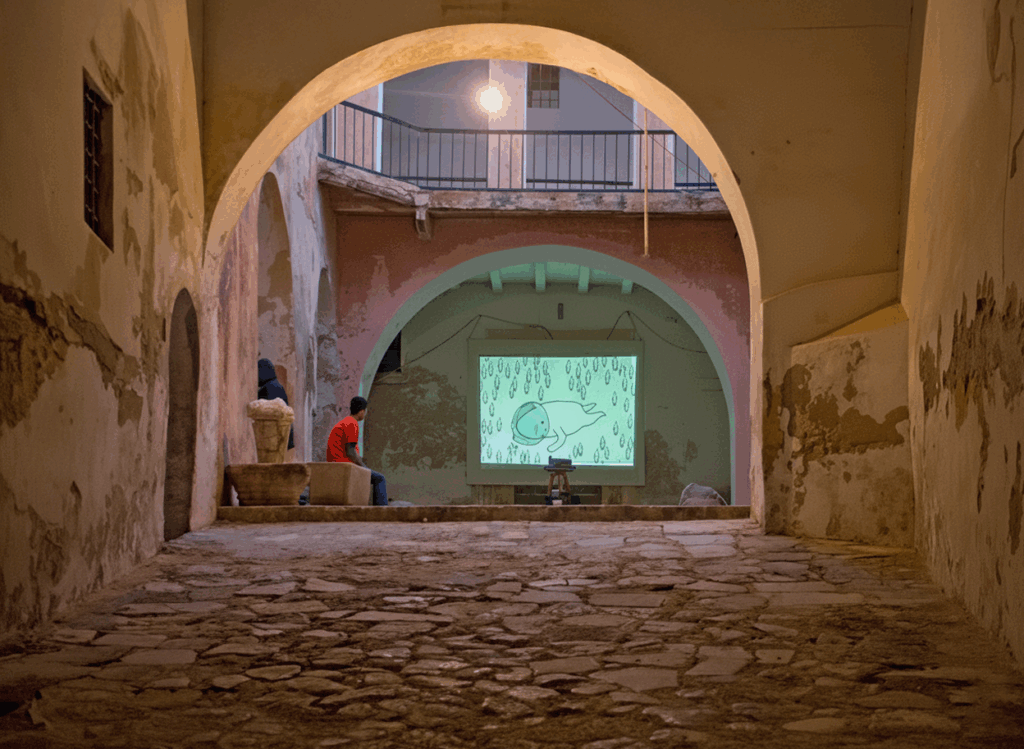
From the First Glance: Video Art Exhibit at Al-Saraya Al-Hamra, Tripoli, 2013
2
We are not concerned here with the history of film clubs and private screenings during the Kingdom, Republic, or Jamahiriya eras. While we hear of cinema clubs and cinephiles from the foundational years of Libyan cinema (1968-1972, before the establishment of the “Khayyala” organization) people who were, like fanatics elsewhere, only human after all—it is difficult to imagine these clubs having the capacity to screen what the French Cinémathèque did. Even neighboring Arab countries had a more solid cinematic foundation. Back then, films were only available on film prints, making their acquisition a heroic and painstaking task, just as it was for Langlois. Screenings were therefore dependent on the efforts of commercial distributors showing what was popular in Cairo and Beirut.
This situation changed after the 17th February revolution with the emergence of the “Arete Cinema Club”, an initiative of the “Arete Foundation for Culture and Arts.” The club began its screenings at the Dar Al-Funun (House of Arts) in Tripoli in 2012 with Asghar Farhadi’s film, A Separation. Fully aware of the cultural sensitivities of society, the club’s program booklet did not mention the film’s nationality, as Libyans have long associated any engagement with Iranian culture with the promotion of Shi’ism.
Khaled Mattawa, one of the foundation’s founders, tells me that the film’s greatest success was not just the number of attendees, but the significance of the screening itself. Screenings of films by Ingmar Bergman, for example – in the final 2014 seasons – attracted only a few of Tripoli’s cinephiles, but a small audience does not necessarily mean an empty experience. The club continued to show classics of world cinema, an achievement that Mattawa believes could be expanded by distributing program guides to film students at colleges and institutes.
That same year, 2012, the club took its screening experience to the Old City for the “Al-Lamha Al-Oula” (The First Glimpse) festival, projecting international video art onto the city’s white walls. This cultural celebration, he says, “connected the old with the new,” because the youth of the capital had not truly engaged with the world of the Old City. The experience of watching became profoundly communal.
In 2013, following the success of the first festival, a second “Al-Lamha Al-Oula” (The First Glimpse) was held, this time inside the Red Castle (Al-Saraya al-Hamra). This continued the experiment of connecting the viewer to their surroundings, as most Libyans had never entered the castle and, as Mattawa recalls, many found it difficult to get in. He added that in this edition, many of the selected works were critical of aspects of Libyan society, voiced through a collection of international art.
Immediately after that festival, I joined the club’s team to program three seasons of screenings. In this role, I experienced firsthand what I had read in the writings of critics and programmers from around the world: amidst the global dominance of Hollywood studio distribution, a deep-seated curiosity to discover the “other” through alternative cinema still possesses the conscience of societies. This alternative cinema does not have a single face; sometimes it hews close to a “traditional” narrative line, other times it rebels against it, and at other times still, it scrambles the formula entirely. Since we were in cinematic education 101, the majority of our selections at the club belonged to the first category, with a few from the second.
One of the most beautiful moments I will never forget was when a viewer approached me after a screening to ask for a copy of the film so he could watch it again. He was a student at the arts institute, and the film was Incendies, the Canadian adaptation of Wajdi Mouawad’s play about the horrors of the Lebanese Civil War and its aftermath in Canada (and, in this case, its resonance in Libya).
In the joyful summer of 2014, fear seized Tripoli’s soul before it seized its body. The cinema club’s screenings stopped without a meeting or a plan. War, after all, comes to us without a plan. We never imagined that the summer season would be our last. The Arete Foundation continues its cultural activities to this day; the cinema club alone remains suspended, a silent echo of that joyful summer.
From one of the film screenings at the Tanarout Collective, Benghazi, in 2018
3
After the catastrophe of that joyful summer, the “Tanarout Collective” was founded in 2015 upon the ruins of the ongoing war in Benghazi. I asked my friend Houssam al-Thani, one of the collective’s founders, to reflect on some aspects of their experience, which, like Arete’s, is a long story. We will focus on a few highlights that reveal both beauty and ugliness.
Houssam used to meet with his artist and writer friends – all cinephiles – at his house every week to screen films with a personal projector. It was here that one of their “elderly” friends reminded them of a cinema club in Benghazi in the 1990s that he used to frequent. And, as is the fate of Libya’s forgotten film clubs, the security services had inevitably shut it down.
Tanarout’s opening film was Timbuktu by the Mauritanian director Abderrahmane Sissako, who has worked primarily in Malian cinema. We can note a similar impulse in the openings of both Arete and Tanarout: a turn toward world cinema, not just in terms of production, but in its mood, its “humanist” themes that serve as a true introduction to alternative cinema.
Remember how Arete avoided mentioning Iran for A Separation? The Tanarout club fell into the trap of “promoting Shi’ism” when it screened an Iranian film. (Incidentally, Libya’s guardians of virtue always conflate Shi’ism with atheism, secularism, Freemasonry, Ibadi Islam, and other concepts that should never be confused, let alone blended). This marked the beginning of a societal clash with the club and its events, which spanned all areas of arts and culture.
Houssam reflects on some of the collective’s choices in dealing with these clashes. He tells me they should have decided on a path of reform instead of revolution, of maneuvering and “diplomacy” with social opposition rather than confronting it head-on. Yet, after harassment engineered by the Islamic Endowments Authority and naturally supported by the security services, the founders and directors decided to shut down the collective completely in 2020, having barely survived legal battles and the COVID-19 pandemic.
Today, there are a number of cultural institutions in Libya that have learned from these two preceding experiences and have become more timid. They walk a fine line, clinging to a delicate balance. But regular, seasonal film screenings have not been revived since Tanarout.
We noted at the beginning the desire of critics and cinephiles to archive world cinema and create a quiet space away from the monopolies of distribution and commercial theaters. In our current era, it has become easy for cinema fanatics like me to watch whatever we please from around the world, from the earliest experiments of the Lumière brothers to this year’s festival standouts. Therefore, the importance of alternative screening spaces in Libya does not lie in archiving, as it’s the mission of the “First World”, but in establishing cinematic references. It is about introducing society to the world through a lens other than massive Hollywood productions, not because they are harmful, but because they are not the only way to express this ever-evolving art form, an art that most of the world’s population has yet to truly discover. It is also about moving beyond the condescension of an elite who claim these films are not suitable for the simple viewer, only to be surprised by that same viewer every single time.
Finally, we must remember the communal essence of any screening, whether in a commercial or an alternative space. Nearly every film screening includes a post-film discussion with its makers or experts. A film’s life cycle does not end when the credits roll. In the cinema clubs we have mentioned, and those we haven’t, screenings were accompanied by discussions that connected the content of the films to social issues in the country. In addition to discussing issues that mirror our own, we engage with those that challenge them. In the end, cinema, like all arts, strives to ask questions. Otherwise, it would lose its power to create societal shocks, and we would have no need for discussion at all.