Apr 9, 2026
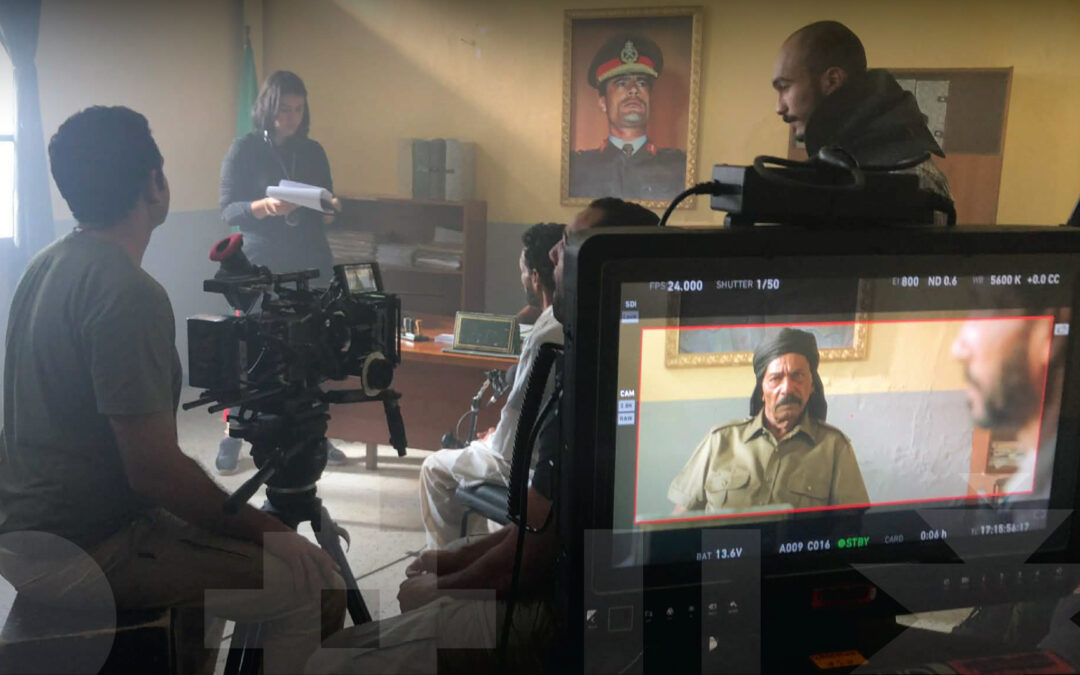
At its current juncture, Libyan cinema faces a central question: which path is better suited to express reality, documentary or fiction?
This question is not merely technical. It is deeply tied to the nature of the Libyan experience itself and the challenge of translating a complex reality into an impactful visual medium.
At first glance, the documentary seems the natural choice in an environment undergoing rapid transformations. It allows for recording the moment exactly as it unfolds, offering the filmmaker a chance to approach reality directly without numerous intermediaries. For this reason, recent years have seen a notable surge in Libyan documentaries, particularly those produced by young filmmakers with limited resources.
However, a documentary is not just a direct recording. A good film requires vision and the ability to transform reality into a cinematic experience. The greatest challenge lies in avoiding dry reportage or a direct discourse that strips the image of its power. Cinema, even in its documentary form, demands an aesthetic sensibility that allows the viewer to see reality from a fresh perspective.
On the other hand, fiction films offer a broader space for the imagination. They are not bound by literal truth but rather reshape it through characters and narratives capable of evoking deeper empathy. Cinematic storytelling allows for the exploration of complex questions without falling into the trap of direct documentation, enabling the audience to live the experience rather than merely observing it from the outside.
Yet, the path of fiction filmmaking in Libya is fraught with difficulties. Narrative production requires infrastructure, larger budgets, and specialized technical expertise. Because these elements remain scarce, many directors turn to the documentary format as the more realistic option.
Ultimately, cinema does not require a strict choice between the two. Documentary and fiction are not opposing paths but rather complementary ones. Documentaries preserve memory, while fiction gives it human depth. The former captures the event, and the latter opens the door to interpretation.
In this context, cinema cannot be viewed merely as an artistic tool or a vessel for nostalgia. It is a means of exercising the right to culture, as enshrined in Article 27 of the Universal Declaration of Human Rights, which affirms everyone’s right to participate in cultural life. Producing films that reflect Libyan reality, whether documentary or fiction, empowers the society to see its identity and visual heritage presented with dignity on screen, and to actively participate in shaping its own narrative.
Libyan cinema today stands at a testing phase. Current cinematic endeavors, despite their differences, point to a genuine desire to forge a unique visual language. Perhaps the future lies in blending the two forms, creating films that stem from reality but employ narrative storytelling tools to convey deeper meaning.
Hence, the importance of transitioning from mere nostalgia to sustainable continuity becomes clear. New filmmakers are required not only to recover the past but to document the present as the raw material for tomorrow’s memory. What we see on the screen today can become the heritage of the future if captured with awareness and a deep human sensibility. In this sense, cinema transforms into a living bridge connecting memory to the future, making the act of viewing a collective experience that reunites people around their shared stories rather than leaving it as an isolated, individual act.
The priority is not choosing a specific format, but rather developing a cinematic vision capable of remaining true to reality without losing its aesthetic dimension. When Libyan cinema succeeds in striking this balance, it will be able to construct its own distinct visual discourse. This discourse will transcend the boundaries of categorization, expressing a society caught between memory and transformation.
In this context, filmmaking is not a luxury but an essential cultural act. It creates spaces where people can gather around their shared stories, protects the collective memory from erosion and oblivion, and grants society the ability to see itself not as it is described by others, but exactly as it chooses to narrate itself.
Writer:
Muhammad Ben Saoud

Apr 2, 2026
Madghis Madi, a Libyan researcher specializing in the history of Libyan cinema, is a leading voice in excavating the country’s cinematic archives. He consistently raises fundamental questions about this archive and its role as a vital piece of Libya’s cultural memory.
In this interview, we open the file on Libyan cinema with him, exploring a past that was never adequately documented, a present struggling to take shape, and a future that relies entirely on the ability of its creators to transform individual passion into a sustainable cultural project.
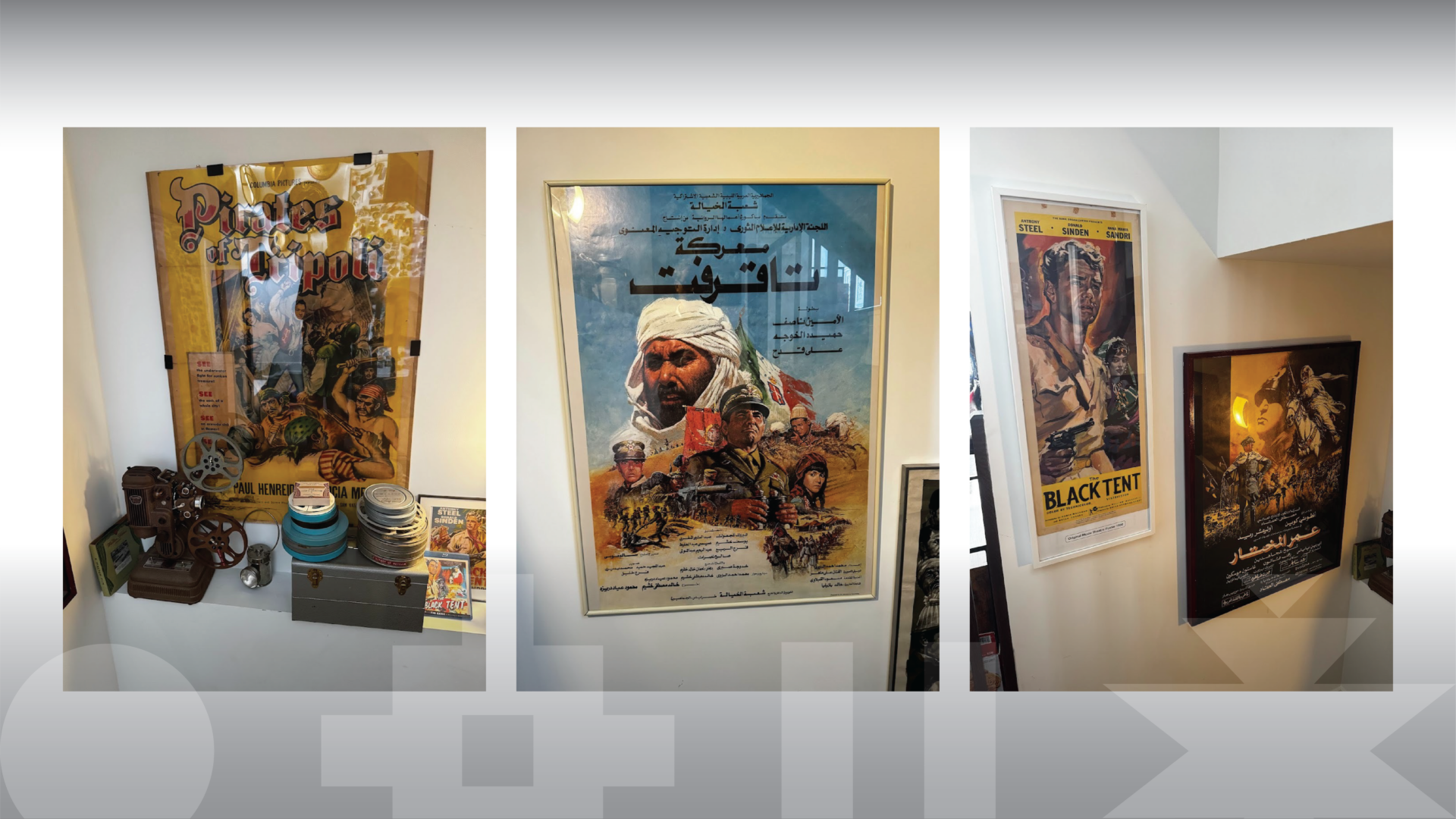
Madi holds a vast collection of movie posters. Some, like the poster for Omar Mukhtar (Lion of the Desert), stretch up to five meters long. His collection also features rare posters for local films such as The Road, The Emigrants, The Splinter, and Tagreft, alongside posters for American and Italian films shot in Libya.
Over the years, Madi has translated numerous old texts and studies related to the history of cinema in Libya. Originally published in languages like Italian and French, some of these materials date back to the very dawn of photography and filmmaking in the country. They include press articles, reports, and documents detailing cinema halls and cinematic activity during and after the Italian colonial period.
These sources remain largely inaccessible to the Arab or Libyan reader. Madi hopes a cultural institution will eventually step forward to publish these translations in a book, officially documenting the early beginnings of cinema in Libya. To him, cinema is not merely a medium for entertainment; much like football, it is a tool for communication and a way to introduce oneself, one’s culture, and one’s society to the world.
Where did your passion for researching the history of Libyan cinema begin?
The interest essentially stems from my deep fascination with everything Libyan. Anything related to Libyan culture draws me in and sparks my curiosity, and cinema is an authentic part of this cultural heritage. From this starting point, my passion for researching the history of Libyan cinema began, as I tried to trace its various paths and phases.
I also have practical experience in documentary production. I worked professionally in this field in Morocco and other countries, producing a range of audio and visual documentaries available online. These covered various aspects of Libyan culture, such as traditional foods like couscous and tea, traditional dress, folktales, and profiles of historical figures. I have also directed several audio plays.
During my studies in France, where I lived for many years, I worked in theater handling lighting and sound effects. That experience gave me a great deal of technical and artistic knowledge in the audiovisual field. As you know, I left Libya at a young age and did not return until after the February 2011 revolution, but my connection to Libya and its culture has always been present in everything I do.
Are there Libyan films that began production but stopped suddenly due to censorship or financial issues? What are these films, and what are their stories?
Yes, there are several Libyan film projects that began but never saw the light of day for various reasons, ranging from censorship to financial hurdles. Among them is The Whale Hunter, directed by Mohamed Al-Ferjani. The project dates back to 1967, but unfortunately, it was never completed.
One of the earliest films to face censorship was Revolution in the Hearts in 1970. It featured a prominent cast of Libyan actors, including Khadouja Sabri, Omran Al-Jazwi, Fatima Al-Jazwi, and Aziza Al-Azzabi. In fact, this was the final theatrical and cinematic appearance for Aziza Al-Azzabi. Omar Al-Shweirif also participated, and the film was produced by Ali Al-Haloudi.
The truth is that there are many Libyan films completely unknown to the new generation. Because of this, I try as much as possible to collect and preserve whatever is left of them, whether on film reels or video tapes. I have digitized some of these materials to save them from being lost forever, and work is ongoing to digitize more whenever the opportunity arises.
One work I desperately hope to find any trace of is considered the very first film ever produced by a Libyan. It was created by the late artist and writer Fouad Kabazi and documented the activities of the Zawiya of Al-Asmari. This film participated in film festivals and was shot by Enrico Pavello, an Italian born in the Libyan city of Zuwara. The film won several awards in Italy and was covered by the Italian press at the time.
I have also found references to films produced in the Libyan oil fields featuring artists like the late Abdul Moneim Al-Naji and the artist Cafo, who later emigrated to the Netherlands. I actually have copies of some of these tapes dating back to the late 1960s.
How did directors navigate between their desire for artistic creativity, funding pressures, and the official political direction of the country?
In Libya, unfortunately, supporting creators was rarely a priority for officials, even though creativity requires a nurturing environment to thrive. Most creators worked with highly limited resources, trying to strike a balance between their artistic ambitions and the constraints imposed on them, whether financial or ideological.
There is another equally important issue, which is the preservation of Libyan cinematic and cultural heritage. These works do not belong to specific individuals; they are part of the Libyan society’s memory and the rights of future generations. Therefore, preserving and documenting them scientifically and systematically is absolutely essential.
You keep a large number of Libyan movie posters and tickets. What makes them so special?
As part of my interest in archiving Libyan heritage, I keep a large number of cinematic posters, mostly for films screened in Libya during different historical periods. To my knowledge, I might possess one of the largest private collections of posters, photos, and publications related to Libyan cinema.
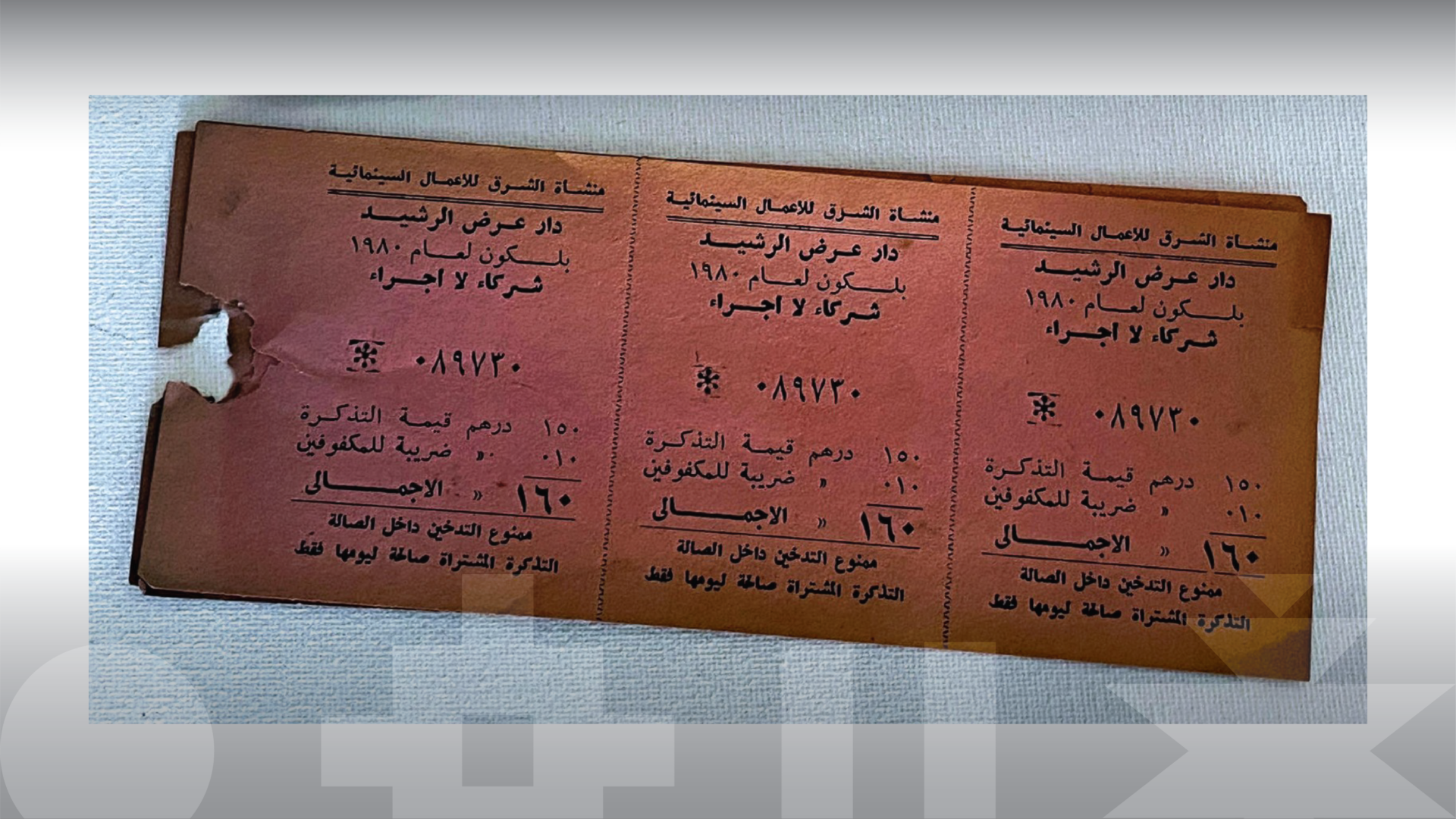
The collection ranges from massive posters, some reaching five meters in length like the one for Omar Mukhtar, to rare posters for local films such as The Road, The Emigrants, The Splinter, and Tagreft. The collection also includes posters for American and Italian films shot in or about Libya, along with a vast array of photos and tickets from cinemas across different eras.
I showcased a portion of these materials in a documentary about the history of cinema in Libya. I also have another unpublished documentary that delves into the history of Libyan film production and the key directors who contributed to the field.
When researching this history, do you feel like you are discovering a forgotten past, or are you actively rewriting a lost visual memory?
Honestly, it feels like a combination of both. Often, I discover materials and works that feel like completely forgotten pages of our cultural history. At other times, I feel like I am trying to reconstruct a visual memory that has been lost.
For example, the film On the Road starring Youssef Al-Ghariani is a movie well worth watching within its historical context. I have the poster for it, but unfortunately, the only copy of the film belongs to a friend. I have tried repeatedly to purchase it to add to the Tawalt Foundation archive, but all my attempts have failed. The film was directed by Youssef Shaaban with a story by Ahmed Al-Dernawi.
Over the past few years, I have also translated a large number of old texts and studies about the history of cinema in Libya. Published in languages like Italian and French, some date back to the very earliest days of photography and film in the country. They include newspaper articles, reports on film shoots in Libya, and documents about cinema halls during the Italian colonial period and beyond.
I translated these materials driven by a desire to preserve this crucial part of Libyan cultural memory, as many of these sources are simply unavailable to Arab or Libyan readers. These translations remain unpublished, and I hope to find a cultural entity or academic institution willing to publish them in a booklet or a small book. In my view, these materials form a vital building block for understanding our visual history and the evolution of film production in the country.
What was the most exciting moment or document you encountered during your research that left a special impact on you?
One of the most thrilling moments for me was finding a collection of rare posters in a shop in Los Angeles. The shop owner didn’t care much about them. Among the collection were posters, photos, and brochures for the famous Italian film Shin Tebbi – What do you want, which was released in 1928.
I bought all these materials for a very low price, but for us as Libyans, they hold immense historical value because they are part of our visual history. The film itself serves as a document of Italian fascist propaganda from that era, but it was shot in Libyan locations like Tajoura, Ghadames, and the Sahara. It featured Libyan clothing and included Italian actors alongside Libyan extras.
Which Libyan film do you believe was critically wronged or did not receive the attention it deserved?
Without a doubt, The Splinter and Tagreft are among the Libyan films that did not receive the critical and media attention they deserved, despite their significant artistic and historical value.
Is the main problem with the Libyan film industry a lack of production, a lack of vision, or a lack of infrastructure?
It seems to be a combination of several factors. There is a lack of funding and infrastructure, but there is also a severe lack of good scripts. The brilliant director Osama Rizk has pointed this out; he is constantly searching for scripts and screenplays to read and potentially produce.
This is where the core problem lies: producing literary material and screenplays that stem from the Libyan reality and express the Libyan heritage with honesty and awareness.
In your opinion, what is the first step to building a real film industry in Libya?
The first step is encouraging the youth and establishing specialized cinema clubs and schools. These should not just be theoretical; they need to actively produce and direct films. Technical capabilities today are much simpler and more accessible than in the past.
It is unfortunate that state institutions sometimes spend millions on things that may not be a priority, while a fraction of those resources could easily be directed to support film production. Cinema is not just for entertainment; like football, it is a tool for communication and a way to introduce our identity, culture, and society to the world.
If asked to choose one film that represents a genuine moment in the history of Libyan cinema, which would you choose and why?
Today, there are short films produced by promising young Libyans being shown at festivals outside of Libya, and sadly, Libyans themselves have never heard of them. Therefore, I hope local festivals are established to showcase these works and encourage their creators.
I prefer not to single out one specific name because there are so many of these experiences. The issue is that many of these filmmakers do not know how to promote their work, and this is exactly where specialized cultural institutions need to step in.
Today, can artificial intelligence tools be used to revive the Libyan cinematic archive?
Artificial intelligence will undoubtedly revolutionize film production. During Ramadan this year, I directed several short episodes about scholars from North Africa without shooting a single real frame; they were produced entirely using AI technologies.
Publishing an Amazigh comic book in Libya titled “Our History” seems like a bold adventure. Was it?
Yes, I have a comic series titled Our History consisting of fourteen parts. It won first prize at the FIBDA festival in Algeria, in the presence of a large number of comic creators from around the world.
I also have cinematic experience in animation. In Morocco, I produced an animated film for Moroccan radio and television titled Tamoktit N Oumali, which means Memory of the Shadow. It is an hour-and-eighteen-minute animated feature detailing the life of King Jugurtha and his resistance against Roman colonization. It was highly praised at the time and won awards.
I have also produced several episodes for other projects that have not yet been aired, including a series called Juha’s Adventures. This was created using claymation, for which we built an entire miniature city to shoot the work.
Mar 26, 2026
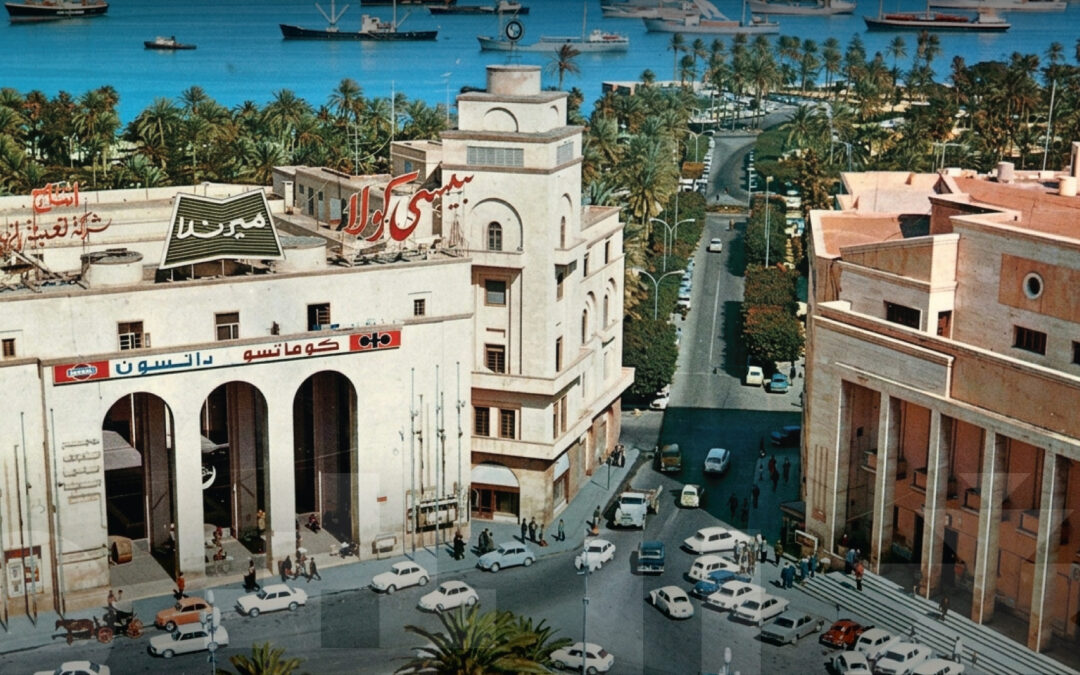
Cities in cinema do not merely appear as silent backgrounds. They often transform into main characters that participate in the creation of meaning. Streets, facades, sounds, and even the light itself all contribute to shaping the visual and psychological experience of the viewer. The camera does not just capture a location as it is. It rediscovers the space, forging a new relationship between human beings and their environment.
In global cinema, cities have played a pivotal role in defining national and cultural identity. Paris in French cinema is never just a filming location, and New York in American cinema is more than just a crowded metropolis. They have evolved into visual symbols carrying profound human and social connotations.
In the Libyan context, however, the city has largely been absent from this role despite its visual richness and its architectural and social diversity. The Libyan city rarely appears on screen as a living space. When it does, it is usually tied to stereotypical imagery: quick shots of the desert, scenes of tension, or generic public spaces that serve a broader context without focusing on the place itself.
This absence is not solely due to a lack of film production. It also stems from the absence of a cinematic vision that views the city as compelling narrative material. When a city is missing from cinema, it loses a part of its presence in the collective memory. The cinematic image is capable of granting a place an extended life, turning its everyday details into a part of the shared imagination. A viewer who sees a city on screen does not just recognize it, but rediscovers it through a new lens.
In this context, documenting the city cinematically can be viewed as part of the right to culture, as stated in Article 27 of the Universal Declaration of Human Rights, which affirms everyone’s right to participate in cultural life. Filming Libyan cities with all their daily nuances does not only add aesthetic value to a movie. It allows citizens to see themselves, their history, and their environment represented on screen, serving as a powerful form of cultural empowerment.
In Libya, there is an urgent need for films that rediscover cities from the inside. This should be done not through grandiose or showy scenes, but through the daily lives of people: the markets, the cafes, the old alleyways, and the subtle relationships that dictate the rhythm of life. It is these ordinary details that forge the identity of a place and endow a film with its human authenticity.
Global cinema has provided clear blueprints in this direction. A prime example is the work of Vittorio De Sica, who documented daily life in postwar Italian cities. In films like Bicycle Thieves, the streets of Rome transformed into a living space reflecting the struggles and intricate details of people’s lives. This approach demonstrates how art can protect visual heritage and make society an active partner in producing its cultural meaning.
The camera possesses the power to redefine our relationship with the city. A place we walk past every day without a second thought can transform on film into a space charged with meaning. Cinema does not alter geography, but it fundamentally changes our perspective of it. Therefore, filming the Libyan city is not just an aesthetic choice. It is a cultural act that restores the value of place as an integral part of our identity.
Today, with the emergence of new youth-led cinematic experiments, the signs of this shift are gradually appearing. Several short films are attempting to approach Libyan cities from a much more human angle, capturing minor details rather than sweeping, grand scenes. These attempts, though still limited, indicate a growing awareness of the power of place in cinematic storytelling.
The true future of Libyan cinema may well begin here: from rediscovering our cities through the camera. The goal is not to polish them or present a utopian image, but to tell the truth in all its complexity and beauty. Cinema is not merely a tool for artistic expression. It is a vital medium for preserving visual heritage and enhancing community participation in culture.
When the city finally becomes the hero on the screen, a new story begins, not just for the film industry, but for our everyday relationship with the spaces we inhabit.
Writer:
Muhammad Ben Saoud

Mar 19, 2026
Mohammed Al-Qasir’s entry into the world of cinema was not the result of a traditional academic path or a pre-planned career strategy. Instead, it stemmed from a simple passion that began with a camera and the hobby of photography. Over time, this passion evolved into a deeper interest in telling and documenting human stories visually, gradually placing him at the heart of the documentary filmmaking experience.
In his conversation with the Libya Film Institute, Al-Qasir explained that his relationship with the camera began as a hobby about 12 years ago, before his passion gradually shifted toward documentary filmmaking, which he formally entered around five years ago, driven by his desire to listen to people’s stories and convey them honestly.
1- How did your interest in human stories begin before entering documentary filmmaking?
This interest began years before I started working in documentary films. In 2013, I was in Egypt with a group of friends, running a page inspired by the Humans of New York project called Humans of Cairo. We would film people on the street, conduct short interviews, and then publish their stories as they were, without interference. This experience deepened my love for listening to people’s stories and conveying them truthfully. I have always believed that every person has a story worth telling, which later motivated me to pursue documentary filmmaking.
2- How do documentaries contribute to raising social awareness of humanitarian and social issues in Libya?
Documentaries play an important role in raising Libyan society’s awareness of humanitarian and social issues. They often focus on a specific topic and present it truthfully and realistically, away from acting or dramatization, which makes their impact deeper on viewers. They also help shed light on marginalized or invisible groups and open the space for societal discussion about these issues.
However, many people in Libya still view documentaries in a traditional style, similar to National Geographic films, with voiceover narration, interviews, and archival materials.
Documentaries come in various types, including the kind I am most interested in: free cinema. This style does not rely on a pre-written script or a fully detailed plan before filming. This type, in particular, can be more influential in society because it brings the audience closer to reality as it is, allowing them to experience it directly, creating deeper empathy and a more authentic understanding of the issues presented.
3- How do you choose the topics for your films? How do you determine whether a subject is suitable or appealing?
Many people have a traditional view of documentaries, but when they watch modern documentary works, they engage with them more because they contain a dramatic element, what is known as Creative Documentaries. This engagement helps change the audience’s perspective, prompting them to think about issues differently and even motivating them to take positions or initiatives.
For example, my collaborator, director Mohammed Masli, and I filmed a documentary called Champion, which highlights the story of Souad, a weightlifting champion with a disability, and her struggle to achieve her global dream. Another film, Melody of Dunes, explores human stories in a desert environment, reflecting everyday life and local experiences.
When Champion was screened in Tripoli, it had a clear impact. I was responsible for directing, cinematography, and editing. The film highlighted real problems faced by the subject, such as her daily commute between the cities of Tawergha and Misrata and her struggle with the state to reclaim her monthly allowance.
After the screening, the Social Security Fund provided weekly transportation, and the coach dedicated private time for free training. This change encouraged two other athletes from Tawergha to join her, forming the nucleus of a women’s team of people with disabilities preparing for local and international competitions.
This demonstrates the power of documentary films—they do not require acting or artificial plotlines because the story is real, and the person we see is the one actually experiencing these hardships. This is the core of their importance in raising awareness: they reflect reality without distortion and give a voice to the voiceless.
As for choosing topics, ideas often come spontaneously. For instance, the film Mountain Friends came about because one of my friends was part of that environment, and I was close to the experience.
In other words, the environment and society you live in greatly influence your choices. Ideas emerge from your surroundings, friends, and daily experiences. Being close to these stories gives them greater authenticity, which in turn reflects in their impact on the audience.
4- What are the main challenges facing Libyan filmmakers today?
The challenges are large and complex. The first problem is the lack of screening venues. In Egypt, for example, there are festivals and independent cinemas that allow young directors to show their work, even if the budgets are limited. There is an audience ready to watch these films, giving creators the chance to gain experience and reach viewers.
In Libya, the situation is different. There are no cinemas, and most films are shown via social media. This disadvantages the film because it loses the communal viewing experience that cinema provides.
5- And what about funding? Do Libyan filmmakers receive adequate support?
Funding is a major challenge. External support exists but is limited and comes with strict conditions. Even if you receive a large amount, such as $50,000, there is no guarantee you can produce the film as planned. There have been previous experiences where we submitted projects to foreign institutions and either received no response or were rejected without clear reasons. Sometimes, the reason is political, organizational, or due to the funding entities’ concerns about the country’s political and social stability.
6- How does the political and economic situation affect cinema in Libya?
Cinema is not just art; it is linked to political, economic, and social conditions. The absence of funding, few screening venues, and the monopoly of some producers over TV screens, especially during Ramadan, make it difficult to develop a true cinematic scene. TV seasons are limited, with only four or five series broadcast each year, preventing the emergence of new voices or independent projects. Even producing a short or music film comes with high costs, and there is no sufficient local support to realize it.
7- Are there solutions or proposals to overcome these obstacles?
Solutions exist but require time and planning. There must be political and economic stability, the opening of independent screening venues, direct financial support for young directors, and the development of a television scene that allows production diversity. Without these, Libyan directors remain constrained and often have to present their work on social media, where the film does not receive full viewing or communal interaction.
Despite all difficulties, I believe that producers, cinema enthusiasts, and directors must continue. Continuing production is what drives the cycle and allows everyone to participate.
8- Even if this is not your original field, how do you maintain motivation to continue?
My motivation comes from the stories themselves. In every corner of Libya, there is life and characters waiting to be told, and every film is a window into a reality that has never been seen before. For me, filming is not just about capturing images; it is about creating a space for people to have their voices heard and for viewers to experience their moments with them.

Mar 12, 2026
1
I have often hesitated to publish selections from my memoirs on this blog. Perhaps I feared confronting the memories that shaped my identity as a filmmaker in an environment that views cinema only as a luxury or a waste of time. I discovered early on that cinema in our country is not a luxury. In my view, it is an urgent human need. It is the mirror in which we see both our flaws and our beauty, and it is the most powerful tool for educating people about their rights.
My decision to enter the world of cinema was not just a career choice. It was an early confrontation with a social system that glorifies the colleges of medicine and engineering. I remember that critical moment vividly when I was trying to choose my university major. As soon as news spread of my desire to study cinema, specifically directing and screenwriting, my family went on high alert. Some relatives even visited our home specifically to try and stop me, as if I were about to destroy my future with my own hands.
Yet, despite the pressure I felt, I remember a single response from my late father that settled everything and silenced those present. He said with a confident tone, “I will not interfere in your choice of study, but I will hold you accountable only if you fail.” His words gave me the right and sufficient support to pursue my passion without fear of the reactions around me. He placed me in a challenge with myself to prove to everyone that my choice was not an act of recklessness.
2
My true perspective on films was not formed inside lecture halls or cinemas, which were mostly unavailable. Instead, it was born behind a counter at a film store on Gamal Abdel Nasser Street in Tripoli. There, in 2010, I had a priceless opportunity: the right to watch hundreds of titles for free. Amidst that passion, my father strengthened his support with an unforgettable gesture. He bought me my first professional camera in secret, without my mother’s knowledge, to be the first tool of my dream and the primary motivation to study cinema academically.
I entered The Advanced Institute of Art Techniques in Tripoli with big dreams and a desire to learn everything about the industry. However, I was struck by the reality of weak curricula that failed to keep pace with the development of the field. The focus was excessively on outdated theoretical methods. Despite this, there were bright moments. I remember our immersion in Italian Neorealism, which touched me with its honesty, and the enchanting worlds of director Federico Fellini.
Even with the overall poor teaching standards, I cannot forget the professor of the Viewing and Analysis course. Although his teaching abilities were modest, his absolute love for the cinema of Alfred Hitchcock was my only benefit. He would simply turn off the lights, screen the films in total silence, and leave the hall until the screening ended. He would then return and say, “You may leave, the lesson is over.” This gave us an instinctive ability to analyze the language of suspense without formal instruction.
I was one of the lucky ones. In the period following the revolution, specifically between 2012 and 2014, I received intensive training with international institutions, most notably the Scottish Documentary Institute. This experience sharpened my tools before the security situation collapsed following the “Operation Libya’s Dawn” events. Opportunities stopped, and international training disappeared completely. Searching for any new horizon for self-development required traveling abroad.
The biggest shock came after graduating in 2015 when I faced a job market that did not recognize the title of filmmaker. I was forced to work hard personally to stay in the field. Because independent filmmaking did not generate an income, I spent my years working as a photojournalist with local and international agencies, a photographer for events, and in television programs and channels to ensure a source of income. This work was merely a means of professional survival for me until the moment of real transformation arrived.
3
This transformation happened during the COVID-19 pandemic. I was part of a group of creators and activists in a voluntary movement to face the crisis. During our activity, the idea arose to cooperate with an institution to produce awareness films. However, we were surprised to find during our search that there was no non-profit organization in Libya at that time dedicated exclusively to cinema and filmmaking operating from within the country.
From this institutional vacuum and out of the heart of field work, the idea for the Libya Film Institute (LFI) was born in 2021 as an independent initiative to bridge this gap. We wanted to create a specialized environment that the country lacked. We began by organizing film screenings and workshops and producing films that touch our reality, believing that cinema is the mirror that reflects our identity and makes our voices heard.
Today, despite everything, I find myself facing a new chapter. Since moving to the Netherlands two years ago, I felt as if everything I had started had returned to square one. The competition here is much higher, and the challenges are completely different. However, I hope to develop my skills and benefit from the expertise available here.
My ambition is not to stay away, but to return to Libya one day, carrying more tools and greater professionalism to make better films that are worthy of our stories and contribute to building a collective consciousness that rejects marginalization. My sense of responsibility toward my country and toward the effort we started at LFI is stronger than any feeling of exile.
May God have mercy on my father, because of him, this journey began, and it continues wherever I am.
Mar 5, 2026
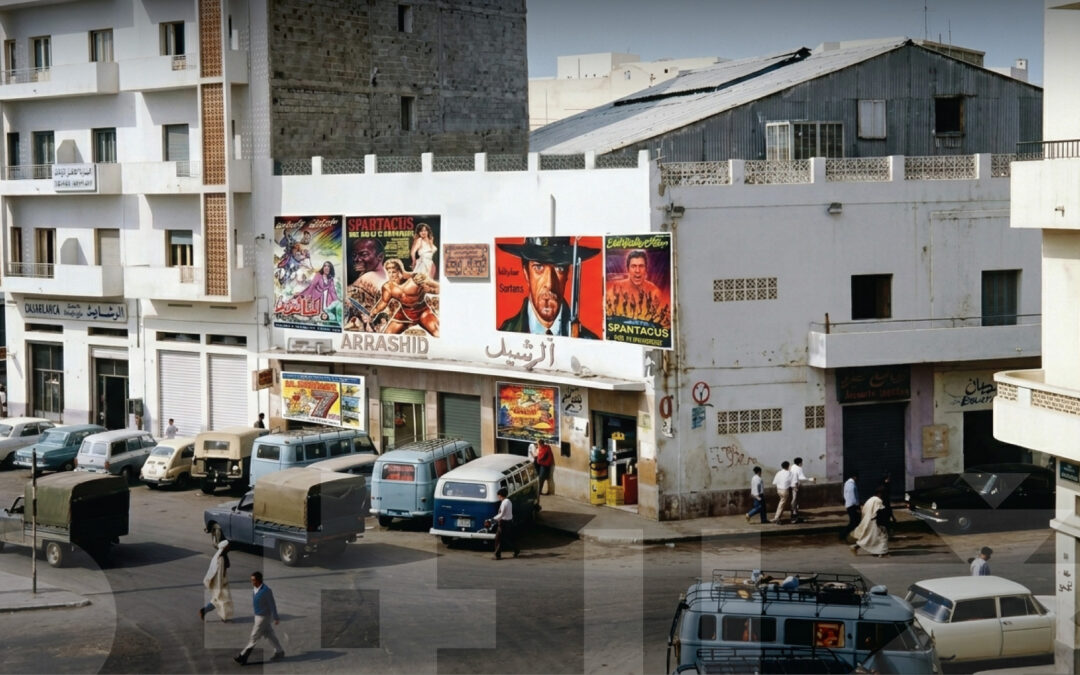
In the heart of Tripoli, Libya, where the lights would dim to signal the start of a show and silence would descend upon an audience facing a large screen open to the world, a visual memory was formed for generations of Libyans throughout the last century, through American, Indian, Italian, and Arab films.
Today, Cinema Al-Rashid returns as a name echoing in the city’s collective memory. It was a building that witnessed Tripoli’s transformations, its shifting artistic and cultural tastes, and the fleeting conversations held outside the theater about influential actors and scenes. It transformed the cinema from a mere venue for amusement into a vibrant social and cultural space of knowledge.
The story of Cinema Al-Rashid built on the 9th of August Square, later renamed Al-Suwayhli Square is not an isolated case. Cinema in Libya has undergone drastic shifts, from changes in the institutions managing theaters to nationalization, eventually leading Libya from a pioneering cinematic nation to one of total closure. Cinema Al-Rashid was demolished in April 2021.
Film critic Ramadan Salim explains that one reason for Al-Rashid’s fame was its prime geographical location in the heart of Tripoli, alongside ticket prices that were affordable for a wide segment of the public. “It was a modest theater with no windows, a roof made of corrugated metal sheets (zinco), and fans that ran constantly but were weak and ineffective,” Salim recalls. “Yet, even with its dim lighting and dirty walls, the theater saw a huge turnout. It was almost the sole outlet for weekly entertainment and pleasure.”
He adds: “In this theater, I watched black-and-white Arab films that were repeated due to popular demand films starring Ismail Yassin, Farid al-Atrash, Anwar Wagdi, Umm Kulthum, Farid Shawqi, Mohamed Abdel Wahab, and others. I still clearly remember the first film I watched, Afritat Ismail Yassin. Perhaps it stuck in my memory because it contained simple special effects that seemed strange to us at the time, especially the way the genie—played by the dancer Kitty would appear.”
When personal memory intertwines with collective memory, the cinema transforms from a public building into a private space of first experiences and wonder. Ramadan Salim notes: “I remember well that the reason I entered Cinema Al-Rashid for the first time was my uncle’s desire for me to accompany him, as he was a weekly regular. Without that, it would have been difficult to convince my family to agree to this step, even though it was considered simple and normal at the time. After that, going to the cinema became a weekly habit. On its screen, I watched many films, including Ismail Yassin in the Army, Ismail Yasin Police Harby, Ismail Yassin in the Wax Museum, and Ismail Yassin Malek Al Betrol. I watched Farid al-Atrash’s musical films like Immortal Song (Lahn al-Khuloud), films by Abdel Halim Hafez, and Umm Kulthum’s movies like A Kiss in the Desert, Fatima, and Salama. I also saw Mohamed Abdel Wahab’s films, such as Forbidden Love, which was presented in a poor copy I believe due to repeated screenings, and perhaps because we were viewed as a third-class audience.
Summer and Winter Cinemas
Cinema houses in Libya were not merely silent buildings; they were standing appointments with knowledge and wonder. On those seats, in darkened halls, the audience of art and literature learned how a film strip could open a window into the details of other peoples’ lives and cultures.
Even with the absence of precise official documentation regarding the construction date of Cinema Al-Rashid, limited available sources suggest it was likely built in the mid-1950s. This was a period when the capital, Tripoli, was catching its breath after World War II and preparing for a new phase of stability and reconstruction during the era of Governor Italo Balbo.
Until February 5, 1959, Cinema Al-Rashid was known as Cinema “A.B.A.”
During that era, the cinematic activity in the city was dominated by the Al-Nasr Company, owned by Palestinian businessman Khalil Al-Jaouni. The company owned several prominent theaters, including Cinema Al-Nasr in Souq Al-Turk (known as the Politeama Theater before 1943), Cinema Al-Rashid, Cinema Al-Cursal (opened on July 17, 1958), and Cinema “A.B.T.”
Tripoli’s cinemas were divided into winter and summer venues. Among the winter theaters was Cinema Al-Hamra, which reopened after renovations in a two-story building on November 18, 1950. The list also included Cinema Al-Nasr, established in 1943 in Souq Al-Turk, and Cinema Al-Ghazala, known as Union after its new building opened on September 27, 1947, before being renamed Adriano in April 1951, and later acquired by the Libya Cinema Company in early 1954.
Winter cinemas also included Cinema Lux on Amr Ibn Al-Aas Street, Cinema Al-Rashid in 9th of August Square, and Cinemas Lapi and Gabi on Al-Sarim Street, both owned by the Italian Liverani. Additionally, there was Cinema Waddan on Adrian Pelt Street, Cinema Metropole on Kuwait Street, and Cinema Odeon on Al-Magharba Street (formerly Ricardo Street). The Odeon opened on January 29, 1947, in a two-story building with about 800 seats (later known as Al-Zahra); it featured a theater stage, a café, and a dance hall, and was the first cinema to use a gold curtain.
The list further included Cinema Royal on Mizda Street, Cinema “A.B.T” on Haiti Street, and Cinema Al-Cursal in the Dhahra Al-Kabira area.
As for the summer cinemas, the most prominent were Arena Giardino on Hassouna Pasha Street, Cinema “A.B.A” in 9th of August Square, Cinema Al-Corso on Beirut Street, Cinema Rivoli on Omar Al-Mukhtar Avenue, and Cinema Astra on Ibn Rushd Street.
Furthermore, the Wheelus Air Base (Al-Malaha) contained a cinema hall with a capacity of about 5,000 people. It screened a film every two days but was dedicated exclusively to the American community within the base.
Italian Films and Art Magazines
Ramadan Salim explains that one of the features of Al-Rashid Theater was how it announced films: a frame on the left of the entrance displayed the current film, while a frame on the right announced the coming attraction. Schedule changes were extremely rare. This also applied to the posters inside the lobby, which were hung in a disorganized manner, teasing future screenings that weren’t imminent, except during holidays.
The tickets were small, ejected by a small machine, and were not torn by hand upon purchase but rather at the door. Entry, as was customary in most theaters, was allowed at any time since screenings ran continuously. Some patrons would watch a film more than once—not just for enjoyment, but to kill time, especially in winter, when the sound of light rain on the roof could be heard, though it never drowned out the actors’ voices.
According to Salim, Cinema Al-Rashid was mentally associated with Egyptian Arab films; foreign films were rarely shown there, a change that only happened in relatively later years. However, historical Italian films had a wide audience, particularly movies featuring Hercules, Maciste, The Ten Gladiators, Ursus, and Spartacus.
He continues: “Cinema Al-Rashid in Tripoli was a meeting place for friends. This meeting might be linked to a walk through the city streets or a trip to another theater, but it usually settled on watching the film at Al-Rashid. This was due to the ease of returning home no matter how late it got, and the availability of many amenities in the nearby alleys and streets—especially kiosks selling magazines, particularly art magazines.”
Salim adds: “In later times, Cinema Al-Rashid witnessed diversity in its films, ranging from Arab comedies and musicals to dramas adapted from Arab and international novels. This had a profound impact on comparing the world of cinematic viewing with literary reading, especially novels by Ihsan Abdel Quddous, Yusuf al-Sibai, and Naguib Mahfouz that were adapted into films.
On another note, Al-Rashid screened some films that could be described as ‘orphans’ (rare classics), such as Jungle Book (1942) directed by Zoltan Korda, The Thief of Bagdad (1940), and Ali Baba and the Forty Thieves.
Films of Samira Tawfik and Leila Mourad
Leaving the cinema was an extension of another story, creating small memories that lasted long among film lovers. Salim recalls: “In the sixties, Cinema Al-Rashid did not screen American films; the offerings were mostly Arab and Italian, especially adventure films. It also dedicated significant space to musical films due to their popularity. I remember well that films of the singer Samira Tawfik were shown in this hall successively, such as A Bedu Girl in Love, A Bedu Girl in Paris, and A Bedu Girl in Rome. And I cannot forget the Leila Mourad film series, such as Leila Daughter of the Poor, Leila Daughter of the Rich, Leila Daughter of the Shore, and Leila Daughter of Schools, as well as Antar bin Shaddad in both its black-and-white and colored versions.”
He adds: “No other theater had the distinct popular character of Al-Rashid except for Cinema Al-Ghazala, located in Al-Ghazala Square, which specialized in foreign films, particularly Italian westerns. Cinema Al-Rashid was a transitional stage leading to other theaters later on, such as Cinema Al-Shaab (formerly Royal), Cinema Al-Khadra (formerly Al-Hamra), and Cinema Al-Fatah (formerly Lux), in addition to Cinema Al-Nasr, which rivaled Al-Rashid in the type of old films it screened and its location in the Old City (Souq Al-Turk).”
In Conclusion What does it mean for a cinema to be demolished? Is it merely the fall of a building? Or is it the erasure of a part of a city’s memory? Cinema Al-Rashid was more than a screen and seats; it was an entire era of social, cultural, political, economic, and artistic transformations.