Our Articles section offers behind-the-scenes insights, filmmaker interviews, cultural reflections, and updates on LFI’s programs and events. Discover how Libyan storytellers are using cinema to challenge narratives, preserve identity, and inspire change—from Tripoli to the global stage. Whether you’re a filmmaker, artist, or advocate for social justice, you’ll find stories here that inform, uplift, and connect.
Countries of Production: Canada Year of Production: 2023 Running Time: 61 minutes Genre: Documentary Written and Directed by: Sara Ben-Saud Evaluation: A must see
Stories of ancestors often revolve within the orbit of veneration, where the image of the grandfather appears polished with wisdom and sayings meant to illuminate the path and strengthen resolve, accompanied by the image of the grandmother, the weaver of tales and icon of chastity. The features of Libyan identity have long been confined to these two icons: the courage of the grandfathers sharply embodied in the image of resistance fighters against the Italian coloniser and the chastity and sacrifices of the grandmothers in the same era. Literature and theatre perpetuated these constants. Since then, every voice diverging from the principles of courage and chastity has been marginalised in youth literature. In cinema too, “preserving identity” remains a loose concept that never truly discovers the essence of identity.
On the frozen shores of a lake in Quebec, Canada, Sara Ben-Saud captures an image of a duck carving its way forward. Through another camera we see her as a child, and hear her narrating the story of her birth in the summer of 1996. She says she was born in Quebec to a Libyan-Tunisian father and a Canadian mother, raised within Canadian Christian culture without any presence of Libya or even Islamic holidays, since her father had severed ties entirely with his homeland. Thus, the film opens its path, as the “protagonist” follows the traces of absent footsteps: what it means to be being Libyan, to be Tunisian, and in a way not directly confessed to be Canadian. The latter itself is divided between French-speaking Quebec and the other nine “English” provinces, as well as the three territories where Indigenous peoples (the First Nations) form the majority in some and the minority in others.
With this Canadian complexity, Ben-Saud turns to another identity-based complexity (is there any identity not wrapped in complexities!), oscillating between Libya and Tunisia two countries once unseparated by borders, as the dust of the Sahara refused to divide its inhabitants. Here Ben-Saud touches upon one aspect of Libya’s ethnic diversity, where her Libyan grandfather married her Tunisian grandmother. The first and last points of contact are the memoirs of the grandfather, Ahmed Ben-Saud, which he left in the 1970s to his son, Sara’s father. Browsing the memoirs with her father, Sara reads a line in which her grandfather speaks of the marginalised, writing: “those to whom the author belongs.” His story, then, is the story of “those without a voice.”
Thus, the narrative identity of the film takes shape: Sara recounts a letter she wrote to her grandfather, absent in body yet present in words buried for decades. If we mentioned at the outset the veneration of ancestors, here the discovery of ancestors comes through Sara’s discovery of herself, via monologue and dialogue, affirming an old phenomenon: biography is nothing but autobiography. Nor should we forget in this context the awe of writing and its power to create a presence that cancels veneration. Writing is present in those memoirs in several languages composed by Ahmed Ben-Saud, who mastered and translated many tongues including English, Italian, French, and Spanish, in addition to Arabic texts most likely predominant which he left as a legacy to his son.
Sara travels to Tunisia to investigate (she could not visit Libya “for security reasons,” naturally). There lies the house of her grandparents and the remaining family in Tunis. There her cousin sketches a family tree, and they recall that their grandfather died a year or two before the outbreak of the 17 February uprising, having left the country in opposition. In one scene that seems to stray yet draws close to the subject, Sara accompanies a relative on a tour of her great-grandmother’s house (the protruding part of her Tunisian identity), who speaks of the importance of the “spirit of family” found in shared memories, and of the family house empty in body yet full in spirit, and what it means to her uncles and aunts “Hoshe el-Eila” in Libyan parlance.
Returning to the memoirs, Ahmed Ben-Saud portrays himself as a Don Quixote, an image from which we draw a dreamy spirit in which identity splinters only to return to a beginning that never began. Therefore, Sara says she is not merely Canadian when she spends four months in Tunisia, learning the Tunisian dialect and falling in love with a Tunisian young man. Yet this statement does not negate her Canadian-ness but enriches it, just as her grandfather’s Tunisian-ness enriched his Libyan-ness.
Of that Libya, and of that Tripoli in particular, Ahmed Ben-Saud writes of a world that vanished after 1969, when he speaks of “la dolce vita” — the sweet life — as he roamed the city’s streets, visited its bars and nightclubs, and became entangled in its politics, running four times for office only to fail each time for seemingly tribal reasons. Consequently, he was among the optimists about the coup/uprising of 1969, having lost hope in the monarchy, only to lose hope again in the republic and the Jamahiriya, and to be imprisoned in 1979 for two years. We shall return to this shortly.
Sara finally celebrates Eid al-Adha, telling her relatives it is the first time she has celebrated any Islamic holiday. Her uncles share her joy, telling her that the spirit of Eid lies in giving rather than in eating meat, though they admit that this spirit has faded, as celebrants wallow in indulgence and luxury, and they include themselves in that category.
In one of her final letters to her grandfather, she tells him that all his children have left Libya: his three sons settled in Canada and England, and his daughter in Egypt. Yet they now gather for the first time in decades in the family house in Tunis. Her aunt/the daughter brings photos and documents of her father, the amateur writer. In the film’s most powerful scene, Sara sits with her father, uncle, and aunt, hearing them speak of his dream to publish his experiences in a book, but also of his two years in prison the first time candour confronts the darkness of the past. What is easily revealed through grandchildren becomes difficult for sons and daughters who endured the torment of deprivation and absence. She perceives suppressed emotions in their voices and faces. The strength lies also in capturing this harshness without anticipation, with no prelude to the scene. Perhaps this development suggests that the story of exile in Libya remains essentially the story of the prisons of the Jamahiriya, after the prisons of the monarchy and before those of today’s rulers.
In his memoirs, Ahmed Ben-Saud writes of leaving prison in body without spirit (and Sara remembers him as an old man at the beginning of the film, when she was a child seeing him in a wheelchair, defeated and silent). Yet at the end of the narrative, he says he “raises the glass to every Don Quixote in the astute world,” acknowledging to the viewer that prison and his futile struggle do not represent him, but are part of a “sweet life” sometimes tinged with bitterness, so that its sweetness is not trivialised nor its bitterness overwhelming.
I had previously reviewed Khalid Shamis’s filmThe Colonel’s Stray Dogs about the outcomes of political repression through the living father who speaks to us directly. Khalid told me that one of his motives for producing the film lay in his attempt to draw closer to his father, and Sara expresses the same motive in her film. True, Khalid’s subject became alive and speaking, while Sara’s subject became alive through words gathered from scattered papers. Yet it is also true that both sought, and perhaps still seek, the present absentee, in all places and at all times.
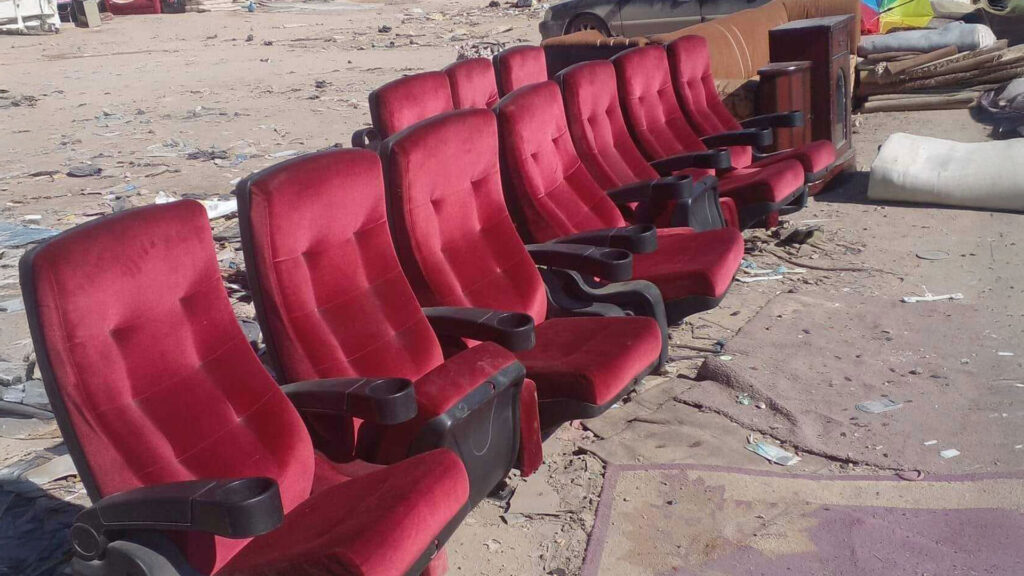
The first scene was painful and filled with sorrow. One morning in March 2023, I woke up to a Facebook post advertising the sale of seats from a cinema hall specifically, Cinema Berenice. The items were being sold at one of Benghazi’s popular markets, known as “Souq Jinaheen.”
The question immediately arose: What happened?
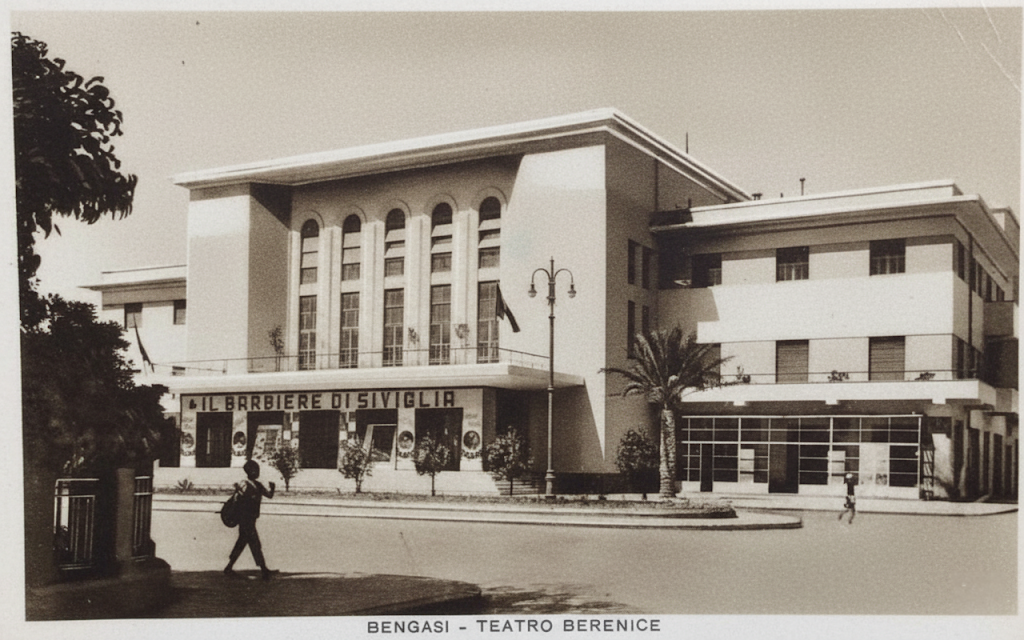
The Berenice Theater and Cinema had been demolished, bringing down the curtain on nearly a century of film screenings and concerts featuring Arab and European music.
According to Libyan historians, the Berenice stage hosted numerous Italian musical performances before parts of it were destroyed following the outbreak of World War II. It was later converted into a cinema. This same stage welcomed legendary Arab singers, including the “Star of the East” Umm Kulthum in 1969 and Warda Al-Jazairia in 1977. It also screened the iconic film The Message in 1976 and Empire of Ghawar in 1983, along with countless Egyptian, Indian, and Western cowboy films that formed a core part of the city’s cinematic memory.
What Happened?
The Berenice building suffered multiple waves of destruction and ruin. The first occurred in the 1970s, and the second in 1984, when a massive fire ravaged the structure, leaving it abandoned for years. In 2016, during the Libyan conflicts, a significant portion of it was destroyed. Finally, in March 2023, it was completely demolished.
Official authorities in Benghazi state that the decision to demolish the Berenice Theater and Cinema was part of a campaign to remove damaged buildings in the city center. Engineering reports confirmed that the structure sustained extensive damage during the 2014–2017 war, losing much of its structural integrity, which rendered it unsafe for use or restoration.
The municipality also included the building within the scope of the downtown redevelopment project, asserting that its dilapidated condition hindered reconstruction and infrastructure efforts. With no official plans or funding available for restoration or cultural investment, the decision to remove it entirely was solidified in March 2023, viewing it as a structural hazard and an obstacle to urban development.
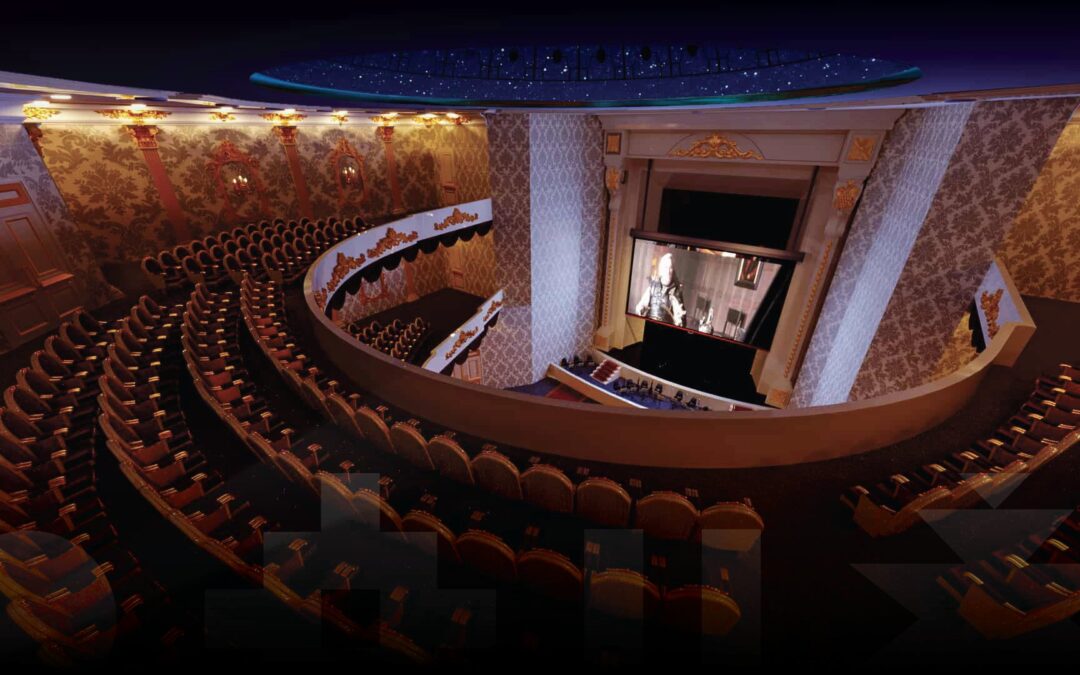
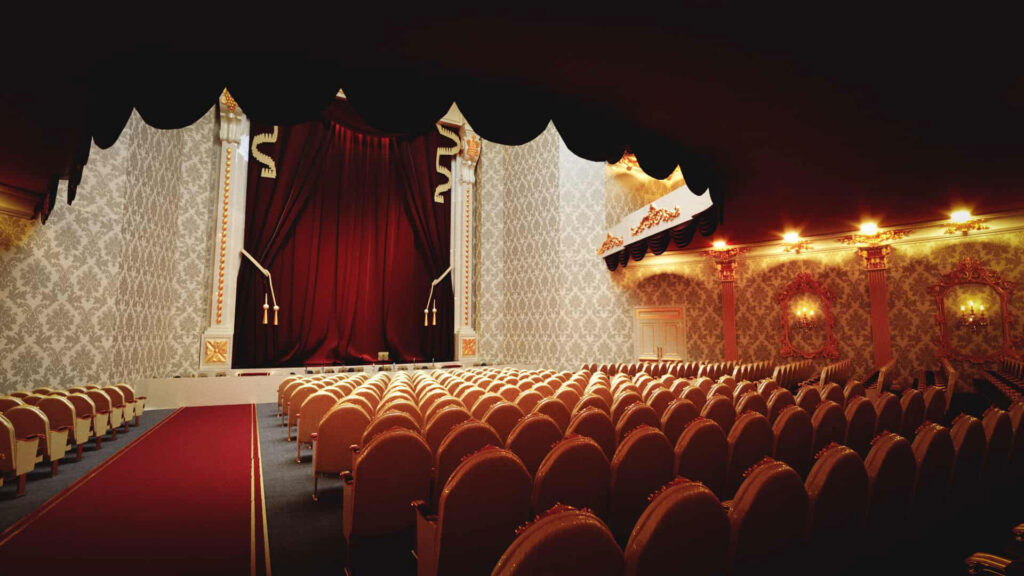
Interior shot of the Berenice Theater and Cinema; Designed by architect Saja Al-Jatlawi, and visualized by Motasim Salama
Remnants of an Ottoman Fortress
According to the book Urban Development of Benghazi: 1911–1940 by Abdul Sattar Mohamed Al-Faqih, the Berenice Cinema and Theater was one of the most significant architectural landmarks on Corso Italia Street (now Independence Street). It was a true Italian masterpiece, considered unique by the standards of the late 1920s.
The theater, later known as the Benghazi Cinema House, was located at the intersection of Rome Street (now Omar Al-Mukhtar Street) and Corso Italia. Built on a large section of the old Turkish fortress grounds, construction began in 1927, and it officially opened on October 28, 1932.
The project started with the removal of the remains of the Ottoman fortress overlooking the Public Garden and Salt Square. Governor Attilio Teruzzi commissioned architects Piacentini and Piccinato to design the detailed plans, while the Fontana company executed the construction.
Why Was It an Italian Masterpiece?
The theater featured a grand hall with 700 seats arranged in a semi-circle, sloping down toward the orchestra pit. It included two main balconies and six smaller box balconies flanking the stage.
Above the hall was a large dome that could be opened for ventilation, featuring a 68-square-meter opening. The theater was equipped with advanced electrical and mechanical systems for the time, and its floors were paved with Slovenian Rovere marble.
Together, the main hall and balconies could accommodate over 1,300 people. The stage itself covered 400 square meters, with a depth of 14 meters and a curtain height of 18 meters. Several small rooms connected to the stage were dedicated to theatrical performances.
To offset the high construction costs and secure additional revenue, a building containing luxury apartments and offices was added to the east of the theater. Another building was added to the west, featuring a café on the ground floor and luxury apartments and offices on the first floor.
The Berenice Theater and Cinema was established in 1928 and demolished in 2023
Where Are You Going This Evening?
Researcher Abd al-Salam al-Zughaibi recalls: “People loved going to the cinema. They would find out about films through daily newspapers in Benghazi, which dedicated a page titled ‘Where Are You Going This Evening?’. The halls were always packed to capacity. A worker sat at the door leading to the screening hall—known as the ‘Ticket Cutter’—who would check your ticket and tear it, giving you back half.”
He continues: “Outside, vendors would call out their wares: ‘Gaz… Gaz,’ distributing Sinalco, pineapple soda, and Portello drinks. Seeds, peanuts, ‘Seven’ gum, and ‘two cents’ chocolate were also sold outside, along with Khalifa Al-Ghariani’s sandwiches from a kiosk next to Cinema Al-Huriya.”
The Flashlight Keeper
Al-Zughaibi adds: “For us kids, we didn’t have the money to buy a ticket, or ‘Billet.’ So we had to resort to waiting for an older man and using the trick known as ‘Get me in with you, uncle’.”
“We used to seize the opportunity of Eid to go to the cinema, where they showed films like Tarzan, cowboy movies, and Charlie Chaplin films starring famous actors. Going to the cinema was usually a group activity involving two or more people; rarely did anyone go alone.
The seats were arranged according to aisles usually two or three and the chairs were fixed to the floor in rows. There was an usher carrying a flashlight whose job was to guide latecomers quietly to empty seats.”
“Spartacus Film”
Short story writer Fathi Naseeb shares his memories: “My father worked the afternoon and evening shifts at the Berenice and Rex cinemas, where he was responsible for operating the projector. Through the small openings in the projection room, I would watch him change the reels. I learned from him how to manually rethread the film, pass it through the machine’s gears, and splice it when it broke.
Berenice and Rex owned by Suleiman Al-Zunni were among the finest cinemas in Benghazi in terms of order, organization, and cleanliness, featuring padded seats and velvet curtains that opened slowly.”
Naseeb speaks of cinema-going as a widespread social habit, with halls crowded with individuals, groups, and families. He elaborates: “Among the films that influenced me as a child was Spartacus, which taught me that freedom is the most precious thing in existence. There were also the Italian neorealist films of Pasolini and Rossellini, the works of Costa-Gavras, and French cinema weeks.”
He continues: “There were many sources of cultural and literary knowledge that shaped the generation of the sixties and seventies in Libya. These included schools, sports clubs like Al-Hilal Club which hosted evenings featuring poets and writers like Talib Al-Ruwaie, Mohammed Zughbiya, Ali Al-Fazzani, Khalifa Al-Fakhri, Hussein Makhlouf, Nizar Qabbani, Abdul Wahab Al-Bayati, and others.
Then there was theater, cinema, and Libyan newspapers and magazines like Al-Haqiqa, Al-Ra’id, Al-Balagh, Reportage, Al-Basha’ir, Illustrated Libya, Cyrene, Al-Umma, and Al-Raqib, alongside the Egyptian and Lebanese press. We also had radio, television, public libraries, Arab and foreign cultural centers, mobile cinema vans, and cafés most notably Al-Aroudi, Al-Tarhuni, Souq Al-Hout cafés, Al-Ummal, Al-Riyadi, Damascus, Shams, Akram, and Tika.”
He adds: “In schools, from primary to high school, the library was an essential part of the educational process. We would borrow a book every week and be tasked with presenting a summary to the Arabic teacher. We also produced weekly wall newspapers; my colleagues and I published one called ‘Free Thought,’ handling both writing and layout, in addition to contributing to school radio.”
The seats of the Berenice Theater and Cinema being sold in a popular market after its demolition
Theater and Cinema
Naseeb points out that theater also played a crucial role by presenting Libyan masterpieces in writing and direction, alongside Arab and international works by Tawfiq Al-Hakim, Mouin Bseiso, Alfred Farag, Saadallah Wannous, Samir Sarhan, and Dürrenmatt. These were performed in Benghazi, Tripoli, Misrata, Sabratha, Derna, Al-Bayda, and Al-Marj on stages like the Popular, Modern, Arab, National, and Scout theaters.
Egyptian professors also contributed to energizing the theatrical movement, including El-Sayed Rady, Abdel Ghani Qamar, Zain El-Ashmawi, Omar El-Hariri, and Mohamed Tawfik.
He adds: “Regarding cinema, I believe it played an important role in spreading awareness and was not merely a means of entertainment. Through it, like many others, I gained knowledge of other peoples and cultures. We watched Egyptian, American, Italian, French, and Indian films, among others, with all their varying themes and techniques.”
He continues: “If we limit the discussion to Benghazi since that is where I lived my childhood and youth there were several cinema halls, including: 9 August, Al-Nahda, Al-Huriya, Berenice, Rex, Haiti, Al-Wahda, Libya, Al-Hilal, Al-Zahra, Al-Firdaws, and Al-Najma.
I also remember that all cinema halls offered free screenings on Children’s Day, and students had the right to enter any cinema for half price.”
He concludes: “Unfortunately, neglect and marginalization befell the cinemas. In the eighties, some were turned into police stations, and most were demolished in Benghazi, Tripoli, and other cities.”
In recent years, despite the absence of a real cinematic scene and significant financial and regulatory hurdles, a number of young names have emerged, attempting to carve out a space within the Libyan cinematic scene. Among them is producer and director Abdulaziz Lamlum. His journey began as a hobby during the revolution years before he moved to the UK to formally study filmmaking and digital media. He returned with practical experience that allows him to view the Libyan cinematic reality from a distinct perspective.
In this interview, Lamlum speaks candidly about his first production experience inside Libya, the lessons learned, and what young filmmakers need to establish their presence. The conversation poses a fundamental question: Is passion enough to make a film, or does the road begin with the persistence to endure the process?
1- How does Abdulaziz Lamlum introduce himself to the Libyan audience?
I am a film producer and director. It started merely as a hobby during the revolution, after which I worked in television between Libya and Egypt. When I moved to the UK, I decided not to complete my engineering degree. Instead, I pivoted to the film industry and digital media, earning my bachelor’s degree after learning every stage of production, from scriptwriting to execution.
2- What are your most notable works?
In terms of production, I produced the film The Debate (Monathara), directed by Mohamed Al-Triki and written by Siraj Al-Huwaidi. I also executed several programs for the “Waw Libya” platform. During my time in the UK, most of my work was in television advertising. Regarding cinema inside Libya, my sole production so far is The Debate.
3- What logistical or technical challenges did you face while filming in Libya?
Truthfully, I hadn’t planned to shoot a film inside Libya. However, when the opportunity and budget became available, I decided to take the risk. The core problem is that producing high-quality cinema here is incredibly difficult because it requires a large number of professionals with genuine cinematic experience.
There is a vast difference between television and cinematic production, and the Libyan market for the latter is still very small. Even the actors whether from theater or TV are unaccustomed to the cinematic workflow, which demands time, precision, and high quality.
We had to hire people who had never worked in cinema and train them from scratch; that in itself was a challenge. Even during casting, we auditioned non-actors, some of whom took on lead roles. We had to teach them how to interact with the camera in a cinematic style, something entirely foreign to them.
As for location shooting, the state still lacks a clear permit system. Sometimes we would get approval to shoot in a location, only to have it revoked later. Large filming equipment creates anxiety among the public, especially in open spaces, as they are not used to seeing cinema cameras or heavy lighting rigs outside of studios. It was a difficult experience, but a true learning curve. I hope things improve with time.
4- As a producer, how do you see the role of Libyan filmmaking in addressing humanitarian issues?
I believe the Libyan film industry is critical in this context. It humanizes complex issues that are often reduced to statistics or news headlines. When we address topics like human rights or social divisions through character-driven stories, it creates a safe space for dialogue without being confrontational or aggressive.
Cinema allows us to highlight the resilience of our people and the strength of our social fabric. It helps us process collective experiences and shared pain. It isn’t about pointing fingers; it’s about shedding light on the human condition and encouraging a deeper understanding of the societal challenges we face daily.
5- In your opinion, to what extent can Libyan cinema influence societal awareness given the political and production challenges?
Cinema is not just entertainment or art; it expresses our collective identity and preserves our cultural heritage. In our society, cinema is a potent form of “soft power” capable of shaping public opinion and bridging gaps between generations and regions. Furthermore, it enables us to present our own narrative to the world through our own lens, rather than relying on external perspectives.
Ultimately, the industry contributes to sparking necessary debates, fostering empathy, and documenting our history for future generations in a way that history books alone cannot achieve.
6- Based on your experience, what are the main problems facing a Libyan producer?
The biggest obstacle today is political interference. It directly hinders artistic work, with various entities trying to impose their own vision, making the production process complex and unstable. Furthermore, the sector lacks clear protocols: there are no fixed procedures for permits, nor a clear mechanism for importing equipment. Everything often relies on personal connections.
Additionally, the production sector in Libya is unregulated politically, economically, and technically and lacks real support from official institutions. Even media graduates struggle to find employment, as perhaps only one series or seasonal program is produced per year, which is insufficient to create a real market.
However, some young people are making efforts to create their own content without waiting for opportunities. This is promising, provided they eventually receive support and the sector becomes better organized.
7- Finally, what is your advice to young producers in Libya?
Don’t try to run before you can walk. Start with small projects where the risks are limited and use them to master the craft. Most importantly, become passionate about pre-production.
Since the film industry in Libya is in its infancy, we lack the robust infrastructure found in other countries like rental houses or clear permit regulations. This means you are forced to plan your work in the most minute detail.
You must also be realistic; the environment in Libya can be unpredictable. You need to leave a large margin for error in your calculations. If Plan A fails, you must be calm enough to immediately switch to Plan B. In our field, a producer’s creativity isn’t just in the script; it’s in finding smart, innovative logistical solutions when the unexpected happens.
Conditions may seem hard, but this is the right time to learn everything yourself. My advice is not to stop and not to wait for a ready-made market, but to forge your own path. If you can produce a film in Libya, you can produce it anywhere in the world.
Production Year: 1976
Runtime: 178 minutes
Genre: Historical / Religious / Biography
Director: Moustapha Akkad
Evaluation: Worth Watching.
It is impossible to discuss cinema with a civilizational dimension in the Arab and Islamic world without pausing at the legacy of Moustapha Akkad. He was a filmmaker who transcended local markets and identity politics, striving instead to present a universal human discourse through the language of film.
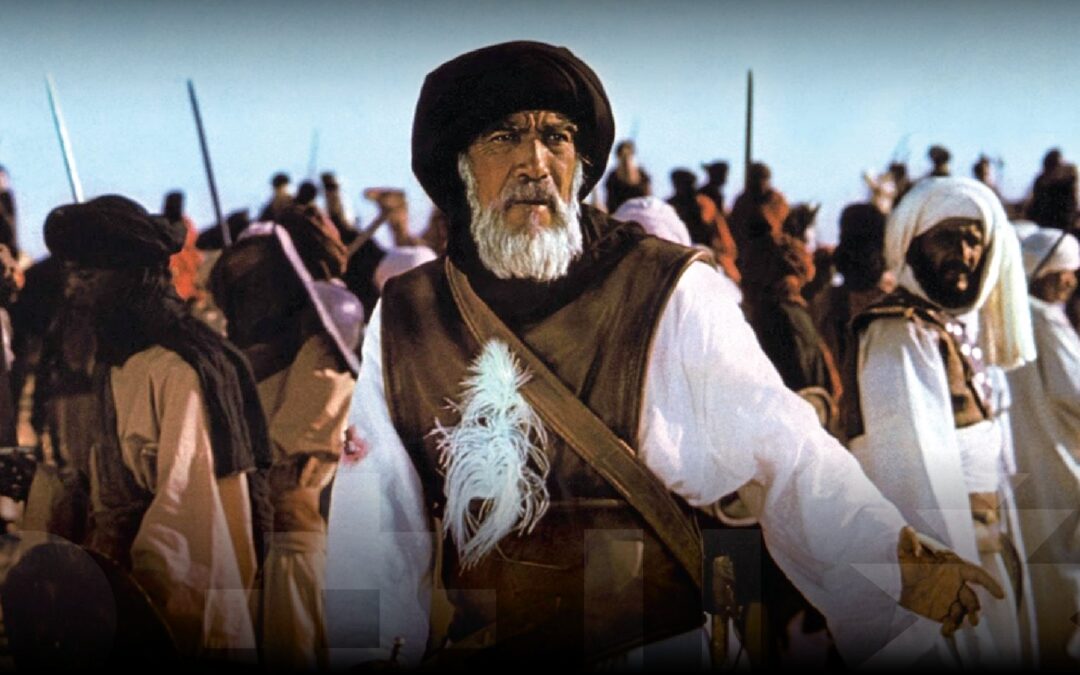
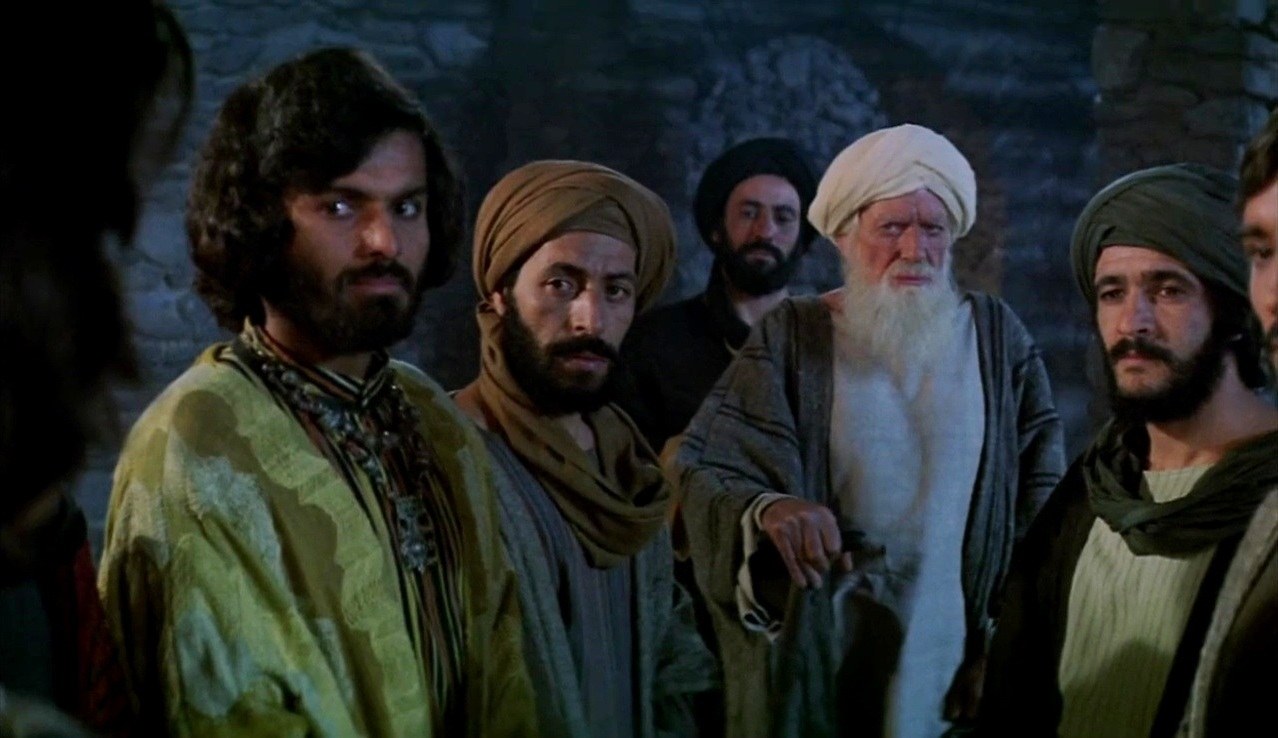
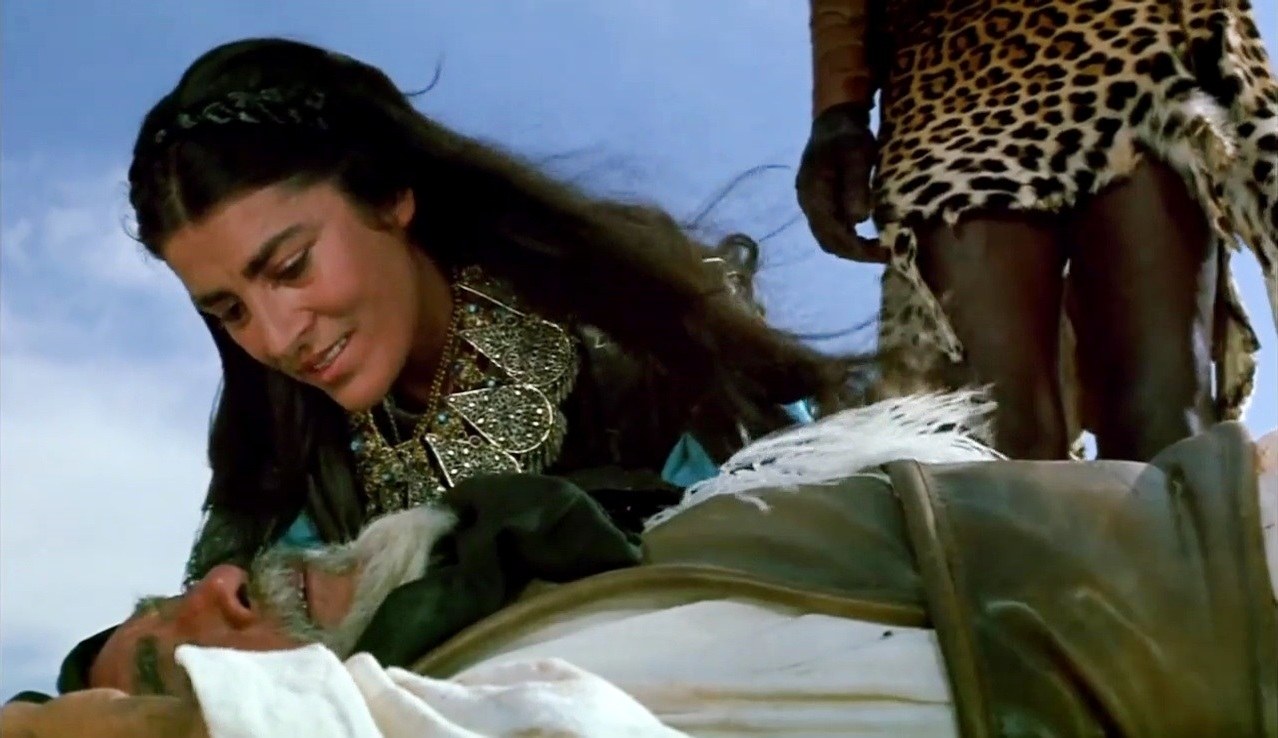
While Lion of the Desert represented the peak of artistic expression regarding national resistance, The Message remains Akkad’s most daring project. It carried immense religious weight, historical sensitivity, and presented artistic challenges that were unprecedented at the time. In The Message, Akkad sought to present Islam not merely as a historical timeline or a display of rituals, but as a universal humanitarian message, relying on a cinematic vision that respected the sanctity of the subject without compromising artistic integrity.
Between Holiness and Cinema
The film deals with the beginnings of the Islamic call, from the first revelation to the Prophet Muhammad (PBUH) until the conquest of Mecca. Crucially, it avoids any physical depiction of the Prophet, adhering to Islamic consensus and respecting the sensibilities of the Muslim audience.
This directorial choice, which some viewed as a technical restriction, was transformed by Akkad into an ingenious aesthetic solution. The camera became the “eye” of the message, the audio served as the echo of the call, and movement expressed meaning rather than personhood.
The film adopted a traditional linear narrative, tracking the evolution of the call from vulnerability to empowerment without resorting to complex time-jumps or deconstruction. While this gave the work a dignified, documentary-like quality, it admittedly slowed the pacing during certain dialogue-heavy sections, particularly in the middle of the film.
Characters and Performance
Anthony Quinn delivered a powerhouse performance as Hamza ibn Abd al-Muttalib, combining physical ruggedness with deep humanity. He portrayed Hamza not just as an epic warrior, but as a symbol of courage coupled with faith. In the Arabic version, Abdullah Gaith also gave a remarkable performance in the same role, preserving the character’s prestige and spiritual depth.
Conversely, some secondary characters—particularly in the Quraish camp—suffered from limited dramatic development, appearing more as symbolic archetypes than complex psychological beings.
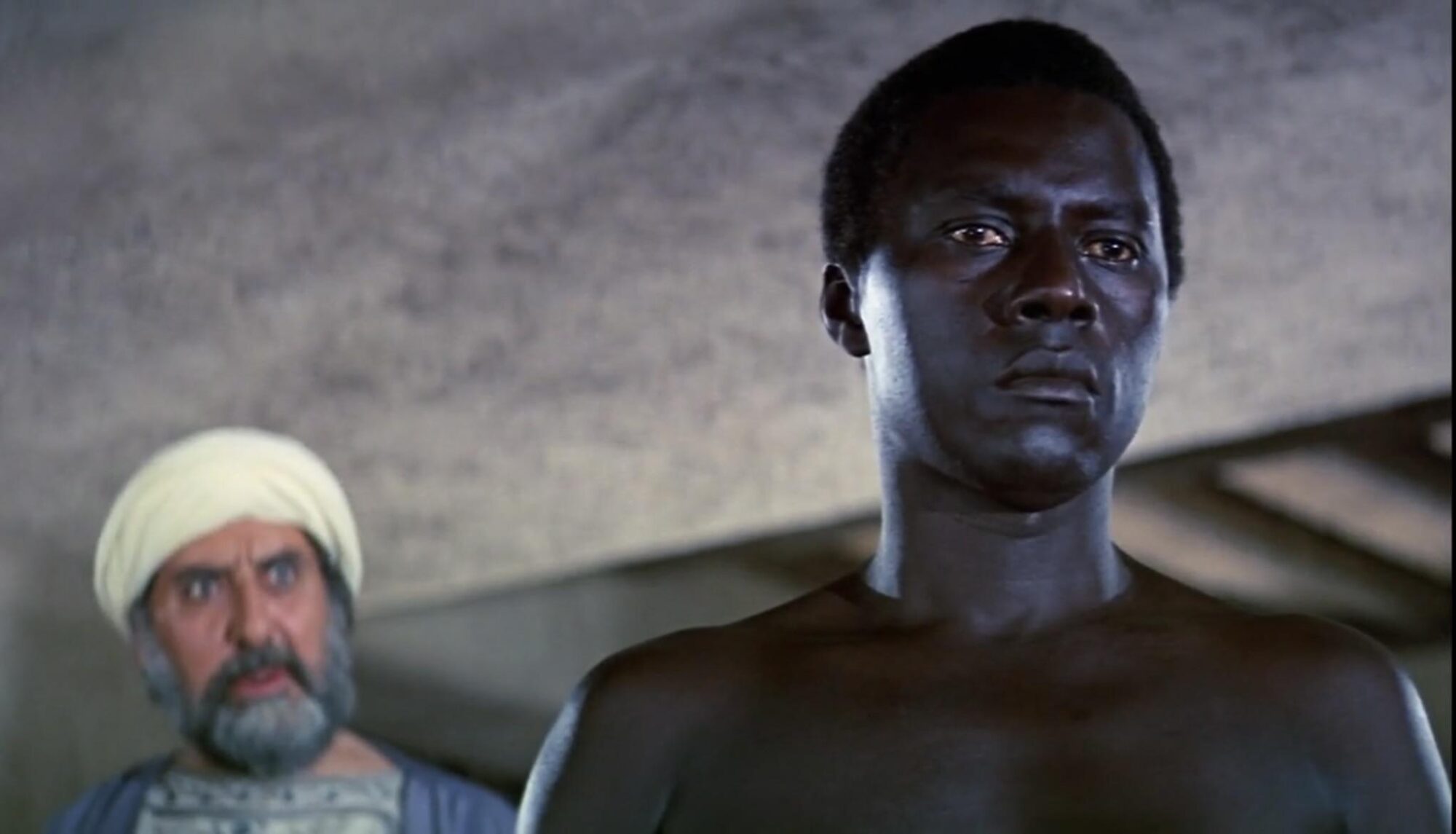
Notably, Libyan actor Ali Ahmed Salem recorded an honorable presence in the film through his portrayal of Bilal ibn Rabah. He delivered the role with profound human sincerity, showcasing the character’s suffering and steadfast adherence to principle. His performance stood as a testament to the ability of Libyan artists to integrate seamlessly into major historical works and contribute to immortalizing Islamic icons through high-caliber art.
Directorial Vision and Technical Mastery
To Akkad’s credit, he produced a religious film with world-class production standards at a time when Arab cinema lacked such technical capabilities. Filmed across Morocco and Libya, the production utilized thousands of extras to reconstruct the historical environment, granting the viewer distinct visual credibility.
Technically, the musical score was pivotal in building the film’s emotional landscape. The melodies were a blend of spiritual solemnity and historical epicness, supporting the narrative without overpowering it. The camera work was largely calm and balanced, fitting for the subject, with calculated intensity during scenes of conflict.
The artistic excellence of the film reached a global level, and its soundtrack received widespread critical acclaim during the Academy Awards season, as one of the most prominent cinematic musical works of that period.
Between Historical Accuracy and Advocacy
Since its premiere, The Message sparked wide debate—less about its historical accuracy and more about the representation of Islam in Western cinema. Akkad was meticulous in adhering to approved Islamic sources, consulting committees from Al-Azhar and other Islamic bodies to ensure the integrity of the content.
However, the film is not devoid of simplifying certain historical complexities. This simplification is understandable given the desire to address a non-specialist global audience; the film does not claim academic comprehensiveness but seeks to present the essence of the message: monotheism, justice, and human dignity.
Premiere and Reaction
Released in the mid-1970s amidst a politically and religiously tense atmosphere, the film faced bans and objections in several countries on both religious and political grounds. Despite this, it eventually received a warm reception across the Islamic world and is considered a precedent-setting step in introducing the West to Islam through the “Seventh Art.”
A Balanced Critical Reading
While The Message holds high intellectual and artistic value, it is not a flawless work. The pacing drags in certain chapters, and the dialogue is occasionally declarative and direct, serving the idea more than the drama. Furthermore, the focus on the educational aspect sometimes diluted the psychological depth of certain characters.
Yet, these observations do not diminish the film’s value; rather, they place it in its natural context. It was a foundational work that opened a door never before knocked upon, succeeding in combining the sanctity of the subject with the demands of cinematic imagery.
It must be emphasized that any artistic reading of the film does not touch the sanctity of the religious text nor the truth of the Prophetic biography, but rather addresses the cinematic work as a visual medium.
Legacy and Importance
Today, The Message is an indispensable cinematic reference for Islamic history. It has transcended its status as a mere movie to become a cultural document, broadcast during religious occasions and studied in media and film departments. Following Moustapha Akkad’s death in 2005, interest in the film was renewed as the pinnacle of his intellectual and artistic project.
Akkad succeeded in making cinema an ethical platform and the camera a tool for “soft advocacy.” The Message remains an exceptional work in the history of cinema because it did not content itself with narrating an event, but presented a value. It did not display religion as the past, but as an ethical project valid for all times.
If Akkad believed that a camera could be a message, his film proved that honest cinema is capable of being a bridge for connection, not a battleground.
In this exclusive interview, we explore the cinematic journey of Libyan director Faraj Mayouf. We discuss his beginnings, his vision for cinema in Libya, and the obstacles he has navigated to produce local films capable of competing on an international level.
1- Let’s start by congratulating you on your career. We are familiar with some of your early work, but we would love to hear from you: What were your very first experiences in filmmaking?
Thank you. My first true experience was in 2011 with a documentary titled Child Revolution (Thawrat Tifl). The film explored the role of Libyan children during the revolution and how they interacted with the events with a mixture of innocence and maturity.
After that, I transitioned into narrative fiction with the short film Memories of the Past, which marked Libya’s first participation in the Alexandria Film Festival for Mediterranean Countries in 2012. I then directed Lost Hope, which addressed the tragedy of children infected with HIV during the Gaddafi era; this film won an award at the Libya Film Festival in Tripoli. Later, I completed 205, a film telling the story of students conscripted from their schools to fight during the Libyan-Chadian war in the 1980s. My most recent work is the short film Trace.
2- Starting with documentaries shows courage in tackling sensitive issues. Was this choice driven by a specific methodology, or did the Libyan reality dictate these themes?
Reality has always inspired me. To me, cinema is not a luxury; it is a mirror of the people. The issues we lived through in Libya – children, disease, and conflict – held stories that deserved to be told on screen. Cinema was the only platform available to address these wounds, so I sought to transform our suffering into a visual narrative that awakens the conscience.
3- You mentioned your film Trace, which won an award for Best Original Score with an entirely Libyan crew. What does this say about the potential of the film industry in Libya?
The score was designed by the late Libyan sound engineer Sami Elsheikhi, may he rest in peace, who played a pivotal role in the work. But importantly, we were an all-Libyan team, from cinematography to production and editing.
The film didn’t just stay local; it participated internationally in nearly 45 events. It screened at the Annaba Mediterranean Film Festival, won the music award at the Libya International Festival in Tripoli, took second place at the Wasit Festival in Iraq, and received honorable mentions in Egypt, the US, and at the Nouakchott Festival. It also won second place at the Benghazi Film Festival and participated in the Luxor African Film Festival and the Bahrain International Festival.
This experience confirms that Libyan talent is capable. However, it requires institutional support – such as training institutes, funding funds, and local cinemas – to give the Libyan film industry true continuity.
4- How do you view the role of the State and institutions in supporting the Libyan film industry?
I believe the State must realize that cinema is part of the cultural architecture of society. There is a need to establish film institutes, provide grants for new talent, and open screening halls.
Without institutional support, passion alone is insufficient. We are currently working with self-funded efforts or minimal support, which limits our potential. Furthermore, the absence of movie theaters prevents the Libyan public from engaging with local productions. If a clear, consistent strategy were implemented over several years, we could witness a genuine renaissance in Libyan cinema.
5- Many consider 205 to be one of your greatest challenges. What difficulties did you face during its production?
205 was a massive project logistically. It required a location with specific historical details, period costumes, and set design, all of which demand a high budget. We relied on personal resources and trained a young team with limited experience.
The challenge was also in conveying the message to the audience, as the story was human rather than political. Ultimately, we succeeded in delivering the film, and I believe it stands as an example of what we can achieve even under difficult circumstances.
6- Last year saw the launch of the Libya Short Film Festival, but unfortunately, it did not return this year. What is your take on this?
It is regrettable that this happened. Festivals require continuity; they cannot be just a single edition. Without a clear multi-year plan, we cannot build a permanent platform for young filmmakers. Continuity plays a huge role in encouraging production and giving hope. I believe we need a national strategy that supports festivals so they can become a permanent pillar of Libyan cinema.
7- Today, we see a new generation of Libyan filmmakers entering Arab and international festivals. Is there a bond between you all?
Yes, there is a genuine connection among the young generation of filmmakers. We meet at various festivals and cinematic events. What unites us is a passion for cinema and a desire to build a strong industry in Libya.
8- Problems like lack of funding and cinemas are often discussed, but solutions are rarely asked for. How can civil society or intellectuals contribute to fixing this reality?
Civil society can contribute, but it cannot build a complete industry on its own. Real support must come from the State through a clear strategy and funding bodies.
By blending the efforts of national institutions, funding, cinemas, and youth training, we can build an independent and sustainable film industry. Additionally, providing grants to creatives and organizing local and smaller festivals that remain active can inject vitality back into the cinematic scene.
9- We’ve heard recently that you are preparing for a new drama series, as well as new films. What does the future hold for your work?
Yes, I have three film projects currently on hold. I am working on starting the filming of a project that was long delayed due to funding. There is also a feature film script that was written some time ago but remains stuck on paper due to the difficulty of securing production. However, I remain optimistic: if support is found, I believe these experiences will soon find life on screen.
10- Some directors switch between TV drama and cinema. Is this your choice, or do circumstances dictate this shift?
Moving between drama and cinema is often dictated by the reality of production. TV drama is sometimes easier financially and offers a faster way to connect with the local audience, whereas cinema requires greater resources and deeper effort. However, I see opportunity in both: Drama allows us to get closer to the Libyan public, while cinema allows us to deliver deeper messages and document our reality.
11- In conclusion, I would like to thank you for this open and transparent dialogue. Do you have any final words you would like to add?
Thank you for this opportunity. I would like to commend the efforts of the Libya Film Institute in providing spaces for dialogue and cinematic production. Today, we have talented directors and noteworthy experiences on both local and international levels. This gives me hope that Libyan cinema can be a true voice for our issues.
I hope that relevant authorities continue to support these talents, and that the world looks at Libyan cinema not as a supplementary participant in festivals, but as a key guest offering deep and honest narratives\
Although Libya was historically a pioneer in cinema, with origins tracing back to 1908, the past few decades have been affected by political, social, cultural, and economic volatility. These obstacles effectively stalled the art form, leading to its absence for many years.
However, in recent years, specifically since 2011, a new generation of young filmmakers has emerged. They are striving to revive cinema in a country that lacks a comprehensive infrastructure: there are no major production companies, no institutes for film or drama education, and a distinct lack of cinemas, theaters, and established local or international festivals.
Despite these odds, these creatives continue to work. They produce films at their own expense and showcase them at international documentary and narrative film festivals, often winning awards. In this report, we highlight the origins of these young filmmakers: How did their relationship with the camera begin? What difficulties do they face? And how have they used modern technology to reach a wider audience?
Director Mohamed Masli says:“The political and social shifts Libya has witnessed in the past years have created a significant gap in the cultural landscape, clearly impacting cinema. Years of ceased production have led to the loss of a ‘collective viewing culture’ among the public. With the disappearance of theater pioneers and the closure of screening halls, real cinematic production ceased to exist. When the industry disappears, so does the environment that nurtures a new generation of filmmakers. Every field requires continuity to create an incubator. As long as there is no infrastructure or a supportive cinematic and societal culture, this industry will not evolve. Consequently, the number of filmmakers remains limited, and their attempts are largely individual and independent. In reality, we are carving a path through stone, trying to establish a new foundation for this industry so that the next generation has something to build upon. We are still at step one, but we believe that the beginning, no matter how modest, is essential for the journey to continue.”
The Complexities of Film Marketing
The creator of the film Champion (Batala) notes that he has not yet released his work on social media. “I work within the framework of independent cinema,” he explains. “My goal is to market films to television channels to at least recoup the production capital, which enables me to produce new work.”
He adds, “I used social media solely to distribute the trailer, share behind-the-scenes photos, and post news about the film’s participation in regional and international festivals. To some extent, this has helped shine a light on an industry trying to make a comeback and has introduced society to issues that deserve discussion.”
According to the creator of Lost Rights (Huquq Ta’iha), one of the most difficult challenges facing the new cinema industry is funding and the absence of specialized production entities. Most companies focus on Ramadan season productions or commercials because they guarantee a quick financial return.
“For films, the marketing plan is long and complex,” he notes. “A film might tour festivals for a full year if it is a narrative, or two years if it is a documentary, before commercial marketing begins. While some documentaries are produced specifically for TV channels, every channel has its own contracting policies. Therefore, funding remains our biggest challenge. What we are doing today is mostly independent work relying on personal effort, not organized production institutions.”
Personal Experience Leading to the Camera
Director Malek Elmaghrebi launched his documentary filmmaking project through volunteer work with displaced people from Tawergha in 2011, specifically at the camp on the Airport Road in Tripoli. Being close to them and feeling their suffering, he sought a way to transmit their voices beyond the camp.
“The idea of visual documentation began to form there,” Al-Mughairbi recalls. “I later had the opportunity for practical training in filmmaking. I worked on eight documentary films within a project aimed at achieving peace, stability, and peaceful coexistence between communities. That experience was my true launchpad in this field.”
The creator of The Way Back (Tariq Al-Awda) noted that he benefited greatly from modern technology, particularly during the COVID-19 pandemic in 2020. When a planned film festival shifted to a virtual space on social media, it gave the filmmakers a chance to reach a broader audience, engaging not just with cinephiles, but with everyday viewers.
“The most beautiful moments were when the audience started asking questions about the behind-the-scenes process and the fate of the characters we featured,” he says. “This interaction reveals the true impact of documentary filmmaking and makes us feel that the story made a difference in society.”
A Hostile Local Environment
The filmmaker behind Khtawat – steps – says: “The difficulties are numerous, starting with the lack of financial support. I worked completely independently, covered all expenses from my own pocket, and traveled at my own expense. I received no support from the entities that trained me or anyone else. I feel I’ve put myself on the track, but I still need someone to stand with me to complete the journey.”
When asked if the local environment offers enough opportunities for new talent, he replies: “Unfortunately, opportunities in our society are extremely limited and confined to a specific class that holds power and money. The controlling elite is content with a limited number of known names and often treats any newcomer as a competitor that must be ‘stopped.’ This makes work difficult, especially for those trying to start from zero.”
He adds, “I tried applying for grants outside Libya after failing to find local support, but that wasn’t easy either. There is a lack of trust in Libyan creatives, almost as if Libya is not a priority for international film institutions. I reached advanced stages in grant applications only to be rejected in the end under the pretext that ‘other stories were better.’ This recurring rejection makes the next attempt psychologically harder. I believe my story needs to be told now, because delaying it means it might never be told. That is what gives me the drive to continue despite the difficulties.”
A Challenging Landscape
Director Osama Al-Fitori points out that more than a decade after Libya’s changes, the cinematic and media scene is still suffering from the aftershocks of political and social transformation. Long years of interruption have eroded the culture of collective viewing. He explains that he doesn’t actively follow films (narrative or documentary) produced in Libya, making it hard for him to objectively judge their quality.
“Most filmmaking attempts in Libya tend to focus on technical aspects like cameras, lighting, and makeup, while neglecting the essence of the film: the story and how to connect with the audience,” Al-Fitouri observes. He emphasizes that good preparation requires a long time for research and gathering material, whereas filming and editing represent the shorter part of the process.
Al-Fitouri describes the filmmaking and media environment in Libya as “extremely difficult,” especially for those coming from abroad. The lack of acceptance of criticism, political division, and security fluctuations between the East and West make fieldwork fraught with risk. This is compounded by bureaucratic complexities; photographers need multiple permits for airports, cameras, and locations. Furthermore, journalists and directors face widespread hesitation from the public regarding sharing information or speaking on camera, necessitating the building of strong trust and relationships before work can begin.
He notes that while the post-2011 media landscape saw unprecedented openness in freedom of expression, breaking the “One Channel” era and allowing for independent channels and production companies, the subsequent security and political regression weakened this continuity, returning the scene to a state of caution and hesitation.
Technology as a New Tool of Expression
The creator of The Deminer of Benghazi believes technology plays a major role in reshaping the media landscape. With smartphones, filming and production capabilities have become accessible to everyone at a low cost.
He adds: “This shift represents a new form of filmmaking. Phones allowed individuals to tell their stories freely during the Arab Spring events; indeed, some of the most powerful images shown on global channels were shot by ordinary citizens. Today, any young person can start their career with simple equipment and editing software available on the phone itself. The biggest challenge remains the nurturing environment, not the tools.”
Meanwhile, the filmmaker behind Was the NATO intervention in Libya a mistake? mentions that his work today is more journalistic than artistic. He benefits from being outside Libya, as his work is showcased on global platforms. However, he admits to a fear of conducting critical or investigative work inside the country, dreading political or security repercussions.
A New Cinematic Consciousness
Director Muhannad Lamin champions the camera and the image, which have always been part of his family memory. “My father was passionate about photography and drawing, trained with the cartoonist Mohamed Al-Zawawi, and worked at Al-Amal magazine before dedicating himself to engineering,” Lamin recalls. “In my childhood, the camera was always present at home, documenting small family moments. Through it, I began to understand that an image is not just a souvenir, but a way to see the world differently.”
Lamin continues: “Over time, the camera turned into my means of understanding reality and expressing things I couldn’t say with words. It is a tool for research, for questioning, and for reconstructing personal and collective memory. For me, the image is an honest space between what is real and what is internal, between what I see and what I feel.”
When asked if these new cinematic experiences can be considered the start of a Libyan film industry or merely individual attempts, he says: “I believe it is the beginning of an industry, even if it looks like scattered individual attempts right now. Every industry goes through a phase like this, where early experiences are built on the passion of people working despite the lack of infrastructure or support. What is happening in Libya today is a slow but real birth of a new cinematic consciousness; a generation trying to tell its stories with simple means but with an honest and conscious vision.”
He adds, “Beginnings don’t have to be perfect or fast. What matters is that they continue, that the habit is created, and that the dream turns into consistent practice. With time, these attempts will turn into a foundation, from which an actual industry can form.”
Cinema is Not a Luxury
The creator of the film Donga believes the biggest challenge facing filmmakers in Libya is the absence of cinematic infrastructure, no production institutions, no funding bodies, and not even theaters to connect with an audience. Every project is an independent adventure relying on personal effort and the support of friends and partners who believe in the idea.
“The difficulty isn’t just funding,” he continues. “It extends to the absence of an environment that respects artistic work as a career path and understands it. Sometimes the biggest challenge is convincing people that cinema is not a luxury, but a means for understanding, documenting, and expressing reality in a deeper way.”
The filmmaker behind The Prisoner and the Jailernotes that after 2011, a new window for expression opened, and many began to see cinema as a tool to document and analyze their surroundings. However, a collective suspicion of the camera also emerged. “Its presence in the street became associated with ideological press or social media, creating a kind of fear toward it, as if it were a tool for surveillance rather than expression.”
He concludes: “This suspicion coincided with a general climate of rejection toward culture and art. Yet, a new generation of directors and photographers has appeared, trying to overcome this fear and carve out a free space within the chaos. I think this paradox between openness and fear, between the desire to express and the dread of it, is what has shaped the new cinematic consciousness in Libya. It has made cinema, for us, not just an art, but a necessity.”
In conclusion, we believe that these individual attempts are but the first step toward reclaiming the cinematic scene from its long absence. This step will be followed by others that will tell our stories as they are, with all their transformations, conflicts, and big dreams.