At its current juncture, Libyan cinema faces a central question: which path is better suited to express reality, documentary or fiction?
This question is not merely technical. It is deeply tied to the nature of the Libyan experience itself and the challenge of translating a complex reality into an impactful visual medium.
At first glance, the documentary seems the natural choice in an environment undergoing rapid transformations. It allows for recording the moment exactly as it unfolds, offering the filmmaker a chance to approach reality directly without numerous intermediaries. For this reason, recent years have seen a notable surge in Libyan documentaries, particularly those produced by young filmmakers with limited resources.
However, a documentary is not just a direct recording. A good film requires vision and the ability to transform reality into a cinematic experience. The greatest challenge lies in avoiding dry reportage or a direct discourse that strips the image of its power. Cinema, even in its documentary form, demands an aesthetic sensibility that allows the viewer to see reality from a fresh perspective.
On the other hand, fiction films offer a broader space for the imagination. They are not bound by literal truth but rather reshape it through characters and narratives capable of evoking deeper empathy. Cinematic storytelling allows for the exploration of complex questions without falling into the trap of direct documentation, enabling the audience to live the experience rather than merely observing it from the outside.
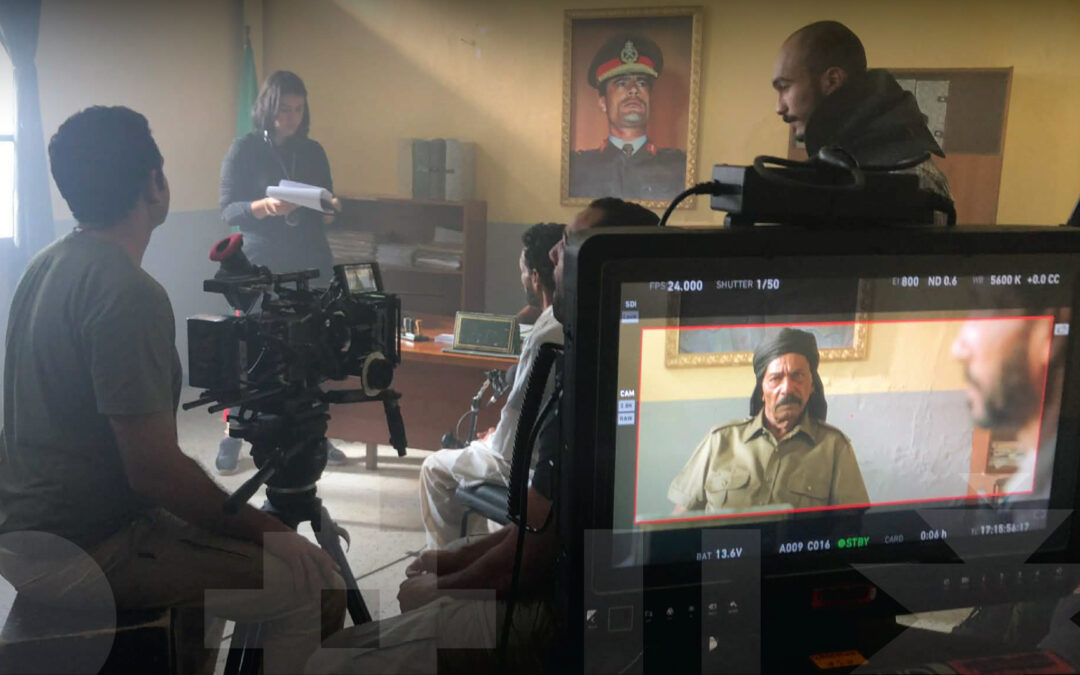
Yet, the path of fiction filmmaking in Libya is fraught with difficulties. Narrative production requires infrastructure, larger budgets, and specialized technical expertise. Because these elements remain scarce, many directors turn to the documentary format as the more realistic option.
Ultimately, cinema does not require a strict choice between the two. Documentary and fiction are not opposing paths but rather complementary ones. Documentaries preserve memory, while fiction gives it human depth. The former captures the event, and the latter opens the door to interpretation.
In this context, cinema cannot be viewed merely as an artistic tool or a vessel for nostalgia. It is a means of exercising the right to culture, as enshrined in Article 27 of the Universal Declaration of Human Rights, which affirms everyone’s right to participate in cultural life. Producing films that reflect Libyan reality, whether documentary or fiction, empowers the society to see its identity and visual heritage presented with dignity on screen, and to actively participate in shaping its own narrative.
Libyan cinema today stands at a testing phase. Current cinematic endeavors, despite their differences, point to a genuine desire to forge a unique visual language. Perhaps the future lies in blending the two forms, creating films that stem from reality but employ narrative storytelling tools to convey deeper meaning.
Hence, the importance of transitioning from mere nostalgia to sustainable continuity becomes clear. New filmmakers are required not only to recover the past but to document the present as the raw material for tomorrow’s memory. What we see on the screen today can become the heritage of the future if captured with awareness and a deep human sensibility. In this sense, cinema transforms into a living bridge connecting memory to the future, making the act of viewing a collective experience that reunites people around their shared stories rather than leaving it as an isolated, individual act.
The priority is not choosing a specific format, but rather developing a cinematic vision capable of remaining true to reality without losing its aesthetic dimension. When Libyan cinema succeeds in striking this balance, it will be able to construct its own distinct visual discourse. This discourse will transcend the boundaries of categorization, expressing a society caught between memory and transformation.
In this context, filmmaking is not a luxury but an essential cultural act. It creates spaces where people can gather around their shared stories, protects the collective memory from erosion and oblivion, and grants society the ability to see itself not as it is described by others, but exactly as it chooses to narrate itself.
Muhammad Ben Saoud