
Madghis Madi, a Libyan researcher specializing in the history of Libyan cinema, is a leading voice in excavating the country’s cinematic archives. He consistently raises fundamental questions about this archive and its role as a vital piece of Libya’s cultural memory.
In this interview, we open the file on Libyan cinema with him, exploring a past that was never adequately documented, a present struggling to take shape, and a future that relies entirely on the ability of its creators to transform individual passion into a sustainable cultural project.
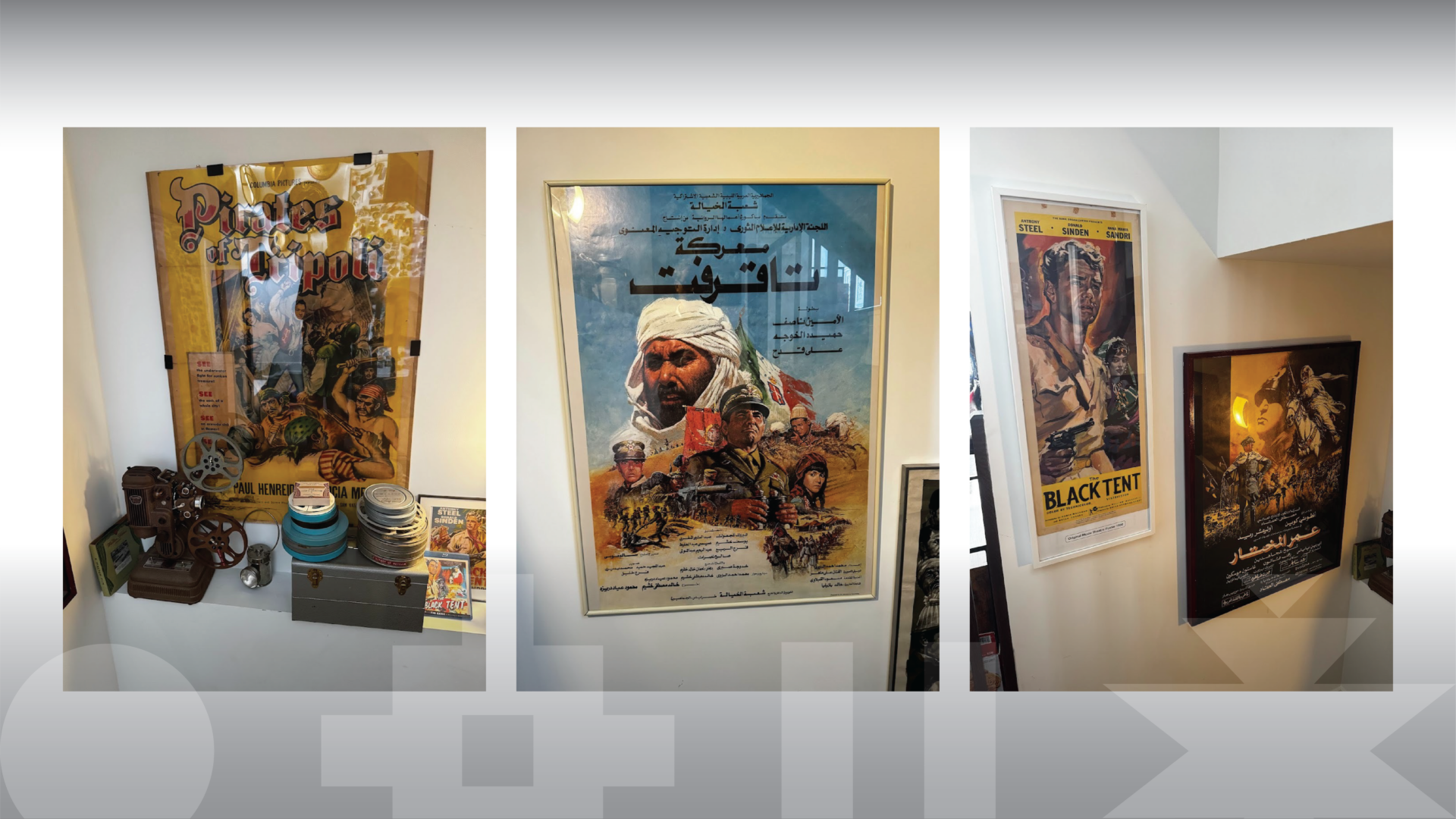
Madi holds a vast collection of movie posters. Some, like the poster for Omar Mukhtar (Lion of the Desert), stretch up to five meters long. His collection also features rare posters for local films such as The Road, The Emigrants, The Splinter, and Tagreft, alongside posters for American and Italian films shot in Libya.
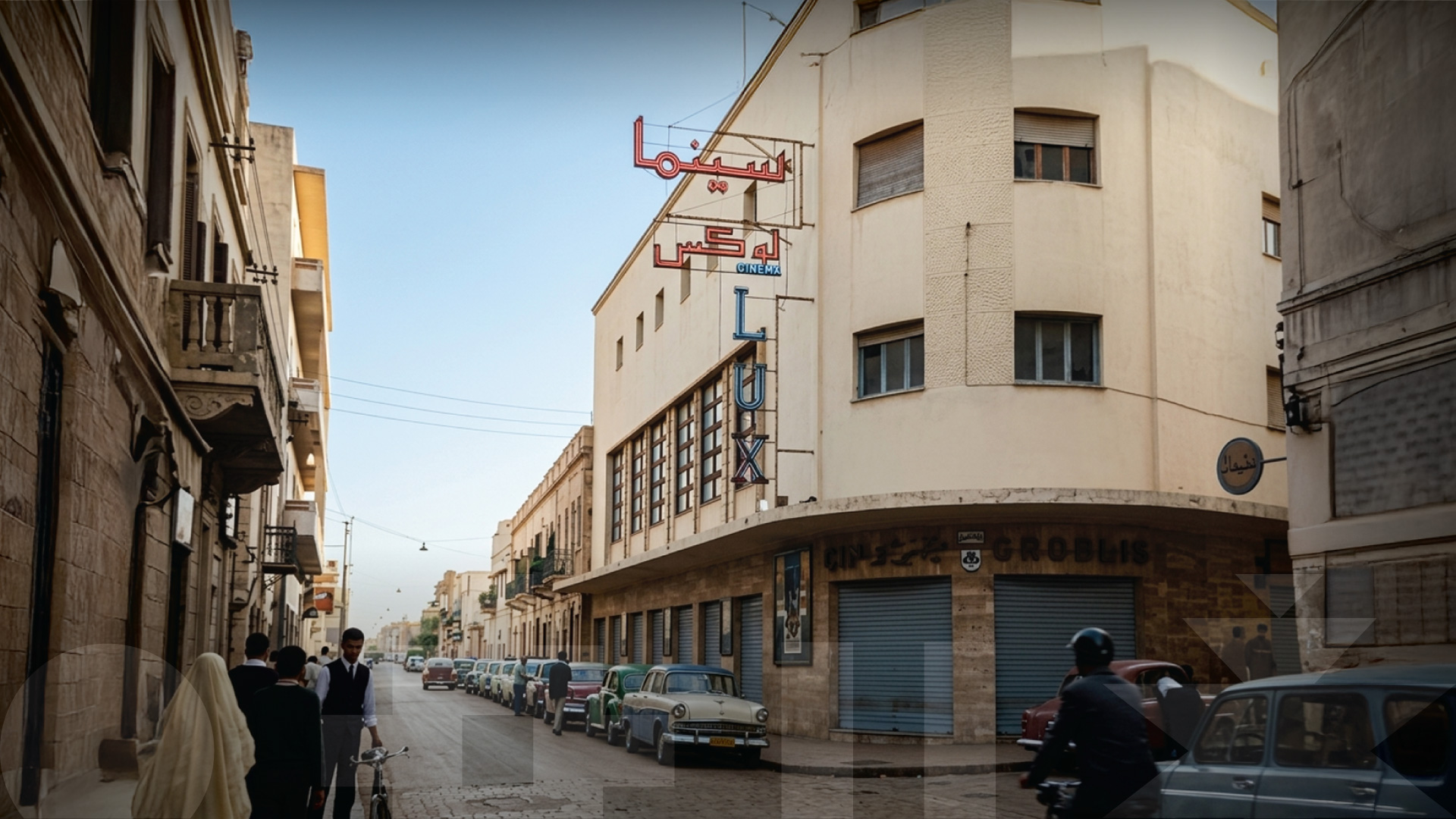
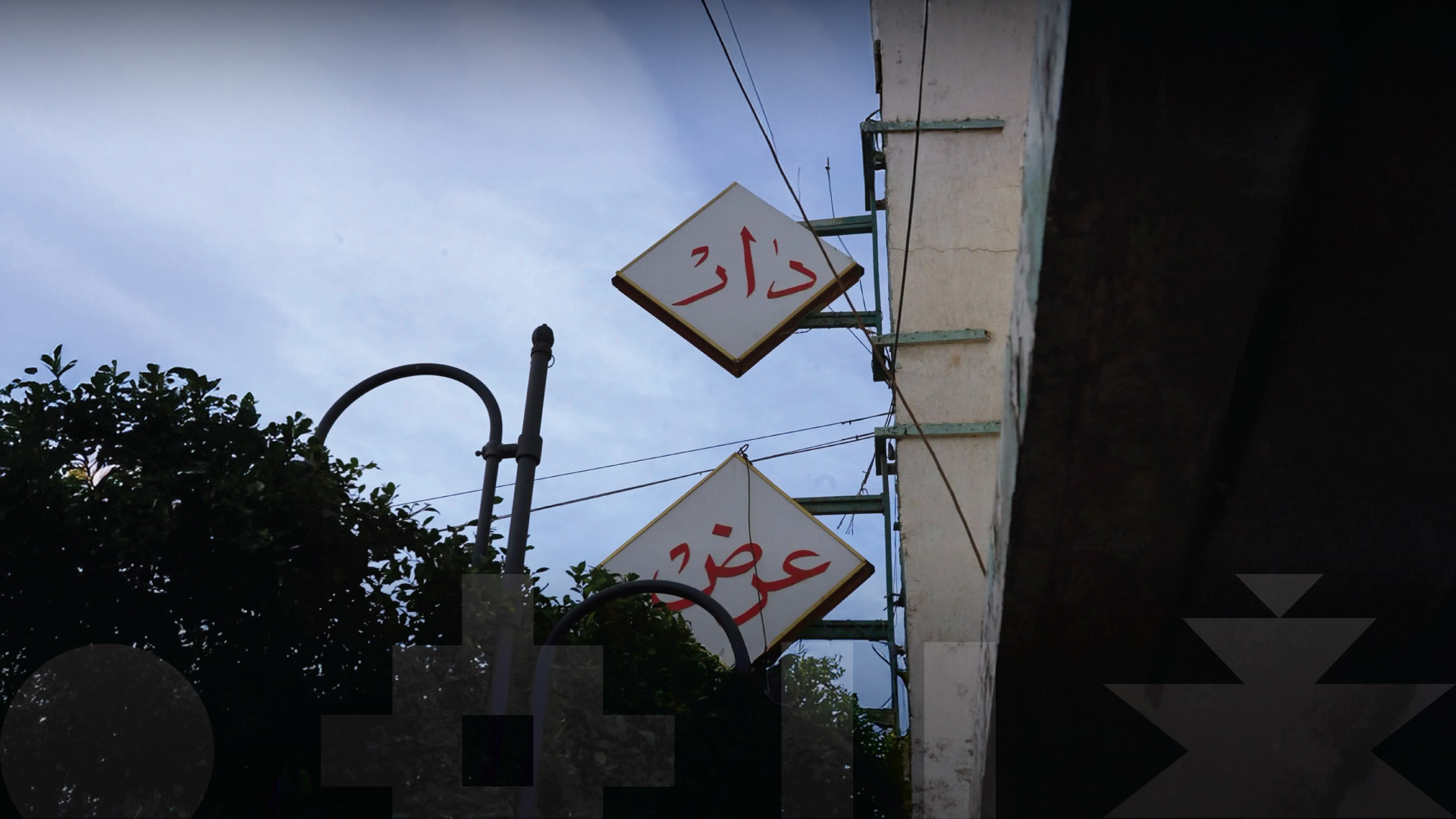
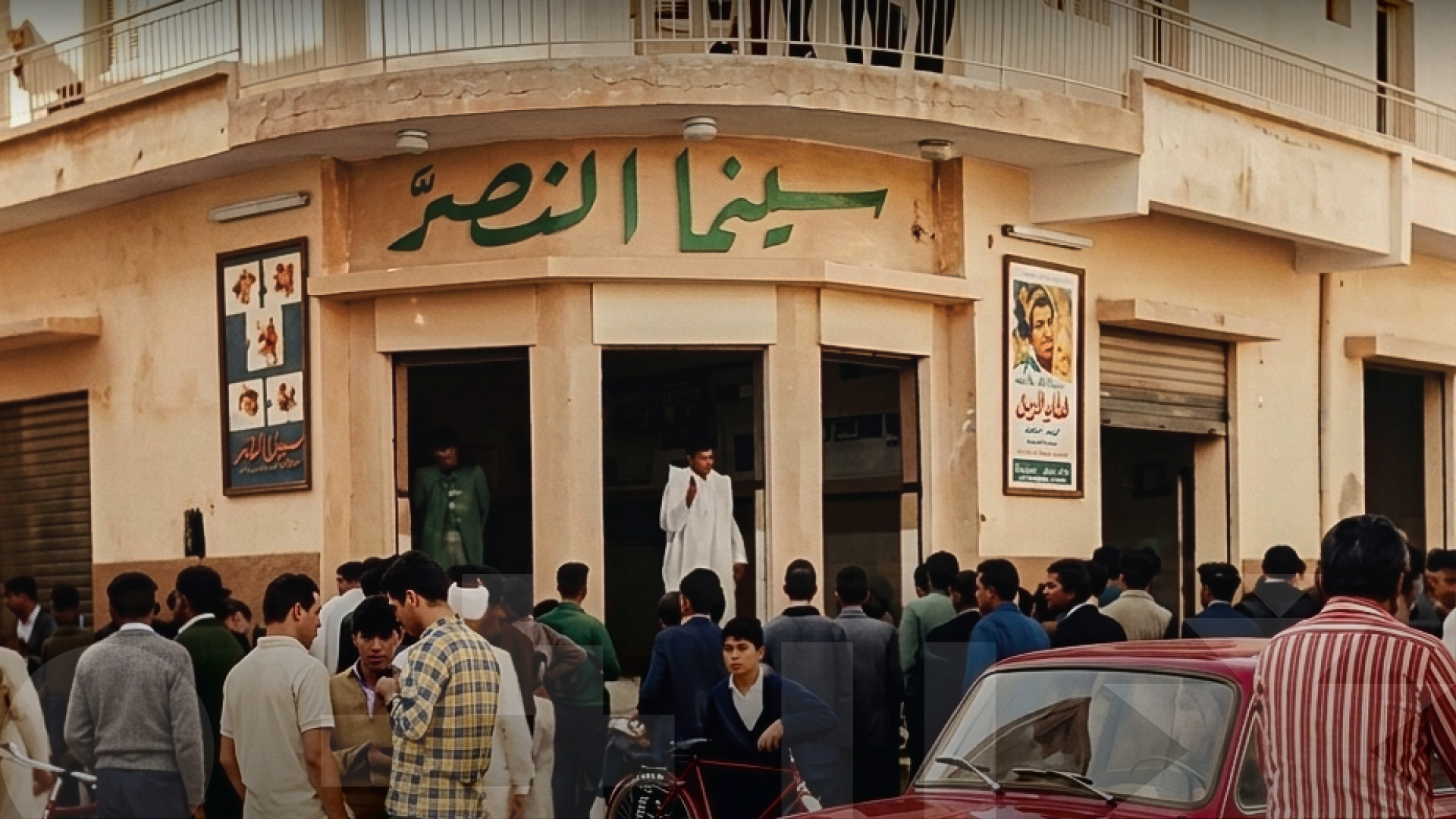
Over the years, Madi has translated numerous old texts and studies related to the history of cinema in Libya. Originally published in languages like Italian and French, some of these materials date back to the very dawn of photography and filmmaking in the country. They include press articles, reports, and documents detailing cinema halls and cinematic activity during and after the Italian colonial period.
These sources remain largely inaccessible to the Arab or Libyan reader. Madi hopes a cultural institution will eventually step forward to publish these translations in a book, officially documenting the early beginnings of cinema in Libya. To him, cinema is not merely a medium for entertainment; much like football, it is a tool for communication and a way to introduce oneself, one’s culture, and one’s society to the world.
Where did your passion for researching the history of Libyan cinema begin?
The interest essentially stems from my deep fascination with everything Libyan. Anything related to Libyan culture draws me in and sparks my curiosity, and cinema is an authentic part of this cultural heritage. From this starting point, my passion for researching the history of Libyan cinema began, as I tried to trace its various paths and phases.
I also have practical experience in documentary production. I worked professionally in this field in Morocco and other countries, producing a range of audio and visual documentaries available online. These covered various aspects of Libyan culture, such as traditional foods like couscous and tea, traditional dress, folktales, and profiles of historical figures. I have also directed several audio plays.
During my studies in France, where I lived for many years, I worked in theater handling lighting and sound effects. That experience gave me a great deal of technical and artistic knowledge in the audiovisual field. As you know, I left Libya at a young age and did not return until after the February 2011 revolution, but my connection to Libya and its culture has always been present in everything I do.
Are there Libyan films that began production but stopped suddenly due to censorship or financial issues? What are these films, and what are their stories?
Yes, there are several Libyan film projects that began but never saw the light of day for various reasons, ranging from censorship to financial hurdles. Among them is The Whale Hunter, directed by Mohamed Al-Ferjani. The project dates back to 1967, but unfortunately, it was never completed.
One of the earliest films to face censorship was Revolution in the Hearts in 1970. It featured a prominent cast of Libyan actors, including Khadouja Sabri, Omran Al-Jazwi, Fatima Al-Jazwi, and Aziza Al-Azzabi. In fact, this was the final theatrical and cinematic appearance for Aziza Al-Azzabi. Omar Al-Shweirif also participated, and the film was produced by Ali Al-Haloudi.
The truth is that there are many Libyan films completely unknown to the new generation. Because of this, I try as much as possible to collect and preserve whatever is left of them, whether on film reels or video tapes. I have digitized some of these materials to save them from being lost forever, and work is ongoing to digitize more whenever the opportunity arises.
One work I desperately hope to find any trace of is considered the very first film ever produced by a Libyan. It was created by the late artist and writer Fouad Kabazi and documented the activities of the Zawiya of Al-Asmari. This film participated in film festivals and was shot by Enrico Pavello, an Italian born in the Libyan city of Zuwara. The film won several awards in Italy and was covered by the Italian press at the time.
I have also found references to films produced in the Libyan oil fields featuring artists like the late Abdul Moneim Al-Naji and the artist Cafo, who later emigrated to the Netherlands. I actually have copies of some of these tapes dating back to the late 1960s.
How did directors navigate between their desire for artistic creativity, funding pressures, and the official political direction of the country?
In Libya, unfortunately, supporting creators was rarely a priority for officials, even though creativity requires a nurturing environment to thrive. Most creators worked with highly limited resources, trying to strike a balance between their artistic ambitions and the constraints imposed on them, whether financial or ideological.
There is another equally important issue, which is the preservation of Libyan cinematic and cultural heritage. These works do not belong to specific individuals; they are part of the Libyan society’s memory and the rights of future generations. Therefore, preserving and documenting them scientifically and systematically is absolutely essential.
You keep a large number of Libyan movie posters and tickets. What makes them so special?
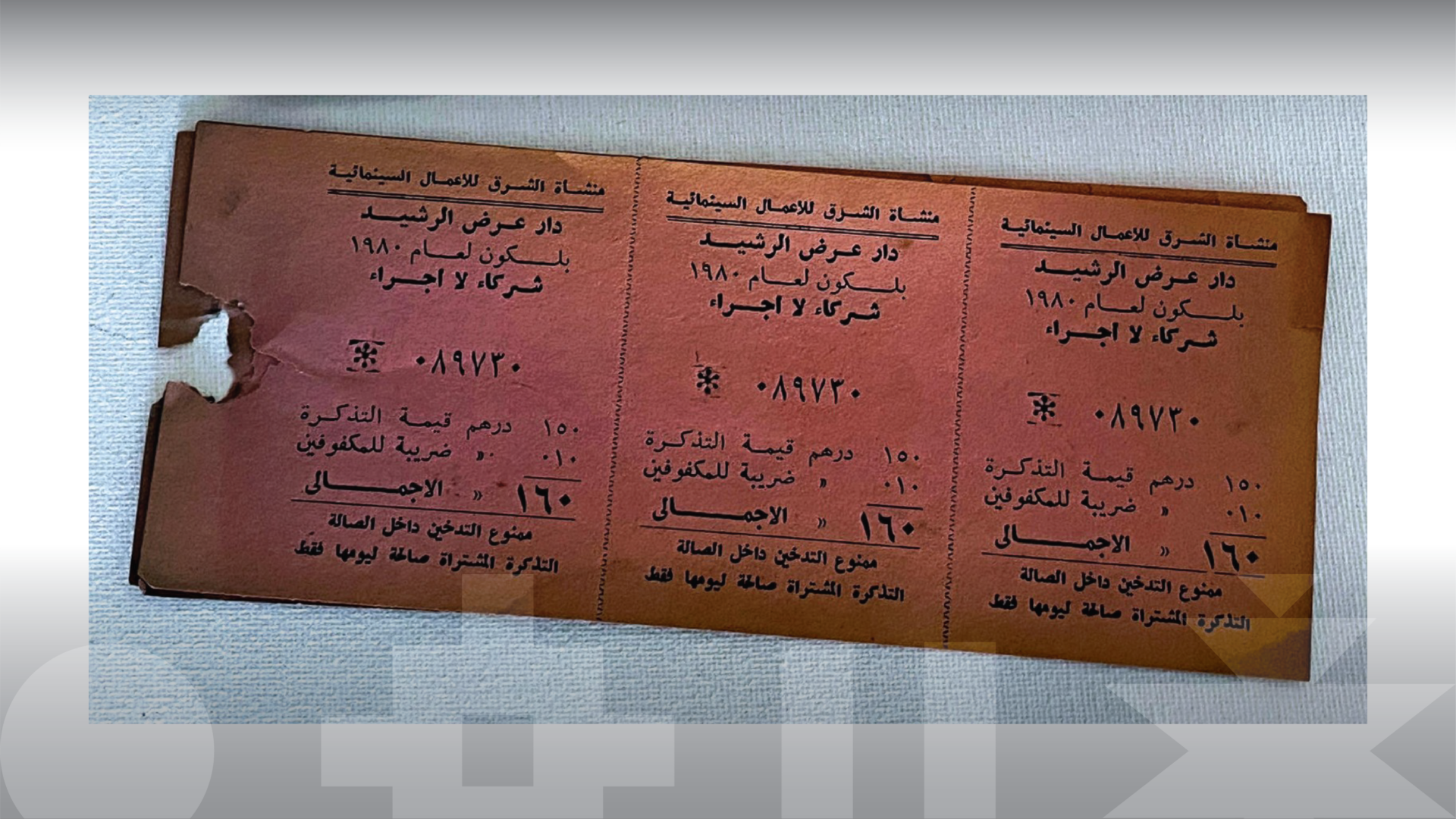
As part of my interest in archiving Libyan heritage, I keep a large number of cinematic posters, mostly for films screened in Libya during different historical periods. To my knowledge, I might possess one of the largest private collections of posters, photos, and publications related to Libyan cinema.
The collection ranges from massive posters, some reaching five meters in length like the one for Omar Mukhtar, to rare posters for local films such as The Road, The Emigrants, The Splinter, and Tagreft. The collection also includes posters for American and Italian films shot in or about Libya, along with a vast array of photos and tickets from cinemas across different eras.
I showcased a portion of these materials in a documentary about the history of cinema in Libya. I also have another unpublished documentary that delves into the history of Libyan film production and the key directors who contributed to the field.
When researching this history, do you feel like you are discovering a forgotten past, or are you actively rewriting a lost visual memory?
Honestly, it feels like a combination of both. Often, I discover materials and works that feel like completely forgotten pages of our cultural history. At other times, I feel like I am trying to reconstruct a visual memory that has been lost.
For example, the film On the Road starring Youssef Al-Ghariani is a movie well worth watching within its historical context. I have the poster for it, but unfortunately, the only copy of the film belongs to a friend. I have tried repeatedly to purchase it to add to the Tawalt Foundation archive, but all my attempts have failed. The film was directed by Youssef Shaaban with a story by Ahmed Al-Dernawi.
Over the past few years, I have also translated a large number of old texts and studies about the history of cinema in Libya. Published in languages like Italian and French, some date back to the very earliest days of photography and film in the country. They include newspaper articles, reports on film shoots in Libya, and documents about cinema halls during the Italian colonial period and beyond.
I translated these materials driven by a desire to preserve this crucial part of Libyan cultural memory, as many of these sources are simply unavailable to Arab or Libyan readers. These translations remain unpublished, and I hope to find a cultural entity or academic institution willing to publish them in a booklet or a small book. In my view, these materials form a vital building block for understanding our visual history and the evolution of film production in the country.
What was the most exciting moment or document you encountered during your research that left a special impact on you?
One of the most thrilling moments for me was finding a collection of rare posters in a shop in Los Angeles. The shop owner didn’t care much about them. Among the collection were posters, photos, and brochures for the famous Italian film Shin Tebbi – What do you want, which was released in 1928.
I bought all these materials for a very low price, but for us as Libyans, they hold immense historical value because they are part of our visual history. The film itself serves as a document of Italian fascist propaganda from that era, but it was shot in Libyan locations like Tajoura, Ghadames, and the Sahara. It featured Libyan clothing and included Italian actors alongside Libyan extras.
Which Libyan film do you believe was critically wronged or did not receive the attention it deserved?
Without a doubt, The Splinter and Tagreft are among the Libyan films that did not receive the critical and media attention they deserved, despite their significant artistic and historical value.
Is the main problem with the Libyan film industry a lack of production, a lack of vision, or a lack of infrastructure?
It seems to be a combination of several factors. There is a lack of funding and infrastructure, but there is also a severe lack of good scripts. The brilliant director Osama Rizk has pointed this out; he is constantly searching for scripts and screenplays to read and potentially produce.
This is where the core problem lies: producing literary material and screenplays that stem from the Libyan reality and express the Libyan heritage with honesty and awareness.
In your opinion, what is the first step to building a real film industry in Libya?
The first step is encouraging the youth and establishing specialized cinema clubs and schools. These should not just be theoretical; they need to actively produce and direct films. Technical capabilities today are much simpler and more accessible than in the past.
It is unfortunate that state institutions sometimes spend millions on things that may not be a priority, while a fraction of those resources could easily be directed to support film production. Cinema is not just for entertainment; like football, it is a tool for communication and a way to introduce our identity, culture, and society to the world.
If asked to choose one film that represents a genuine moment in the history of Libyan cinema, which would you choose and why?
Today, there are short films produced by promising young Libyans being shown at festivals outside of Libya, and sadly, Libyans themselves have never heard of them. Therefore, I hope local festivals are established to showcase these works and encourage their creators.
I prefer not to single out one specific name because there are so many of these experiences. The issue is that many of these filmmakers do not know how to promote their work, and this is exactly where specialized cultural institutions need to step in.
Today, can artificial intelligence tools be used to revive the Libyan cinematic archive?
Artificial intelligence will undoubtedly revolutionize film production. During Ramadan this year, I directed several short episodes about scholars from North Africa without shooting a single real frame; they were produced entirely using AI technologies.
Publishing an Amazigh comic book in Libya titled “Our History” seems like a bold adventure. Was it?
Yes, I have a comic series titled Our History consisting of fourteen parts. It won first prize at the FIBDA festival in Algeria, in the presence of a large number of comic creators from around the world.
I also have cinematic experience in animation. In Morocco, I produced an animated film for Moroccan radio and television titled Tamoktit N Oumali, which means Memory of the Shadow. It is an hour-and-eighteen-minute animated feature detailing the life of King Jugurtha and his resistance against Roman colonization. It was highly praised at the time and won awards.
I have also produced several episodes for other projects that have not yet been aired, including a series called Juha’s Adventures. This was created using claymation, for which we built an entire miniature city to shoot the work.
Kholoud Elfallah