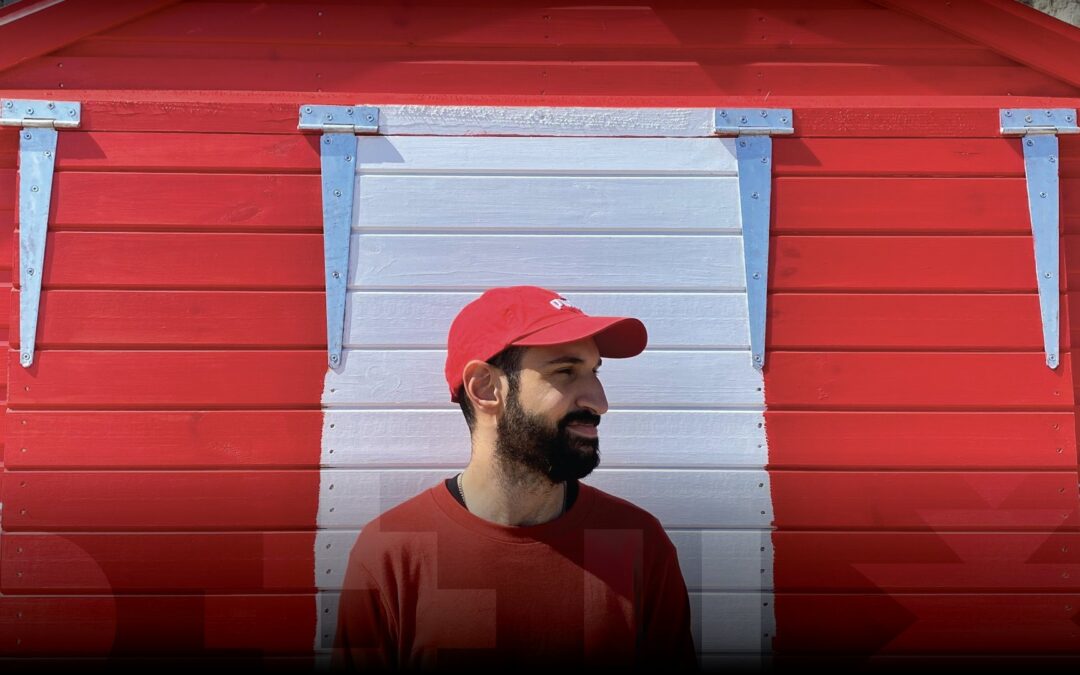
In recent years, despite the absence of a real cinematic scene and significant financial and regulatory hurdles, a number of young names have emerged, attempting to carve out a space within the Libyan cinematic scene. Among them is producer and director Abdulaziz Lamlum. His journey began as a hobby during the revolution years before he moved to the UK to formally study filmmaking and digital media. He returned with practical experience that allows him to view the Libyan cinematic reality from a distinct perspective.
In this interview, Lamlum speaks candidly about his first production experience inside Libya, the lessons learned, and what young filmmakers need to establish their presence. The conversation poses a fundamental question: Is passion enough to make a film, or does the road begin with the persistence to endure the process?
1- How does Abdulaziz Lamlum introduce himself to the Libyan audience?
I am a film producer and director. It started merely as a hobby during the revolution, after which I worked in television between Libya and Egypt. When I moved to the UK, I decided not to complete my engineering degree. Instead, I pivoted to the film industry and digital media, earning my bachelor’s degree after learning every stage of production, from scriptwriting to execution.
2- What are your most notable works?
In terms of production, I produced the film The Debate (Monathara), directed by Mohamed Al-Triki and written by Siraj Al-Huwaidi. I also executed several programs for the “Waw Libya” platform. During my time in the UK, most of my work was in television advertising. Regarding cinema inside Libya, my sole production so far is The Debate.

3- What logistical or technical challenges did you face while filming in Libya?
Truthfully, I hadn’t planned to shoot a film inside Libya. However, when the opportunity and budget became available, I decided to take the risk. The core problem is that producing high-quality cinema here is incredibly difficult because it requires a large number of professionals with genuine cinematic experience.
There is a vast difference between television and cinematic production, and the Libyan market for the latter is still very small. Even the actors whether from theater or TV are unaccustomed to the cinematic workflow, which demands time, precision, and high quality.
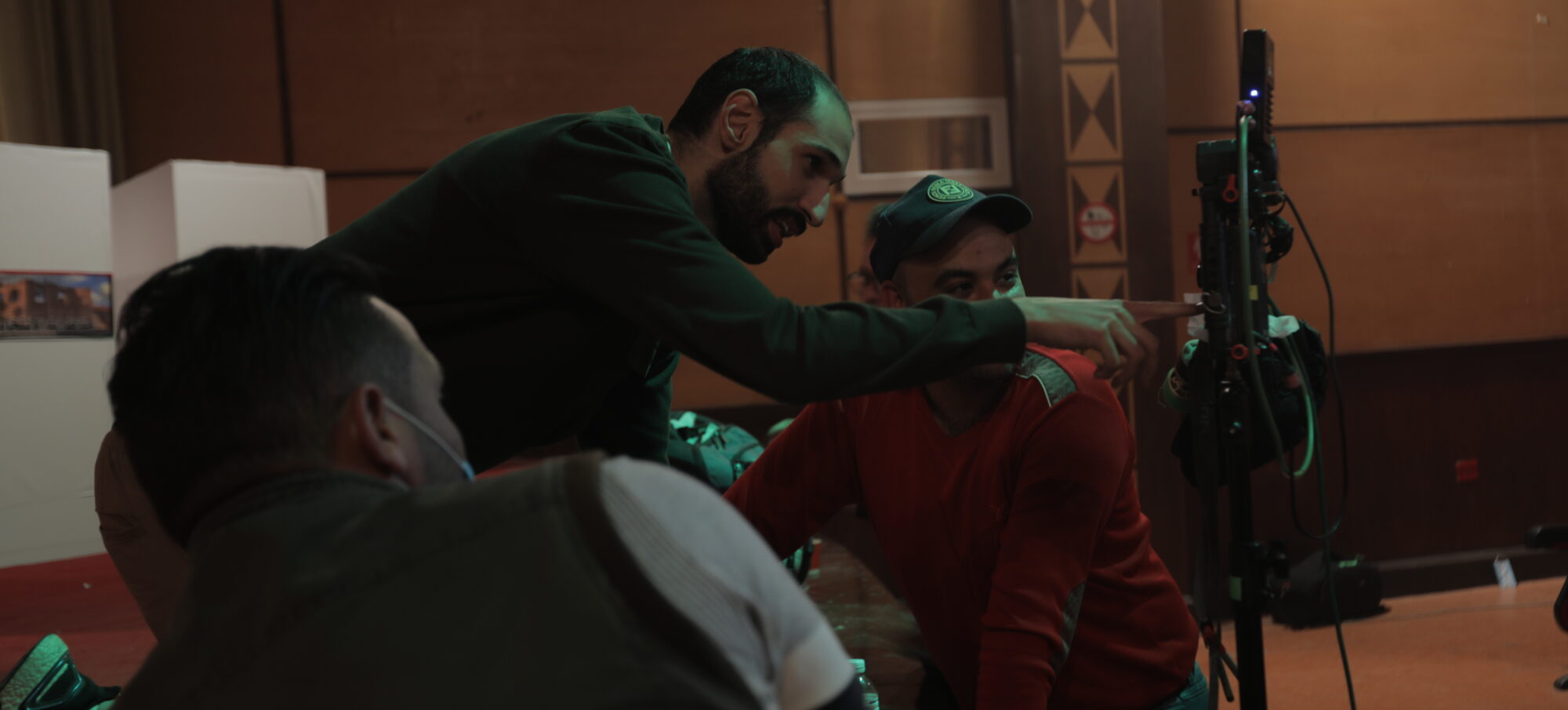
We had to hire people who had never worked in cinema and train them from scratch; that in itself was a challenge. Even during casting, we auditioned non-actors, some of whom took on lead roles. We had to teach them how to interact with the camera in a cinematic style, something entirely foreign to them.
As for location shooting, the state still lacks a clear permit system. Sometimes we would get approval to shoot in a location, only to have it revoked later. Large filming equipment creates anxiety among the public, especially in open spaces, as they are not used to seeing cinema cameras or heavy lighting rigs outside of studios. It was a difficult experience, but a true learning curve. I hope things improve with time.
4- As a producer, how do you see the role of Libyan filmmaking in addressing humanitarian issues?
I believe the Libyan film industry is critical in this context. It humanizes complex issues that are often reduced to statistics or news headlines. When we address topics like human rights or social divisions through character-driven stories, it creates a safe space for dialogue without being confrontational or aggressive.
Cinema allows us to highlight the resilience of our people and the strength of our social fabric. It helps us process collective experiences and shared pain. It isn’t about pointing fingers; it’s about shedding light on the human condition and encouraging a deeper understanding of the societal challenges we face daily.
5- In your opinion, to what extent can Libyan cinema influence societal awareness given the political and production challenges?
Cinema is not just entertainment or art; it expresses our collective identity and preserves our cultural heritage. In our society, cinema is a potent form of “soft power” capable of shaping public opinion and bridging gaps between generations and regions. Furthermore, it enables us to present our own narrative to the world through our own lens, rather than relying on external perspectives.
Ultimately, the industry contributes to sparking necessary debates, fostering empathy, and documenting our history for future generations in a way that history books alone cannot achieve.
6- Based on your experience, what are the main problems facing a Libyan producer?
The biggest obstacle today is political interference. It directly hinders artistic work, with various entities trying to impose their own vision, making the production process complex and unstable. Furthermore, the sector lacks clear protocols: there are no fixed procedures for permits, nor a clear mechanism for importing equipment. Everything often relies on personal connections.
Additionally, the production sector in Libya is unregulated politically, economically, and technically and lacks real support from official institutions. Even media graduates struggle to find employment, as perhaps only one series or seasonal program is produced per year, which is insufficient to create a real market.
However, some young people are making efforts to create their own content without waiting for opportunities. This is promising, provided they eventually receive support and the sector becomes better organized.

7- Finally, what is your advice to young producers in Libya?
Don’t try to run before you can walk. Start with small projects where the risks are limited and use them to master the craft. Most importantly, become passionate about pre-production.
Since the film industry in Libya is in its infancy, we lack the robust infrastructure found in other countries like rental houses or clear permit regulations. This means you are forced to plan your work in the most minute detail.
You must also be realistic; the environment in Libya can be unpredictable. You need to leave a large margin for error in your calculations. If Plan A fails, you must be calm enough to immediately switch to Plan B. In our field, a producer’s creativity isn’t just in the script; it’s in finding smart, innovative logistical solutions when the unexpected happens.
Conditions may seem hard, but this is the right time to learn everything yourself. My advice is not to stop and not to wait for a ready-made market, but to forge your own path. If you can produce a film in Libya, you can produce it anywhere in the world.
Shayma Tabei