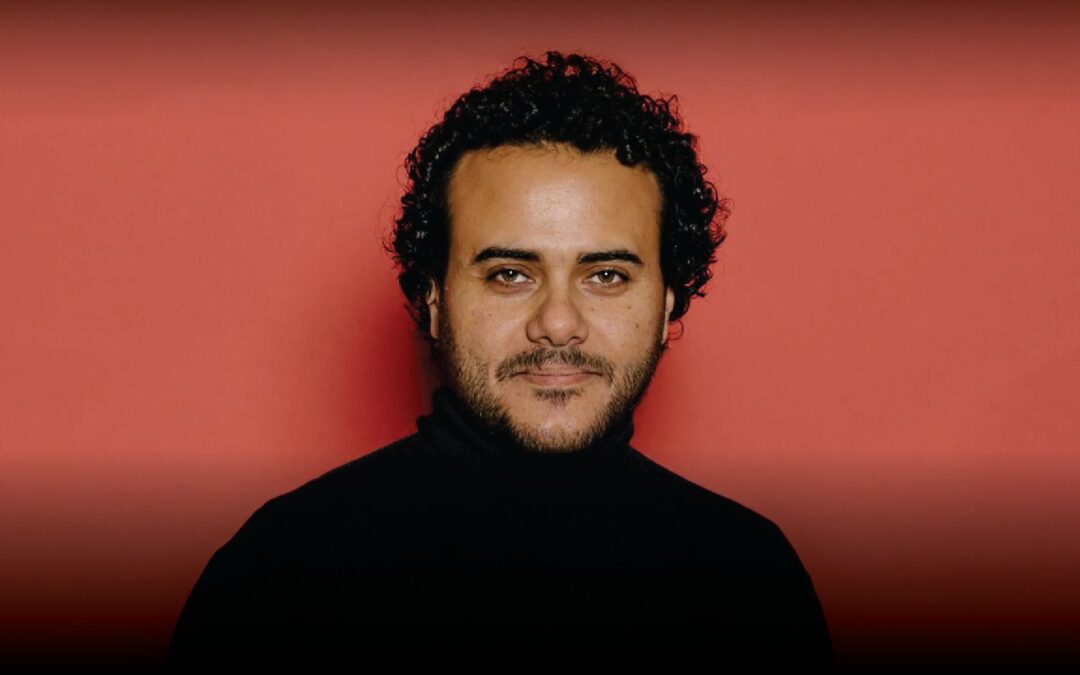
We met with the Libyan filmmaker Muhannad Lamin to discuss his films that have been screened at major festivals, such as the International Documentary Film Festival (IDFA) in Amsterdam, the Locarno Film Festival, and the Clermont-Ferrand International Short Film Festival, as well as Arab festivals including the Carthage Film Festival (JCC) and the Red Sea Film Festival.
The discussion grazed on several topics, including Muhannad Lamin’s first cinematic experience, the most prominent challenges facing Libyan filmmakers given the lack of funds and obtaining support grants from Arab and foreign funds including the importance of thorough preparation before applying for these grants.
The question is, do these grants impact the film’s concept or the director’s vision, especially since they are sponsored by foreign entities?
1- You’ve previously spoken about your experience producing a short film uploaded to Vimeo. Do you think you’d become a filmmaker without this experience?
“Before this experience, the idea of directing or pursuing a career in cinema never crossed my mind. I don’t think I would have become a director without it, the reason being the society and culture in Libya does not support film direction or the field of cinema.”
“This film motivated me to seek academic cinema training in Tripoli. I chose The Advanced Institute of Art Techniques – Tripoli, that’s when I started developing my skills in the world of cinematography and directing.”
“From 2011 to 2014, Libya witnessed growth in the field of cinema, with activities and workshops led by specialists from various countries. Attending these workshops polished my cinematic concepts and deepened my understanding of creative directing techniques. I worked to produce awareness films that provided practical experience in filming and production, thus, marking the real beginning of my cinematic career.”
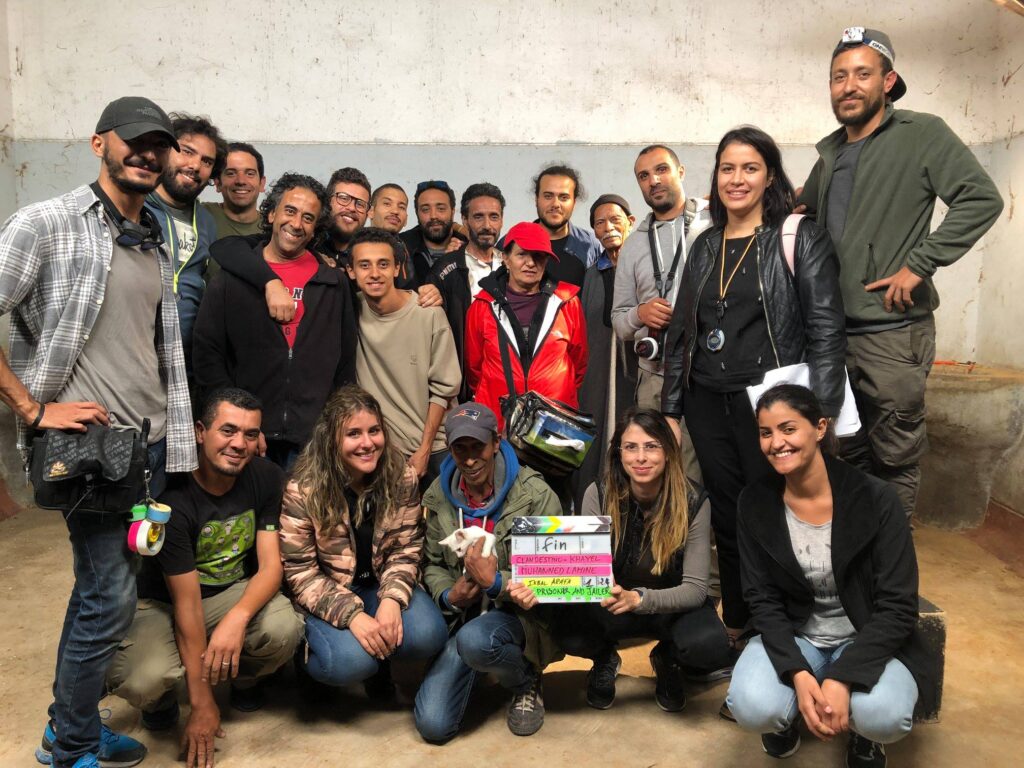
2- The experience that was the first spark which pushed you into the world of cinema. Can you tell us more about your subsequent work?
“I still consider myself at the beginning of my career. I remember my first project; I entered into a competition held by the Tropfest Festival in 2012, a short film festival with strict conditions for production and participation. It was a simple experience, but it strongly motivated me to continue and helped build confidence in my abilities.”
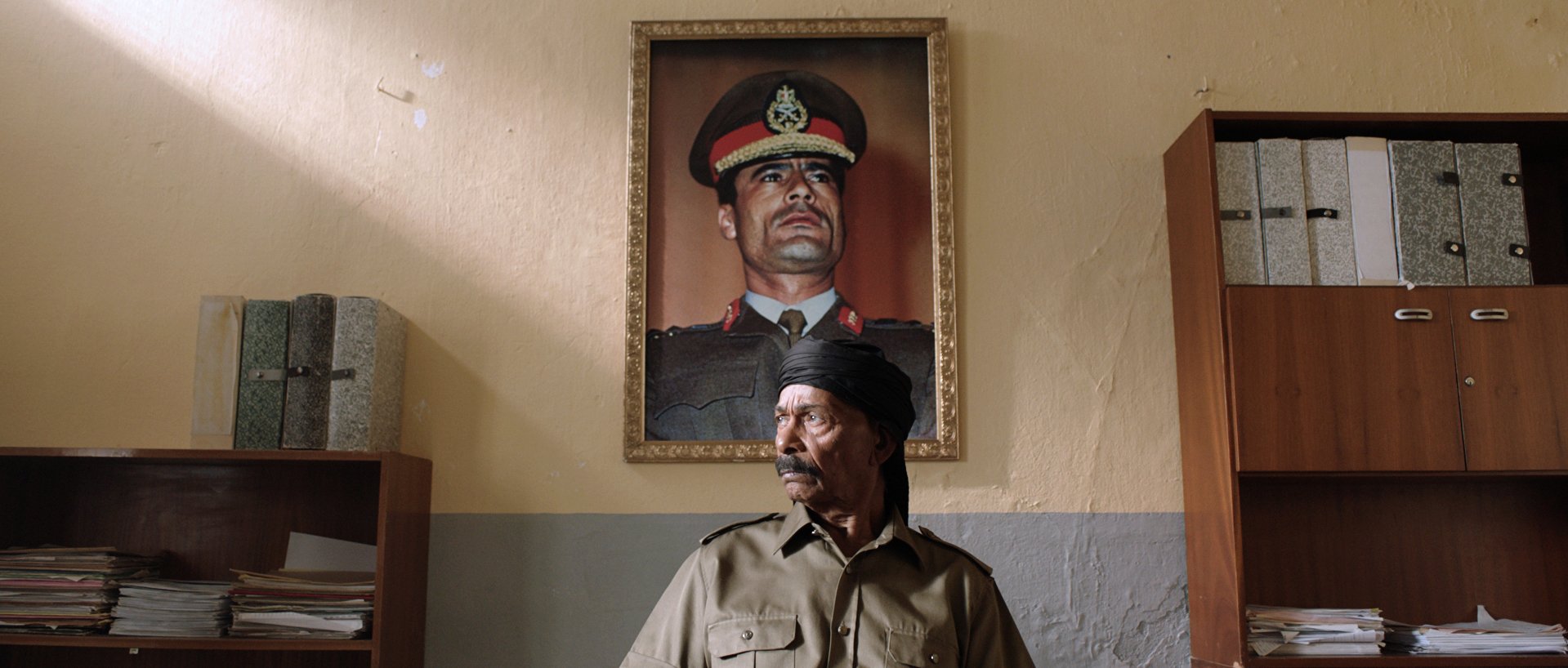
“In 2018, I completed my first short narrative film, “The Prisoner and the Jailer,” which tells the story of two opposing Libyan figures: one a senior official in the former regime, and the other a prominent figure in the post-revolution period.”
“Then, in 2021, I completed my feature documentary Donga, which tells the story of a fighter amidst the conflict in Libya who chose the camera as his weapon. Growing up under a dictatorial regime that glorified Gaddafi, the film Donga captured everything, covering war and daily life for nearly ten years. Currently, I’m working on a new feature film inspired by the novel The Bleeding of the Stone by the renowned Libyan writer Ibrahim Al-Koni.”
3- Has the war influenced your choice of films?
“My root interest in cinema initiated prior to the war, but Libya’s situation has been unstable ever since, which is why the films are on war-related themes. It’s inevitable for war to be one of the themes that are addressed by Libyan cinema.”
4- Your films always relate to political and real-life issues from Libyan society. How can cinema be a tool for human rights advocacy or social issues?
“Films can be a tool that encourages viewers to discuss various topics and ideas related to humanitarian, cultural, and social issues, in an objective and intellectual manner.”
“For example, in The Prisoner and the jailer, the two main characters are contradictory, each with a different ideology. As a director, I did not pick sides or choose who was right; I tried to let each character present their perspective, leaving the decision up to the viewers.”
“In my opinion, a film that becomes an ideological discourse loses its artistic value. The director must respect the viewer’s intelligence and not impose a specific perspective.”
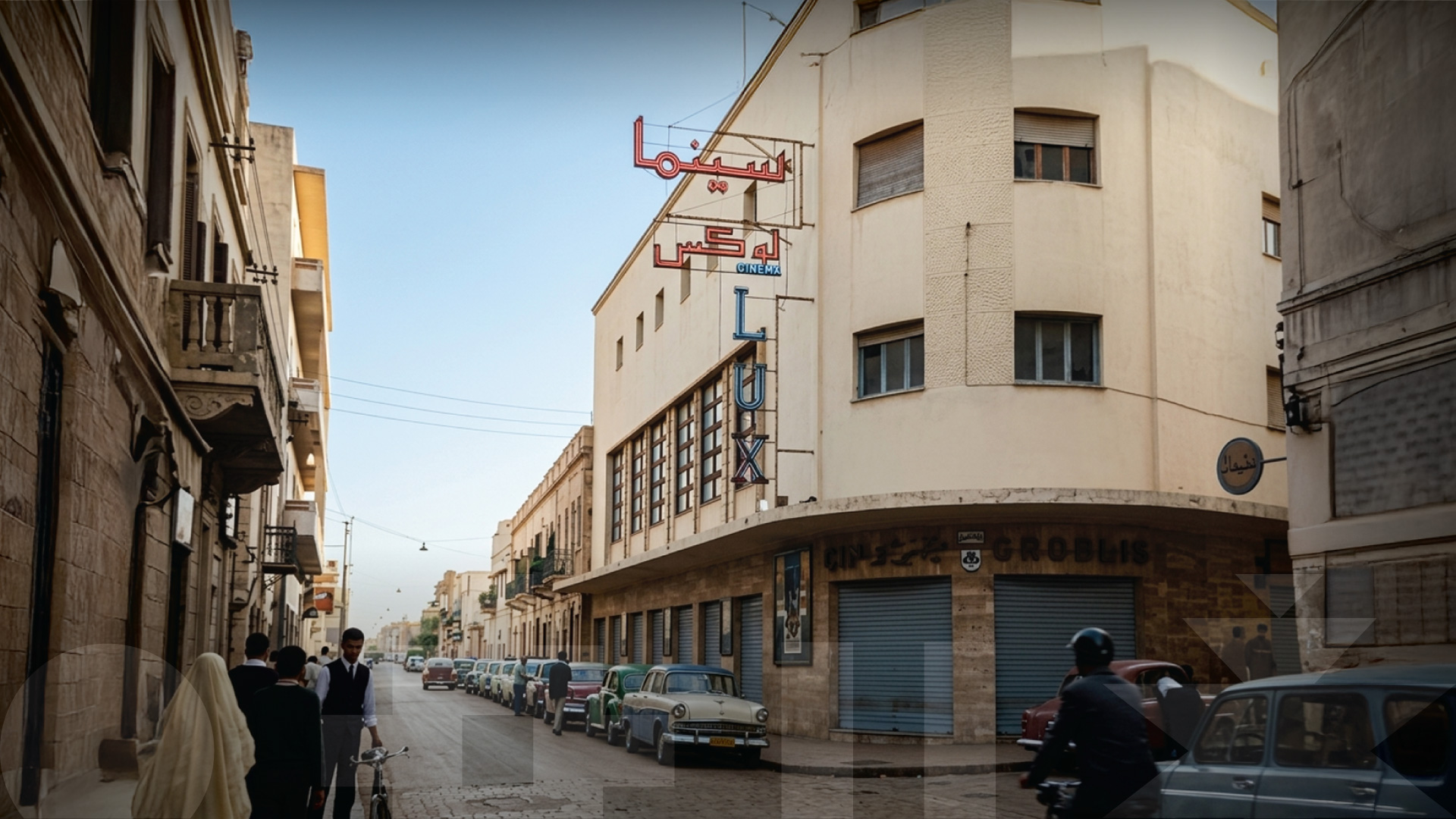
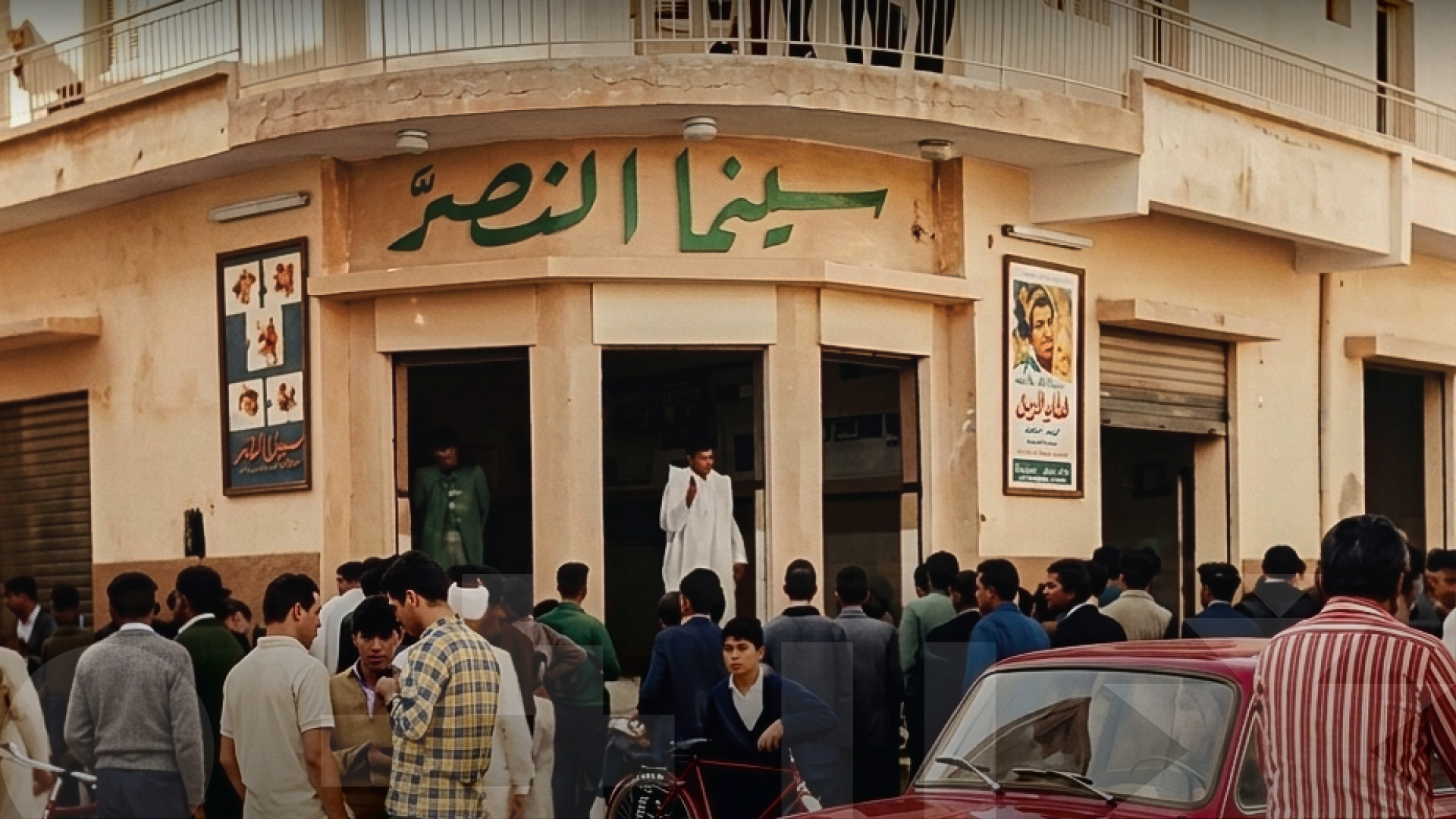
5- Libya’s film infrastructure is fragile and has almost no theatres. How can films still aid to raise and discuss issues?
“This indeed is a relevant yet a complicated question, working in the film industry in a country without a single cinema hall is odd. How can you reach audiences and get them to watch films?”
“In my opinion, the only way to reach an audience inside and outside the country is by telling the stories of Libyans, Libya, narratives inspired by Libyan folklore and literature. The only way to do so is through online platforms.”
“We also need cinemas, film production facilities, and festivals. This requires work space, strong state governance, and active civil society institutions. For example, Saudi Arabia became a country producing cinema both domestically and internationally in less than a year, which confirms that political will is the key to creating a cinematic culture in Libya.”
“The state isn’t the only one to be held responsible for the field’s deficit. Businessmen too, play a vital role in supporting culture and cinema, especially when authorities (politics) fail to provide support. Early 20th-century, Egypt is a clear example: investors and businessmen played a pivotal role in establishing cinemas and building an integrated film industry, turning Egypt into a hub of Arab cinema. Unfortunately, Libyan businessmen have shown no real interest in culture or cinema support, except for limited individual attempts that do not meet the real needs.”
6- What are the most prominent challenges you face as a filmmaker in Libya?
“Working in Libya is not easy; filmmakers face several challenges, such as production and support aspects that aid in bringing ideas to life in an artistic manner in order to reach audiences creatively. The biggest challenge today is not funding but the difficulty of filming within Libya due to security conditions and almost absent infrastructure. Local fundings are non- existent, as there isn’t a national cinema fund. Ironically, the Ministry of Culture, despite its large number of employees, produces little to nothing, so the only options that remain are outside of Libya, through development programs, support funds, and film festivals. This requires filmmakers and producers to search seriously, understand exactly what they need, and build relationships with funding bodies through direct communication, asking questions, and careful preparation.”
“Despite these difficulties, they remain necessary challenges on the path to achieving our dreams and making films that reflect real human issues and resemble us Libyans, to present a truer image of our society.”
7- How were you able to secure funding for your films, especially since many filmmakers consider obtaining grants nearly impossible?
“Applying for these grants requires work and producers that we lack. It requires effort and time, and our situation isn’t as flexible as in other countries that have their own funds to help filmmakers apply for these grants.”
“I believe that participating in Arab and international festivals allowed me to meet producers, expand my network, and work based on the advice of experts. I recall meeting a producer in 2013 at a foreign festival. He asked if there were any producers in my country. I answered no, and he advised me to open a production company and produce my own films, since I wouldn’t find anyone to produce my films—he added. “you are not in Hollywood.'”

8- Based on your experience in funding, what advice do you have for the new generation seeking support for their projects?
“Firstly, you have to learn to apply for these grants on your own. Many Libyan filmmakers find the application process complicated and time-consuming. The process requires time and patience. In simple words, if you don’t put in the effort, you won’t make a film.”
“Applying for these grants isn’t that hard, especially for Arab grants, which don’t require a second language and offer easy and simple communication methods. The main criterion is the film’s idea, not the script or the resources. You have to explain the idea while applying for the grant. The second most important aspect is your motivation behind making the film, which requires a two page explanation of your reason behind choosing a film.”
9- Do grants influence a film’s idea or the director’s vision, especially if they come from specific foreign entities?
“Regarding Arab grants, such as AFAC and Culture Resource and based on my personal experience, none of them interfered with the film’s concept nor the direction or its presentation. Primarily, if the evaluation committee selects the film, they will provide support. If not, it will be rejected.”
“These funds support a vast number of films; therefore, they aren’t interested in intervening in every project. On the contrary, they aspire to ensure the success of each film. We must keep in mind that these institutions are independent of the state. Generally, foreign entities are also included in deciding on either selecting or rejecting a film. They then refrain from interfering in its content, leaving complete freedom to the director.”
Shayma Tabei