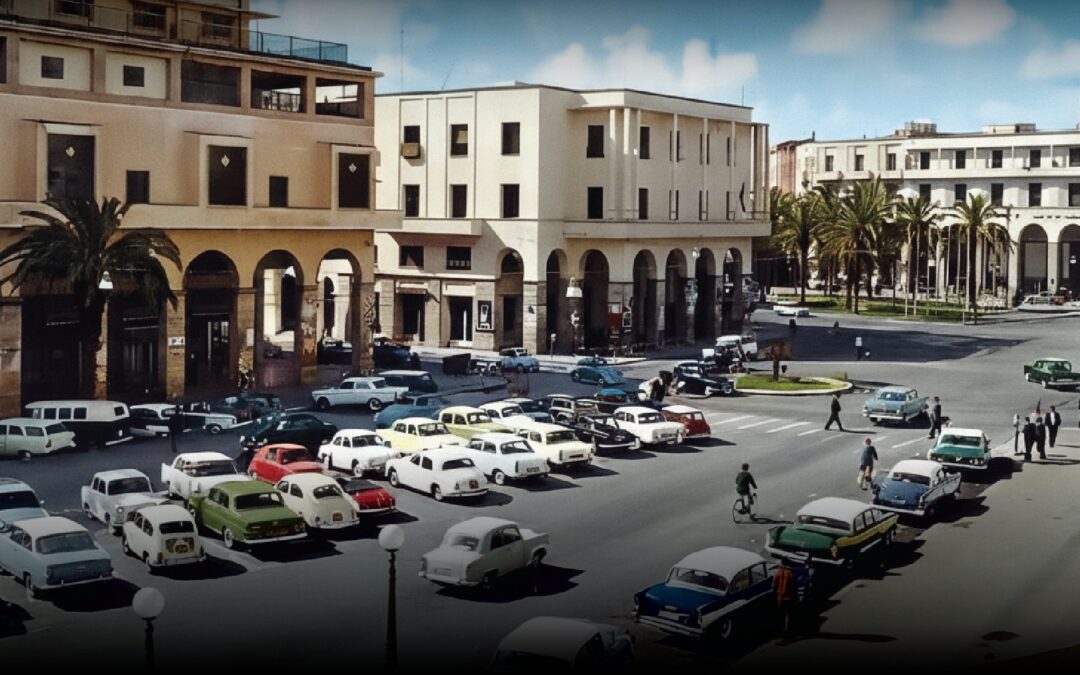
Writing about the early start of cinema in Libya isn’t an easy task. Sources are few, with varying dates and conflicting accounts. Sometimes it feels like chasing a thin thread in a maze of memory, but my passion for discovery and the adventure of research kept me going.
The Ottoman Empire and the Italian Invasion
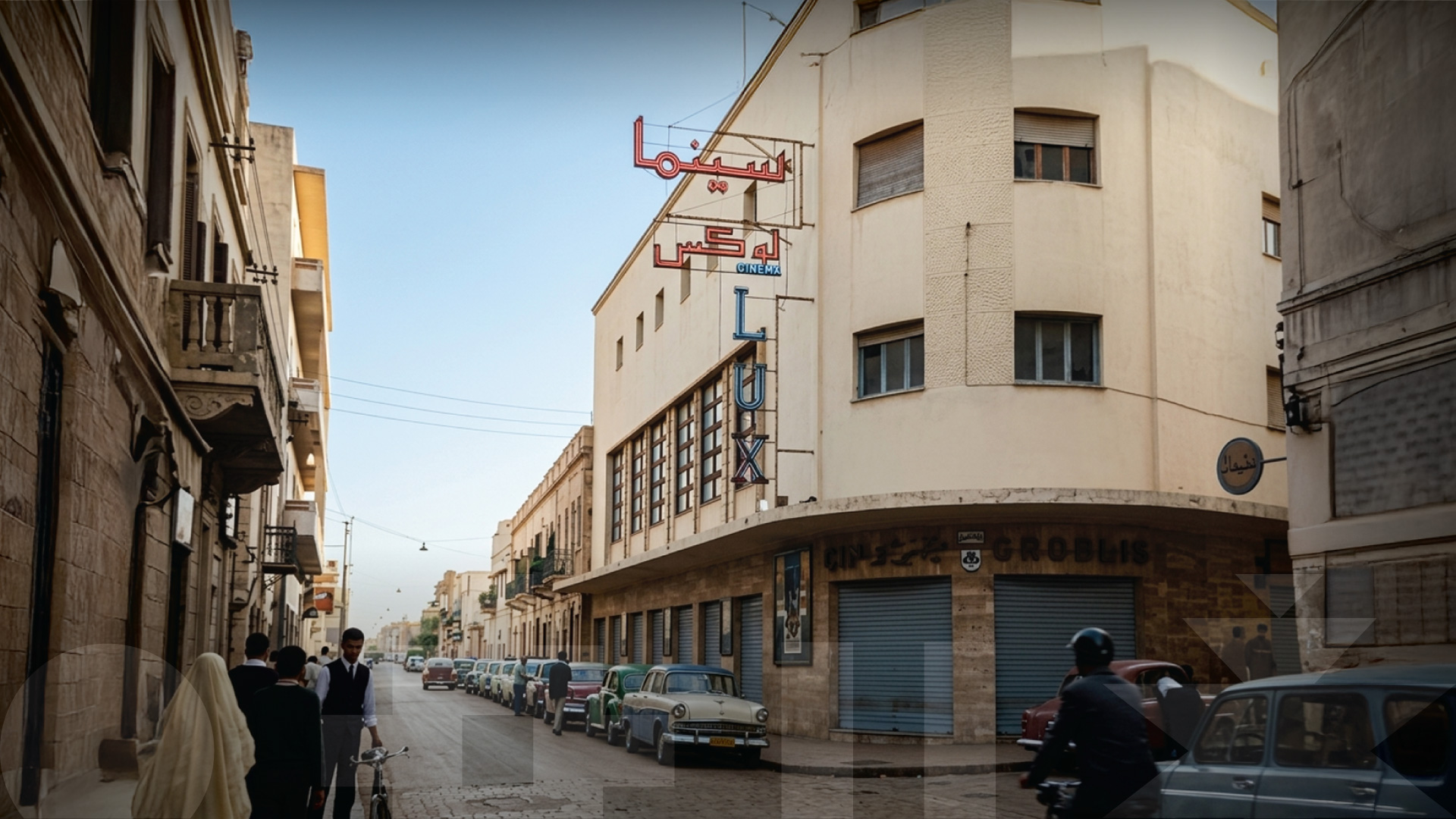
Cinema arrived in Libya in the late years of the Second Ottoman Rule, just before the Italian invasion in 1911. Silent film screenings were held inside the Arch of Marcus Aurelius overlooking the sea, in a hall known as Tograph Bab Al-Bahr Cinema. Audiences included members of the Italian and Greek communities, Jewish merchants, and a small number of Libyans.
Smaller and remote towns never experienced cinema due to the absence of foreign communities, the focus of Libyans on resisting the Italian invasion, and difficult economic and social conditions.
Although Italy referred to Libya as its “Fourth Shore,” it emerged from World War II exhausted and unable to advance development in its colony. By the early 1930s, limited efforts were made to serve the Italian community, including urban expansion in Tripoli and Benghazi, construction of administrative buildings, schools, and shops, and the establishment of cinemas exclusively for settlers.
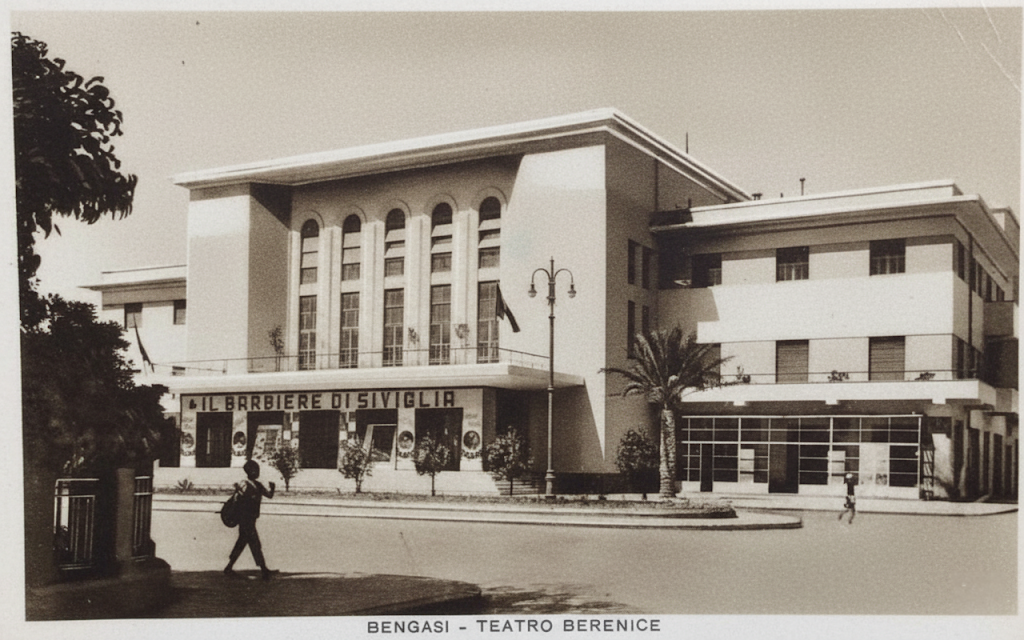
Bernice Theater in Benghazi was established in 1928 and was demolished in 2023
Press, Culture, and Early Cinematic Venues
At the beginning of the twentieth century, after the Young Turk Revolution of 1908, freedom of expression was allowed. Newspapers and bulletins appeared in the Governorate of Tripoli, revitalizing intellectual and cultural life to some extent until the Italian invasion ended the second Ottoman era (1831-1911). The final years of Ottoman rule were marked by an emphasis on culture and literature, including the establishment of the School of Islamic Arts and Crafts to enrich education and crafts.
The Libyan director Mohamed Al-Farjani, in his book The Story of the Libyan Arab Cavalry 1919-1990, states that the first movie theater in Tripoli dates back to the Second Ottoman Era. This theater, called “Cinematograph Bab Al-Bahr,” had its entrance through the famous Arch of Marcus Aurelius. Later, the Italians demolished it along with neighboring houses to prevent blocking the view of the historic Roman arch. With Italian colonization, cinema halls expanded in Tripoli and Benghazi.
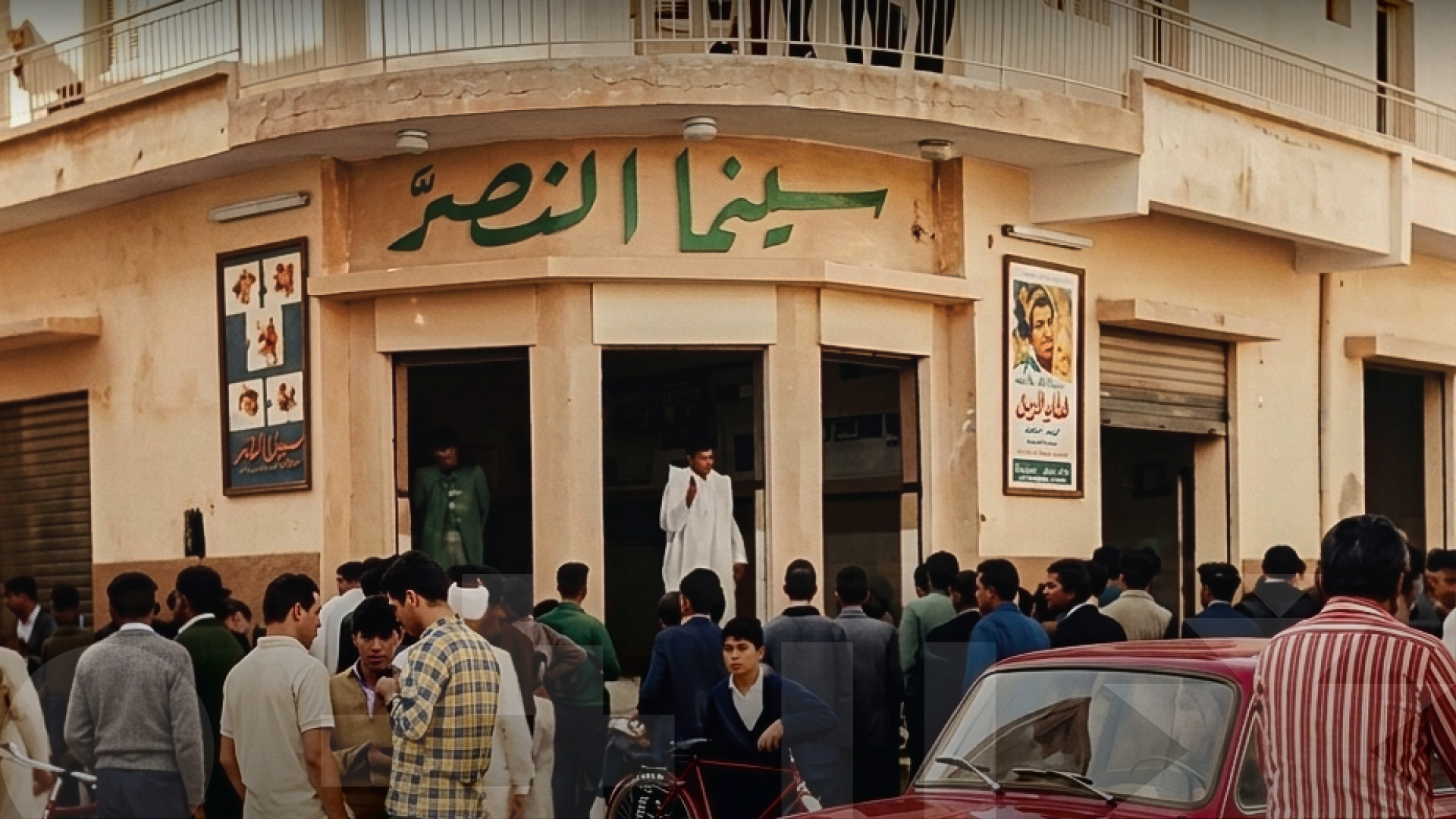
Early shows included shadow plays and “illustrated newspapers,” eventually developing into main cinemas like Al-Rashid, Al-Ghazala, Royal, Al-Nasr, and Al-Qabi. Later, cinemas such as Al-Ghiryani in Tripoli and Old Khoms extended cinematic access beyond major cities. Other notable cinemas of the period included Miramare Theater, Al Hamra, and Berenice Theater in Benghazi.
From Popular Spectacle to Theater
Before the arrival of modern theatre, Libyans enjoyed traditional shadow theatre brought by the Ottomans in the mid-19th century, known as Karakoz. Over time, it became an integral part of festive celebrations, especially during Ramadan and religious holidays. Prominent performers included Hamza Mohamed Al-Wasiti in Tripoli and Salim Al-Makhlal and Bazama in Benghazi. This art form flourished until the early 1950s.
Researcher Abdul Salam Al-Madani, in his study From Theatrical Performances to Emergence of National Cinema, noted that early cinematic attempts were mostly amateur, influenced by Egyptian cinema, which dominated Libyan audiences with dramatic, historical, and religious themes.
He raised the question: why weren’t early pioneers able to contribute to developing Libyan cinema, even in small ways? One example is Fouad Al-Kabbazi, who worked in cinema while studying in Italy and designed the set for The Black Tent, starring Sophia Loren.
A group of young enthusiasts founded the “Libyan Arab Amateur Film Union” in 1968 and produced short 8mm documentary films. However, they faced obstacles such as the policies of the General Organization for Cavalry and a lack of funding.
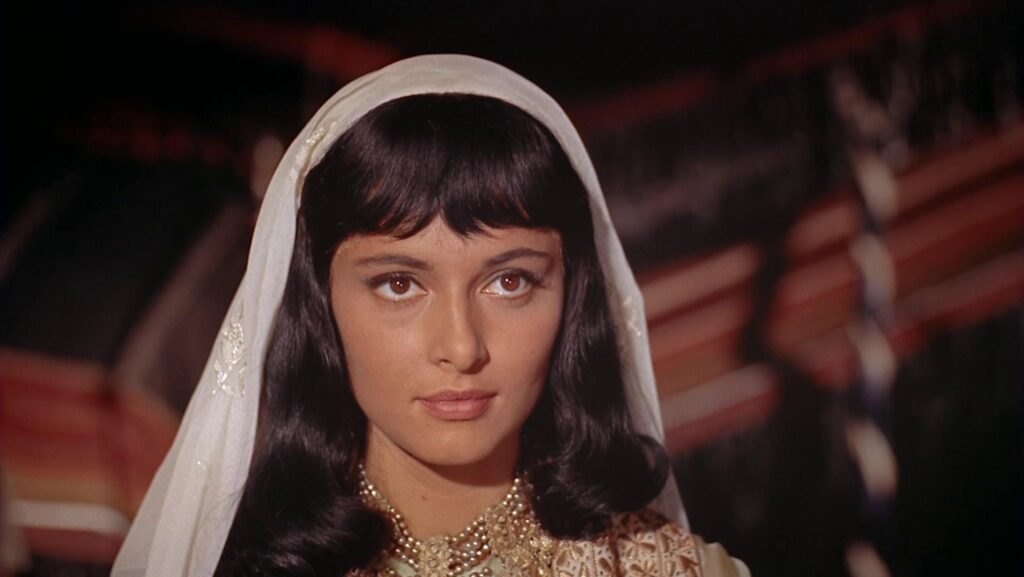
A still from the film The Black Tent (1961), starring Sophia Loren.
The Beginnings of Cinematic Attempts
During his studies in Italy in the 1930s, Fouad Al-Kabbazi gained firsthand experience in film production. In the late 1940s, he collaborated with Italian directors on documentaries, including a film about the zawiyas in Libya.
Between 1963 and 1970, organized cinematic efforts emerged through the Ministry of Information’s film production department, producing documentaries and “illustrated newspapers.”
Feature Film
In the early 1970s, Libyan cinema expanded from documentaries to feature films. This phase tested the local cinema’s ability to produce long-form narratives, despite limited technical resources.
Al-Mughamar (1971), directed by Taher Omar, is one of the earliest narrative films in Libya, representing a serious attempt to develop feature-length storytelling. Further attempts in the 1970s and 1980s sought to establish Libyan cinema, though the industry never fully matured.
Nevertheless, these efforts uncovered young talent in directing, acting, and cinematography, highlighting the urgent need for cinematic institutions and infrastructure, which were still lacking.
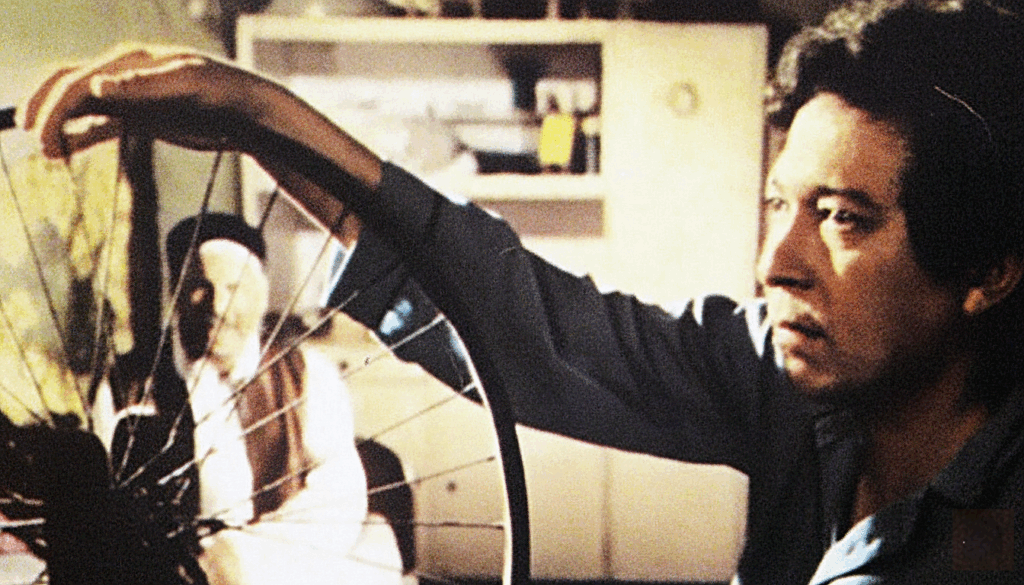
A still from the film The Green Light (1976), starring Taher Al-Qibaili
Local Beginnings of Film Production
After independence in the 1950s, the Ministry of Information established a department to document cultural, political, and social activities. In the 1960s, director Mohamed Al-Farjani, who studied cinema in Egypt, produced his first feature film in 1967, though it was never completed.
The Libyan Arab Film Production Company produced films like When Fate Is Cruel and The Road, addressing challenges such as connecting remote cities with paved roads to facilitate transportation.
According to Abdul Salam Al-Madani, the General Organization for Cavalry, starting in the 1970s, relied on foreign and Arab talent for directing and cinematography. Notable productions included The Ambassadors (Libyan-Tunisian-French), directed by Nasser Al-Qattari, which depicted migrant workers in France. Moroccan director Ali Al-Masbahi also contributed melodramatic musical films, including The Green Light and Where Do They Hide the Sun?.
Conclusion
The history of cinema and the arts in Libya highlights major challenges caused by colonial occupation, politics, and a weak cinematic infrastructure. Nevertheless, early experiences in theater, popular arts, and cinematic experiments laid a foundation for understanding the development of Libyan cultural and cinematic identity.
Kholoud Elfallah