In recent years, I’ve become interested in Arab production especially after the international recognition of some, entering major competitions and nominations at the Oscars and Venice Film Festivals. There were films from Egypt, Lebanon, Jordan, and other countries that got nominated as well which made me curious to learn more about the Arab institutions and companies producing this type of cinema, a genre that—even with grants—maintains its independence, where the director can bring their ideas to life, without restrictions.
In 2018, the Doha Film Institute announced the films to be featured at the Ajyal Film Festival. Among them, a Libyan documentary titled ‘Freedom Fields’ directed by Naziha Arebi was selected to open the festival. This was news worth celebrating—not only for the story itself but also because it reflected a long-held dream of mine: for a Libyan film to reach the world, with characters and struggles that resemble our own.
I contacted my friend Sufian Arara, a member of the film’s cinematography team to share my joy. He conveyed the director’s greetings, who thanked me for my support. Since then, we’ve been eager to watch the film.
Libyan Girls Playing Football Resisting Barriers
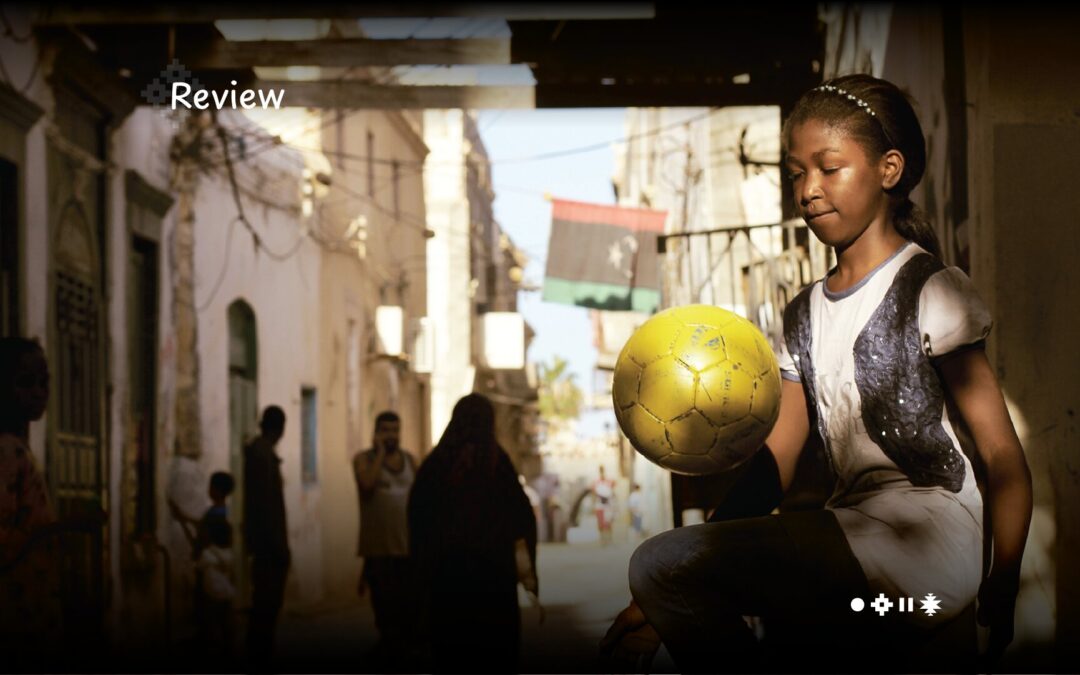
The film is about Libyan girls united by the dream of forming Libya’s first women’s national football team post revolution. However, this dream faces multiple social and security obstacles. The films narrative is divided into three separate storylines of Fadwa, Halima, and Namaa, along with the story of the team’s formation.
The documentary captures this story during a sensitive and transformative period in Libya, addressing a subject often overlooked or dismissed by society.
Three stories… three battles…
Each girl fights her own battle:
- Fadwa struggles with the tension between wearing a hijab and the pressure of marriage, saying, “We are born and then grow up just to get married!” Her family’s support ends at the threshold of marriage, which her mother believes every girl must go through.
- Halima, a goalkeeper and doctor, has a sincere passion for football, inspired by stars such as Lionel Messi and Xavi. She strives to balance her profession and her love for the sport, demonstrating immense dedication and sacrifice for what she loves.
- Namaa, from Tawergha, faces the misfortune of displacement while raising a child, despite her struggles she continues to play football to express her resistance, while lacking many rights, including returning to her city.
These three stories portray the struggles of Libyan girls upon choosing their own paths in life.
When a Documentary Is Told Like a Narrative
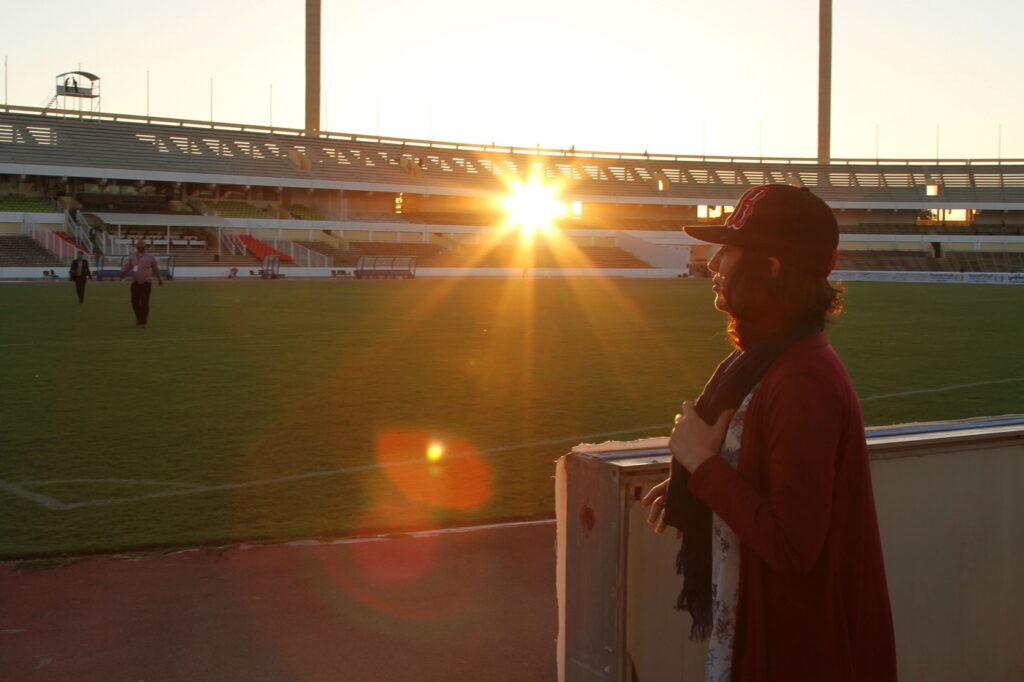
Naziha Arebi distinguished herself in the storytelling approach, making some dialogues and scenes feel as if they were scripted, or at least crafted intentionally. This gives the film a narrative quality, enhanced by cinematic photography and strong performances, particularly by Fadwa, who seems chosen as the voice of the film and its core messages.
The dialogues were honest and moving, including one of the players’ lines to Halima after the loss: “Don’t be upset. We Libyans are always unlucky!” This type of narrative loads the film with an internal message that transcends the time of its production while remaining relevant to Libya’s current reality, given the changing times.
Exceptional documentation and Well-deserved success.
Freedom Fields has won several awards, including Best Film at the 2018 Joburg Film Festival and the Feather Award for Best Feature Documentary at the 2018 Karama Human Rights Film Festival. It was also screened at major festivals including Toronto and is part of the Criterion Collection. One remarkable event was the film’s screening at the invitation of Spanish club Atlético Bilbao, where the director attended to discuss the film.
To conclude, the film delivers a Libyan experience in depth and professionalism, encouraging Libyan filmmakers to convey a message with their work.
Running in Barren Fields
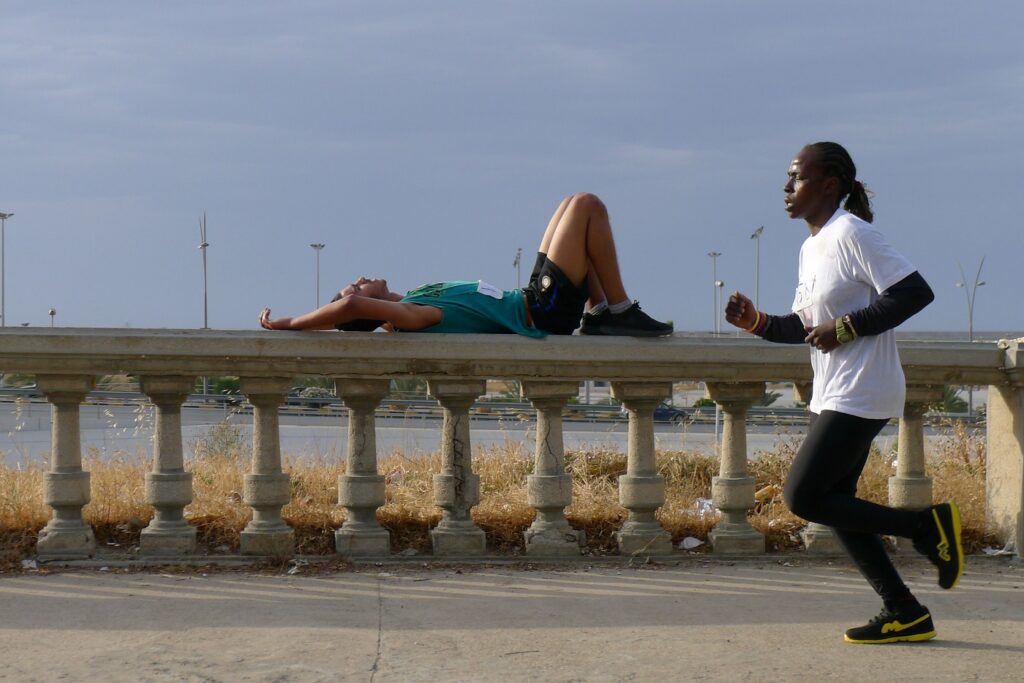
It seems that director Naziha Arebi didn’t enter filmmaking by coincidence or merely to experiment. Rather, she’s a cinephile. Some scenes of Namaa running recall moments from Frances Ha and Forrest Gump. These cinematic touches enrich the film, transforming it beyond mere documentation into a work of art with a true cinematic spirit.
Freedom Fields, a space that isn’t easily accessible, embodies the truth of freedom in our country and its high cost, forcing a person to sacrifice their dreams, or what remains of life.
Mohammed Ben Omran