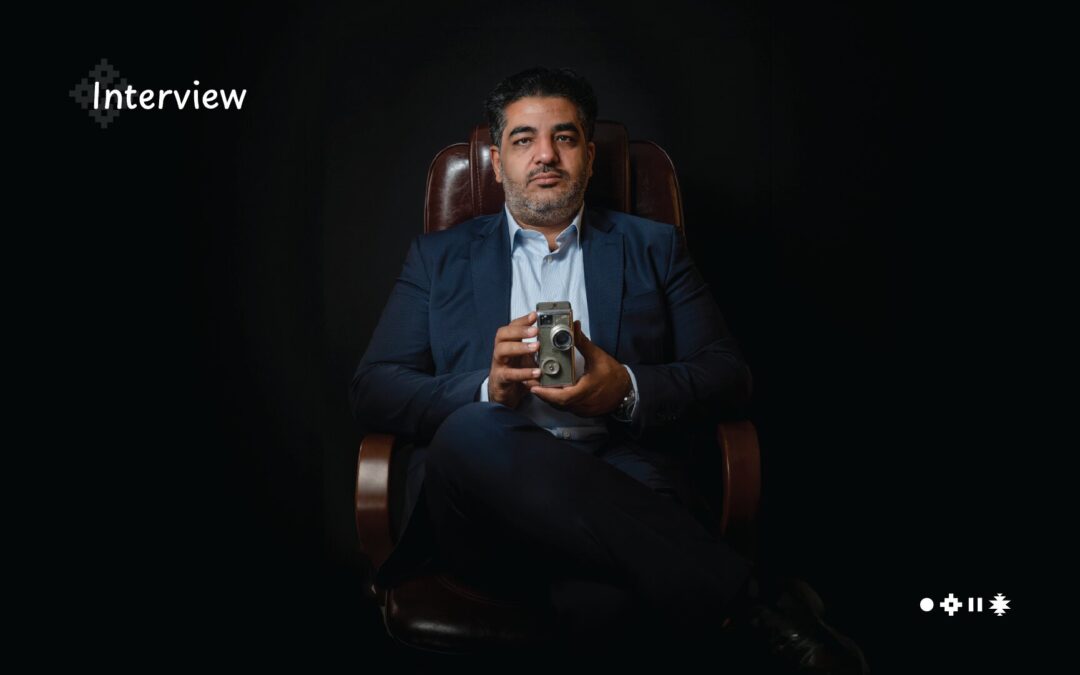
Today, we will talk about art and cinema, with the creative Libyan director Osama Rezg, who has acclaimed around 14 drama series and many short and feature films. He began his career studying filmmaking and presented his first documentary ‘Al Nihom’ (Master of Words) in 2008, followed by several dramas that got high views. One of the most prominent of these is the series ‘Banat Al-Am,’ which aired on the leading platform Shahid. His name has become a powerful presence in the Libyan and Arab drama scene despite the difficulties he faced.
We will be exploring his cinematic credits and discuss his diverse artistic career, delving into the reality of cinema in Libya, which he described to Libya Film Institute as “a bleak present, but an optimistic future.” In this interview, Rezg discusses the importance of artistic production and the actual challenges faced by Libyan filmmakers.
1- Could you tell our readers about your cinematic experience?
My first cinematic experience was through a series of documentaries. At first, it was more of reporting films than documentary films, as it was documentation of public projects but I tried scripting them in the style of documentary films, while using an interesting dialect to engage viewers. Moreover, I was amongst the first that used voiceovers by celebrities like Jihad Al-Atrash and Mahmoud Saeed.
In 2008, I directed Al-Nihom (Master of Words), about the Libyan writer Al-Sadiq Al-Nihom. It was filmed between Tripoli, Benghazi, and Beirut, and it was my first documentary film.
After that, I worked on the short film The Random, which was featured in 16 international festivals, winning the bronze award at the Gabes Maghreb Film Festival, a special mention from the jury at the Oujda Arab Film Festival, and the Best African Film award at the “Art” Festival in Cameroon.
I directed “Al-Barony” in 2021, a biopic of a Libyan activist Suleiman Al-Barony. It was the first feature- historical film. It won Best Director, Best Screenplay, and Best Actor at the Oujda Film Festival in Morocco, but only shown in a few festivals, perhaps due to the film’s historical nature.
My latest experience was my second short film, “Rise,” which is 16 minutes long and discusses the issue of administrative corruption in Arab countries, and how officials are chosen based on personal contacts. The film criticizes the theme of favoritism and corruption in Arab countries. The film first participated in the Khouribga African Film Festival, where we won the African Film Award from the African Federation of Filmmakers. The film will be participating in other festivals soon. I wish my cinematic portfolio was larger, but certainly, future opportunities will expand it.
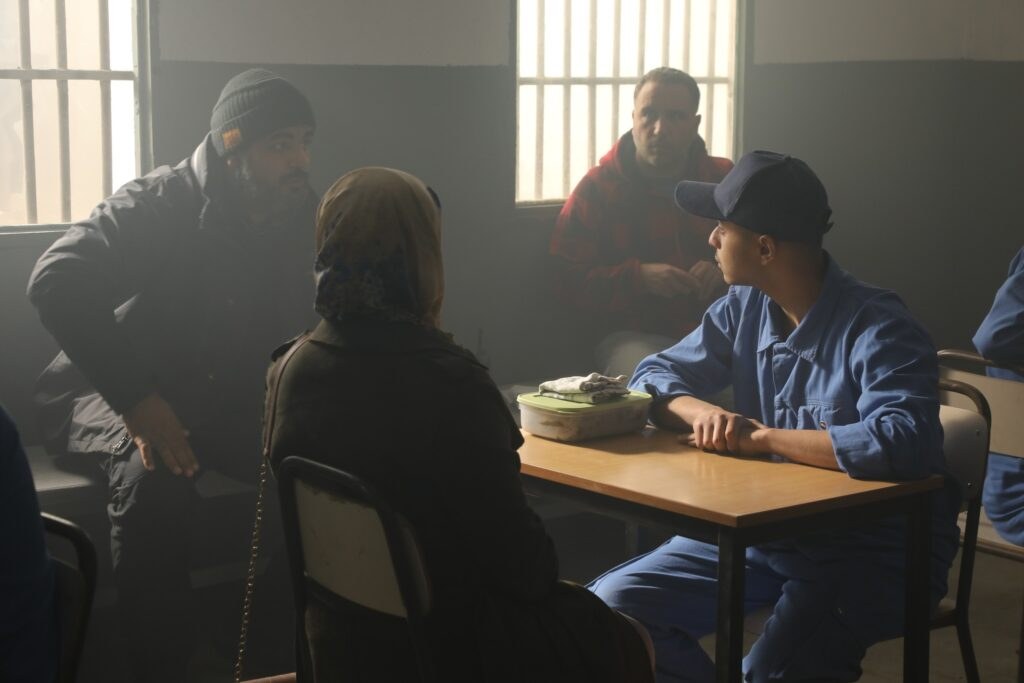
Behind the scenes of the series ‘Banat Al-Am’, Libyan director Osama Rezg appears with actors Ahmed Ammar and Aya Shou
2- Do you have any new film projects?
Yes, I do have projects that are under study and are seeking support, trying to establish a large cinematic base. Unfortunately, the situation in Libya isn’t favorable for filmmakers.
3- Is the diversity of your work between drama and cinema a deliberate approach, or is it due to the reasons and difficulties crossing film production in Libya?
I hate repetition. I do not like redoing the same style and parts and it’s obvious in my work. I only have the ‘Al-Saraya’ series in two parts, because my plan along with Siraj Al-Hawaidi, and producer Walid Al-Lafi – was for a trilogy. However, the second part featured a difference in the directorial vision, the cinematography, even the series’ style.
Ultimately, I don’t want to stick to the same tone but sometimes the decision is or isn’t yours, rather the circumstances. That’s why I try to present diversity in terms of story, cinematography, and even editing. I don’t want to be remembered as a director with a “one-size-fits-all” style.
4- Are there particular subjects you can address in cinema but not in drama?
Absolutely! Drama reaches every household and various social groups, so one must be cautious in addressing topics, whether social or political. Cinema, however, has a selective audience. The moviegoers chose to go and watch a film; they must accept the director’s vision, even if they disagree. Cinema allows you to present topics globally, unlike drama, which is more confined. In cinema, you are freer to express your perception without being influenced by other opinions.
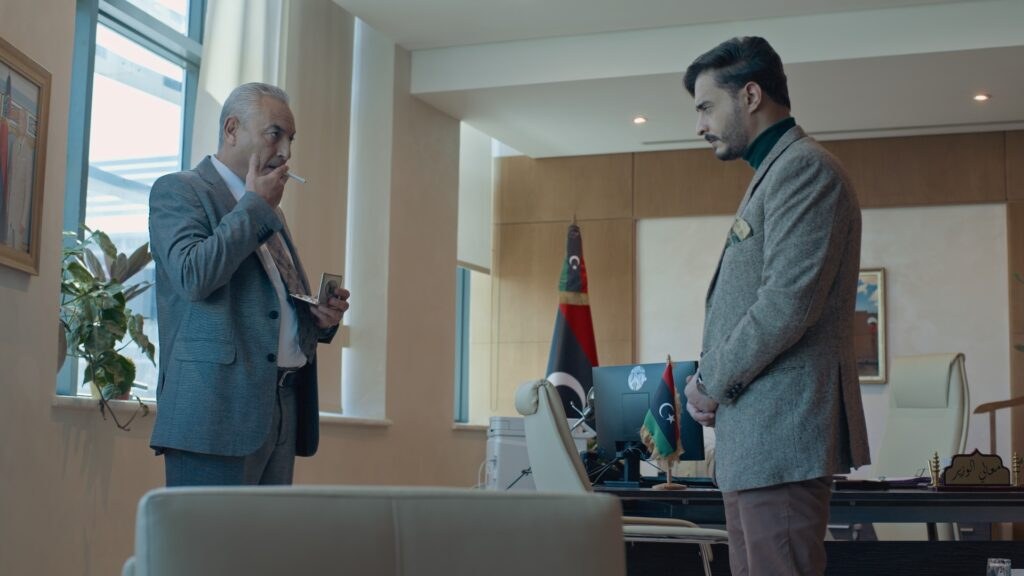
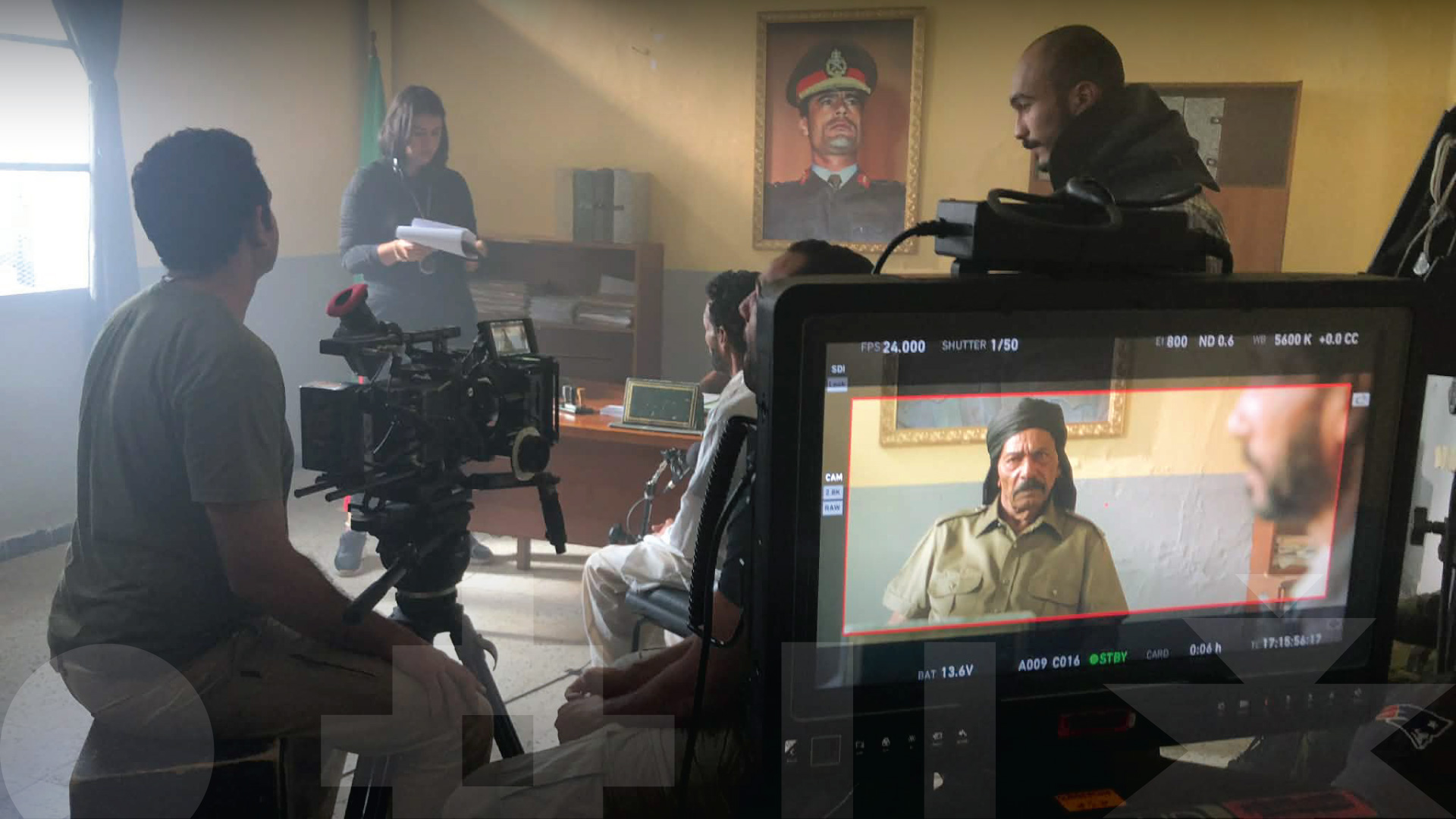
A shot from the film ‘Rise’ by director Osama Rezg, featuring actors Abdel Baset Abouqanda and Mohamed Ben Nasser.
5- How can intellectuals and directors contribute to addressing societal issues?
Frankly, my opinion is contradictory. I believe that art plays the role in addressing the issue and presenting it in an artistic way. It is my duty to present an issue using my creative vision in an attempt to probe it, but addressing it is on the other parties, including the state, institutions and society.
6- How do you assess the current state of Libyan cinema?
It is poor. The current reality is rough, but I am optimistic about the youth who are eager to create films in Libya. Most efforts are individual, as the state provides no financial support for cinema. Arab and international funding agencies largely ignore Libyan cinema. While young directors apply for grants and festival support, Libya rarely receives funding, unlike countries like Tunisia, Morocco, Sudan, or Egypt. Nonetheless, I remain hopeful for the future, the youth, and creators with a vision, and I am optimistic that state support will come soon.
7- What are the most prominent challenges facing Libyan filmmakers, given the absence of institutional support and the weak infrastructure?
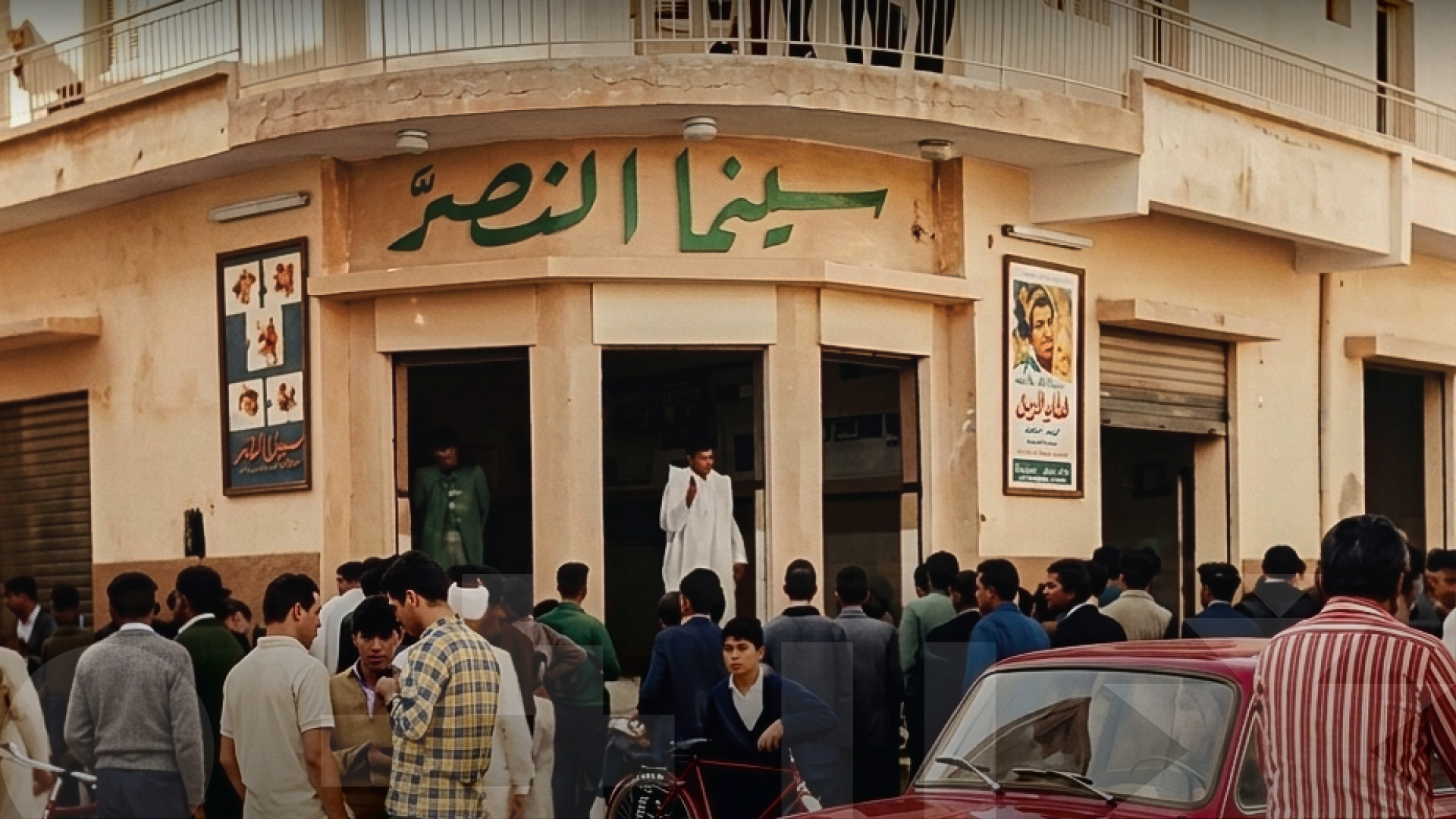
Honestly, the infrastructure isn’t just weak, it is nonexistent in Libya. There isn’t a single movie theater in the entire country. Before 2011, there were around 15 movie theaters. We lack comprehensive cinematic equipment, whether public or private. For instance, if we decided to produce a full-length film in Libya, we would have to ship in equipment. Moreover, there aren’t enough skilled technicians to produce a film with a full Libyan crew. The state should establish theaters and a supportive production environment.
8- How do you see the development of film production in Libya in recent years?
There are few successful projects, including the film ‘Prisoner and Jailer’ by director Muhannad Lamin, a remarkable film that participated in the Carthage Film Festival, along with the film ‘Athar’ by director Faraj Maayouf, director Mouayed Zabtia’s film called Emirate,’ the short documentary ‘Champion’ by Mohamed Masli, and ‘Freedom Fields’ by Naziha Arebi. Yet these remain small steps in establishing Libyan cinema.
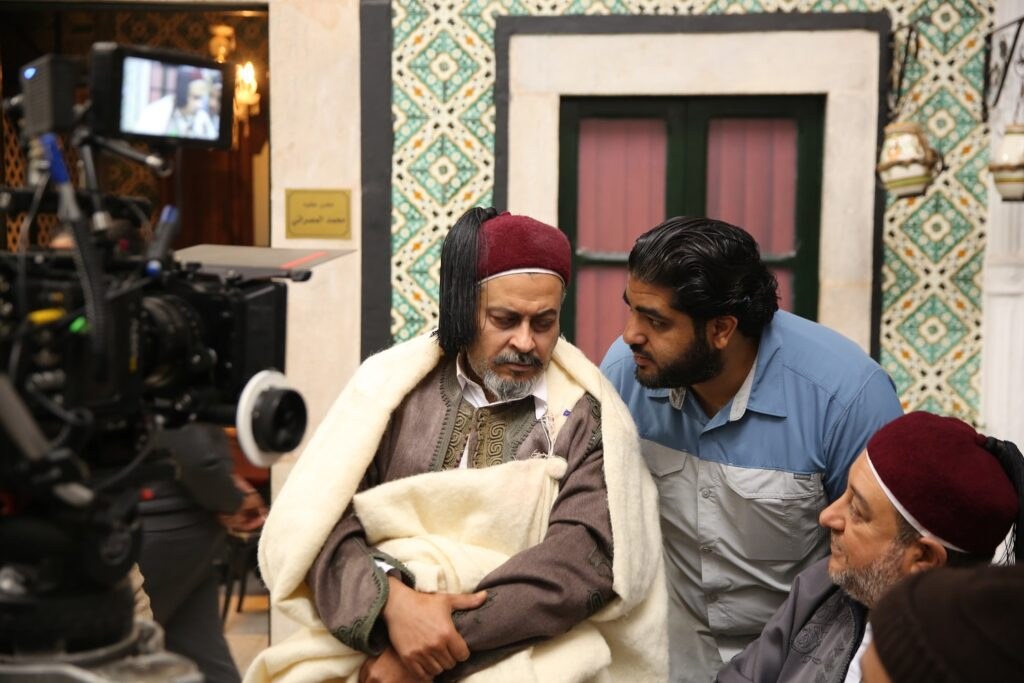
Behind the scenes of ‘Zanqat Al Reeh’: Osama Rezg with Mohamed Othman and Khaled Kafo
9- Is it possible to transform a society by influential cinema?
At the present it is almost impossible as there aren’t any screening venues that welcome citizens to watch and discuss the issues raised in films. This is where the problem lies: we are raising issues and topics that touch us and express who we are. Unfortunately, we cannot convey them to the audience.
10- Who is your targeted audience?
I focus on universal human issues, not only Libyan viewers. For instance, the protagonist in ‘The Random’ could exist anywhere in the world where rights are denied. Similarly, the minister character in Rise represents officials found in many developing countries. Our themes are human, addressing both Libyan and international audiences.
11- Can Libyan cinema regain its status and effectiveness in society?
The real problem we face is the lack of cinemas. A film must be screened under excellent technical conditions to ensure its impact. But I hope for a flourishing film sector, with support from inside and outside Libya. I also hope that you play a role in raising awareness about the importance of cinema, so that cinema culture can grow and screening venues in the country can once again showcase our work.
Shayma Tabei