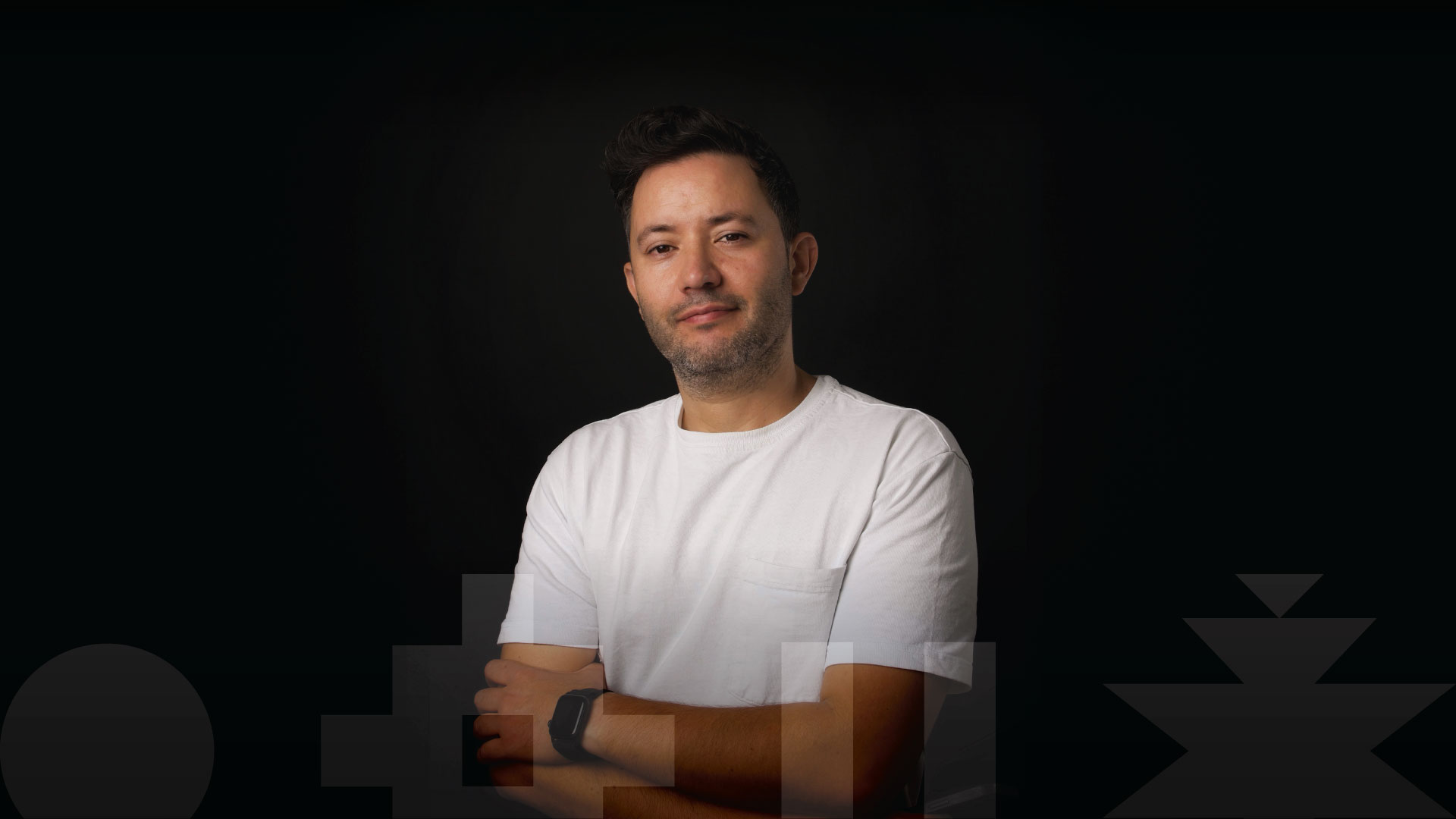

In an interview with the Libya Film Institute, director Mohamed Masli confirmed that Libyan filmmakers today face numerous production and filming challenges amidst a near-total absence of financial support.
Masli discussed his beginnings in filmmaking and the vital role of documentaries in addressing human rights issues, exploring the Libyan audience’s appetite for the genre. The conversation also touched upon whether documentary cinema can truly impact Libyan society, his own future projects, and his assessment of the country’s cinematic landscape today.
1- How did you begin your journey in filmmaking?
Honestly, my journey began in the media field back in 2008. Then, in 2019, I received 10 months of training in documentary filmmaking from Germany’s Deutsche Welle Akademie, in addition to storytelling training with Zenith Magazine. From there, I launched my career in documentary filmmaking.
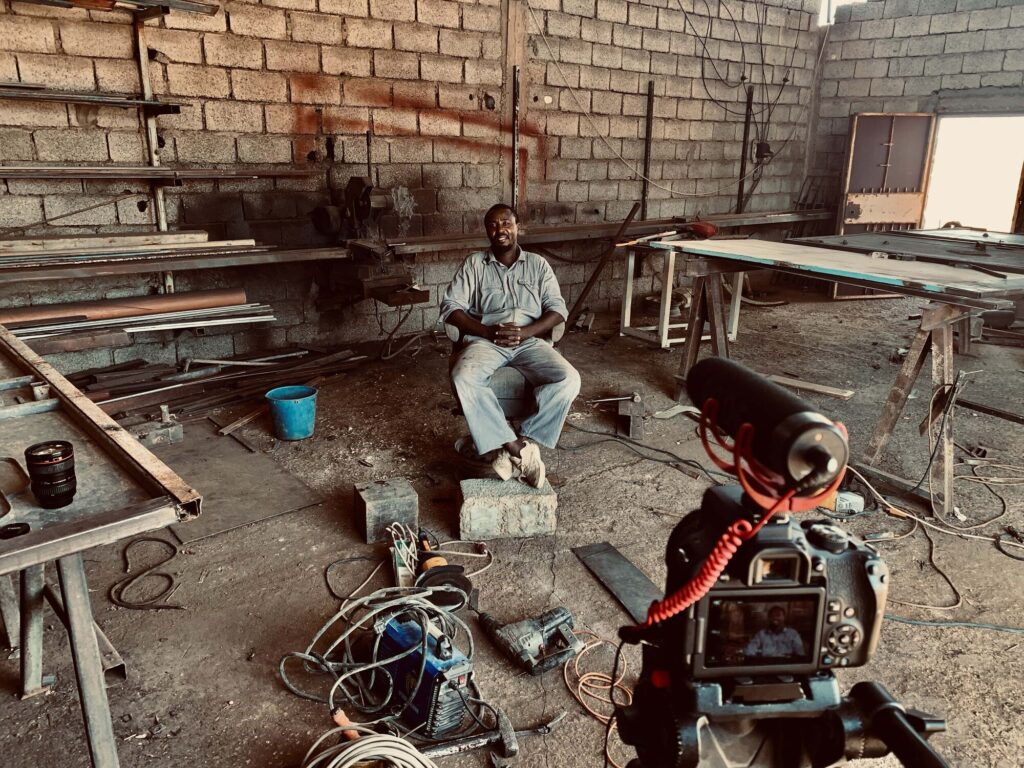
I currently have four short documentary films to my name. It started in 2021 with the film Tawergha’s Blacksmith, as part of the Libya Film Institute’s “Step” project.
In 2022, I made my second short documentary, To the Council, which was about the role of women in elections and society’s perception of women working in Libyan politics.
Then, in 2023, we collaborated with the Jusoor Organization to produce Lost Rights, a film that addresses the absence of the rule of law in Libya.
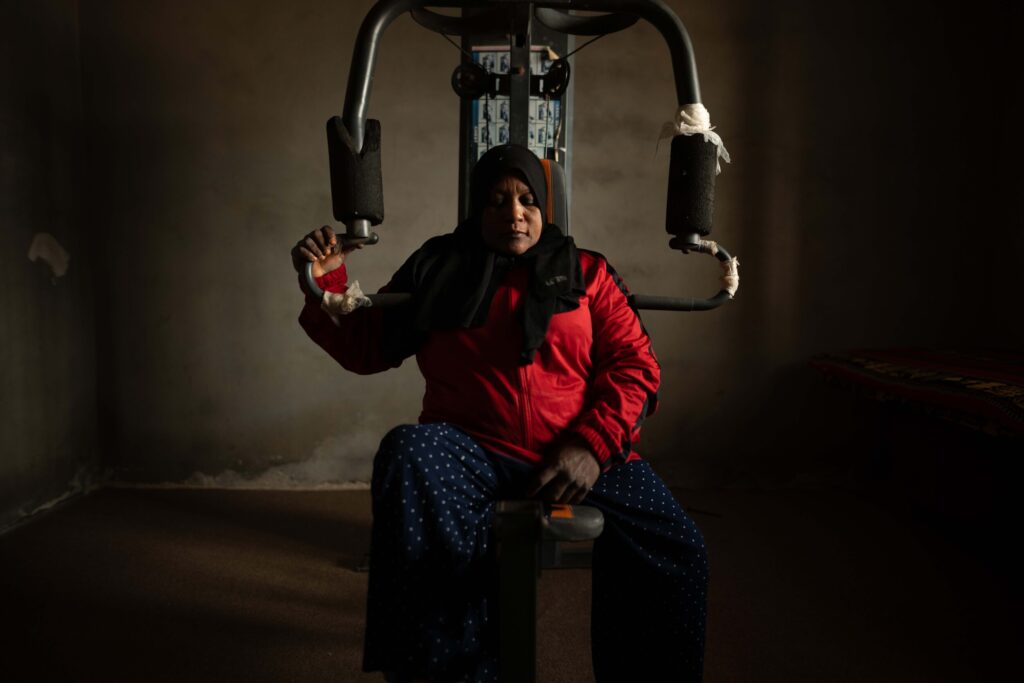
Finally, in 2024, we produced Champion, which deals with the rights of women with disabilities. I am currently working on several new projects.
2- Why did you start with documentaries rather than narrative films?
From my earliest days working in media and developing television programs, I was always searching for impactful and unique human stories. I truly enjoyed the time I spent speaking with participants to understand their lives and the details of their experiences. This is what led my programs to always focus on documentary-style storytelling.
I find myself more in the documentary form because I love meeting people directly and speaking with them without barriers or intermediaries. Some films take two or three months of preparation, and I enjoy this phase of the work, especially when there’s a challenge in interviewing one of the film’s subjects or convincing them to be filmed and have their story shared. For example, in Lost Rights, there were four women featured in the film. As you know, it is very difficult for women to appear on camera in Libyan society. But I didn’t give up, and I succeeded in including their perspectives in the film, shooting several scenes within their safe space.
I do have plans for narrative films in the future, but for now, my focus is on documentaries. Another primary reason for this is that the production cost of a documentary is significantly lower than that of a narrative film.
3- Did you face challenges during the production of your film projects?
While making my first feature-length documentary, I faced many difficulties related to the high production costs. Producing a long-form documentary that meets international standards turned out to be incredibly expensive. For instance, the project we are working on now requires a budget of around $60,000. This is because, with my short films, I relied on my own individual efforts for shooting, editing, and preparation, and the crew was never more than four people. In contrast, a feature-length film requires a crew of at least 15 people.
4- Have you ever received financial support from within Libya?
Unfortunately, no. The only thing I received was a small grant for Lost Rights, which was just to provide payments for the technicians working on the film. It wasn’t really support, just a token of appreciation.
5- What are the main funding difficulties Libyan filmmakers face?
Over the last 20 years or so, a real gap has formed in Libyan society. Generations have grown up without cinema, without films, without a single movie theater. This has made both the public and private sectors completely uninterested in cinema. You find that all sponsorship and support automatically goes toward Ramadan television dramas to meet audience demand, where artistic production is consumed just once a year. And even then, the state of television production is not much better off than the film scene.
In reality, on the ground, a film industry simply does not exist in Libya. All the attempts we see today are personal endeavors by individuals like Osama Rizk, Muhannad Lamin, Faraj Meayouf, Moayed Zabtia, Yousef Eljedabi, and Ayoub Ahmed, among others. But they remain isolated efforts, not an organized industry.
6- Is there any financial support from Arab or foreign entities for Libyan films?
Personally, I have tried to apply for more than one grant outside of Libya, but I am rejected every time.
During my participation in the Oran International Arab Film Festival last year, someone advised me that I needed to partner with a foreign producer to be able to secure foreign grants. I did contact two producers, one from America and one from Tunisia, and both gave me the same answer: “I am not prepared to apply for a grant to produce a Libyan film because Libya is an unstable country. If we get the grant and then a problem suddenly erupts in Libya that halts the project, I will lose my reputation with the funding bodies.”
Their advice was to secure initial funding from within Libya, work on producing the film locally, and then apply for completion or encouragement grants—not full production grants that cover a film from the initial idea and script phase.
Some people do manage to get foreign grants, but these are small, supportive funds, not the kind of grants that allow you to produce a feature film from start to finish according to international standards.
7- What are the real factors that have led to the absence of a film industry in Libya today?
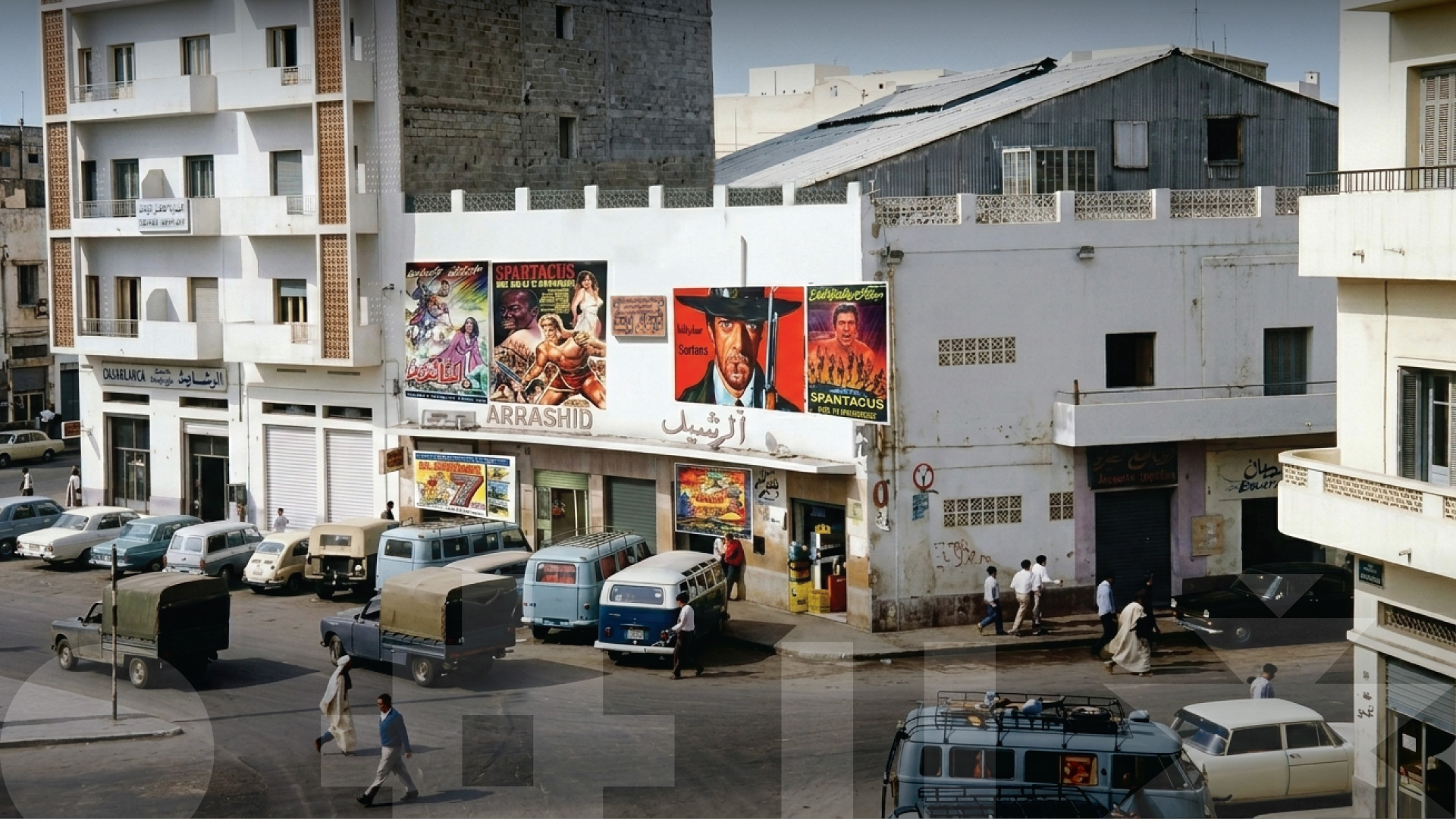
We come back to the primary historical reason, which is the 20-year time gap between the last cinema screening in Libya and today. This is what caused people to drift further and further away from cinema and lose interest in film production. In addition to that, there are many other reasons, most notably the fragile infrastructure, the absence of film production companies or support funds, and the lack of theaters.
We conducted an experiment where we screened a collection of Libyan films in collaboration with the Misrata National Theater, which is a space equipped with a large screen and good technology, with a capacity of about 360 seats. We sent out invitations for free attendance, but the turnout never exceeded 100 people. This just confirms how little interest the average Libyan citizen has in films and cinema screenings.
In contrast, the first screening of Lost Rights was completely full. The reason was that we put up a large promotional banner a month before the screening, but it was very expensive and we paid for it out of our own pockets. This experience shows us that we must think seriously about rebuilding the foundational infrastructure for a film industry in Libya, from theaters to financial and media support.
8- How can documentary films contribute to changing the reality in Libya today?
The director Federico Fellini was once asked, “Why do you love making documentary films?” He replied, “There is nothing more magnificent than reality.”
Art is a mirror of society, whether it’s cinema, drama, or even folk songs. There is nothing more beautiful than expressing society through art. In cinema, when you tackle an issue with sound and image and convey real, human stories, your message reaches people faster. This is especially true when documentaries are about real people and real issues stemming from the community and the daily problems of its citizens.
When we screened Lost Rights, viewers couldn’t believe that the people in the film were real and that their stories were true events from Libya, not acting. They were shocked that the problems raised by the film actually exist in our society. This is why documentaries open the door for serious discussion about the issues facing marginalized groups — people who live among us but are neither seen nor heard.
I believe the great advantage of art is that it presents a beautiful artistic image that allows the viewer to enjoy their time, while simultaneously addressing critical human rights issues. In my film Champion, we highlighted some of the rights of people with disabilities in Libya, especially women. The film told the story of an athlete, Souad, who had to travel over 20 kilometers from her city for training and had her monthly disability benefit cut off because she got married. This caused her financial problems and stood in the way of her athletic dream. Thanks to the film, two of the many problems it highlighted were solved: a means of transportation was secured for the athlete, and her monthly benefit was reinstated.
For us filmmakers, that is the greatest achievement and the most valuable prize, when we can create change and inspire hope.
Shayma Tabei