Production Year: 1976
Runtime: 178 minutes
Genre: Historical / Religious / Biography
Director: Moustapha Akkad
Evaluation: Worth Watching.
It is impossible to discuss cinema with a civilizational dimension in the Arab and Islamic world without pausing at the legacy of Moustapha Akkad. He was a filmmaker who transcended local markets and identity politics, striving instead to present a universal human discourse through the language of film.
While Lion of the Desert represented the peak of artistic expression regarding national resistance, The Message remains Akkad’s most daring project. It carried immense religious weight, historical sensitivity, and presented artistic challenges that were unprecedented at the time. In The Message, Akkad sought to present Islam not merely as a historical timeline or a display of rituals, but as a universal humanitarian message, relying on a cinematic vision that respected the sanctity of the subject without compromising artistic integrity.
Between Holiness and Cinema
The film deals with the beginnings of the Islamic call, from the first revelation to the Prophet Muhammad (PBUH) until the conquest of Mecca. Crucially, it avoids any physical depiction of the Prophet, adhering to Islamic consensus and respecting the sensibilities of the Muslim audience.
This directorial choice, which some viewed as a technical restriction, was transformed by Akkad into an ingenious aesthetic solution. The camera became the “eye” of the message, the audio served as the echo of the call, and movement expressed meaning rather than personhood.
The film adopted a traditional linear narrative, tracking the evolution of the call from vulnerability to empowerment without resorting to complex time-jumps or deconstruction. While this gave the work a dignified, documentary-like quality, it admittedly slowed the pacing during certain dialogue-heavy sections, particularly in the middle of the film.
Characters and Performance
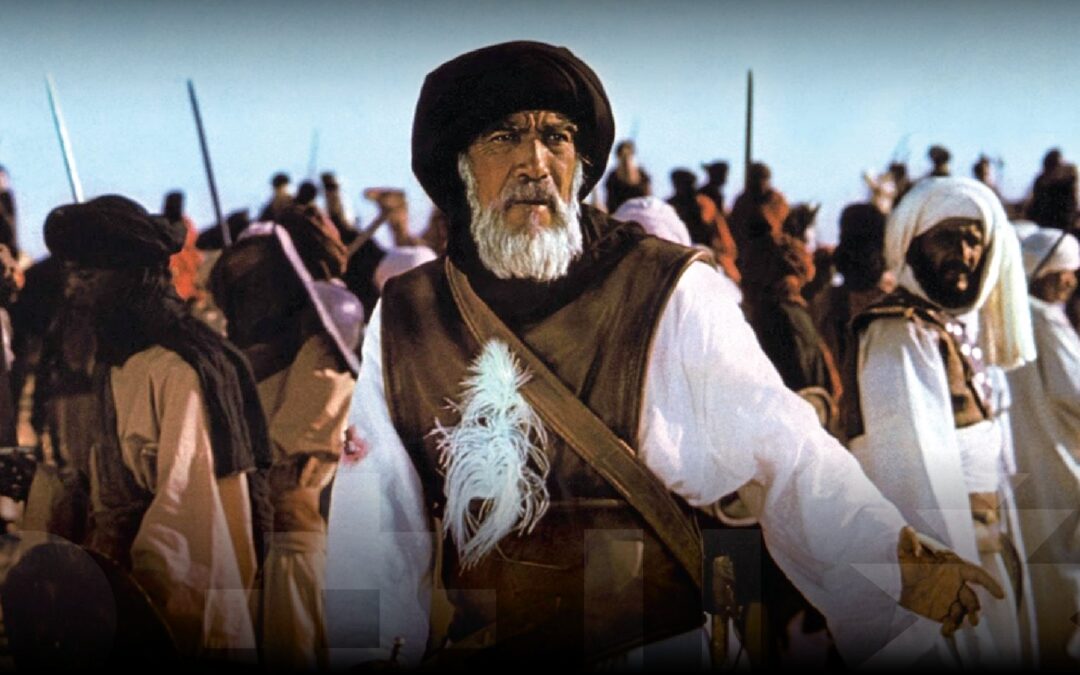
Anthony Quinn delivered a powerhouse performance as Hamza ibn Abd al-Muttalib, combining physical ruggedness with deep humanity. He portrayed Hamza not just as an epic warrior, but as a symbol of courage coupled with faith. In the Arabic version, Abdullah Gaith also gave a remarkable performance in the same role, preserving the character’s prestige and spiritual depth.
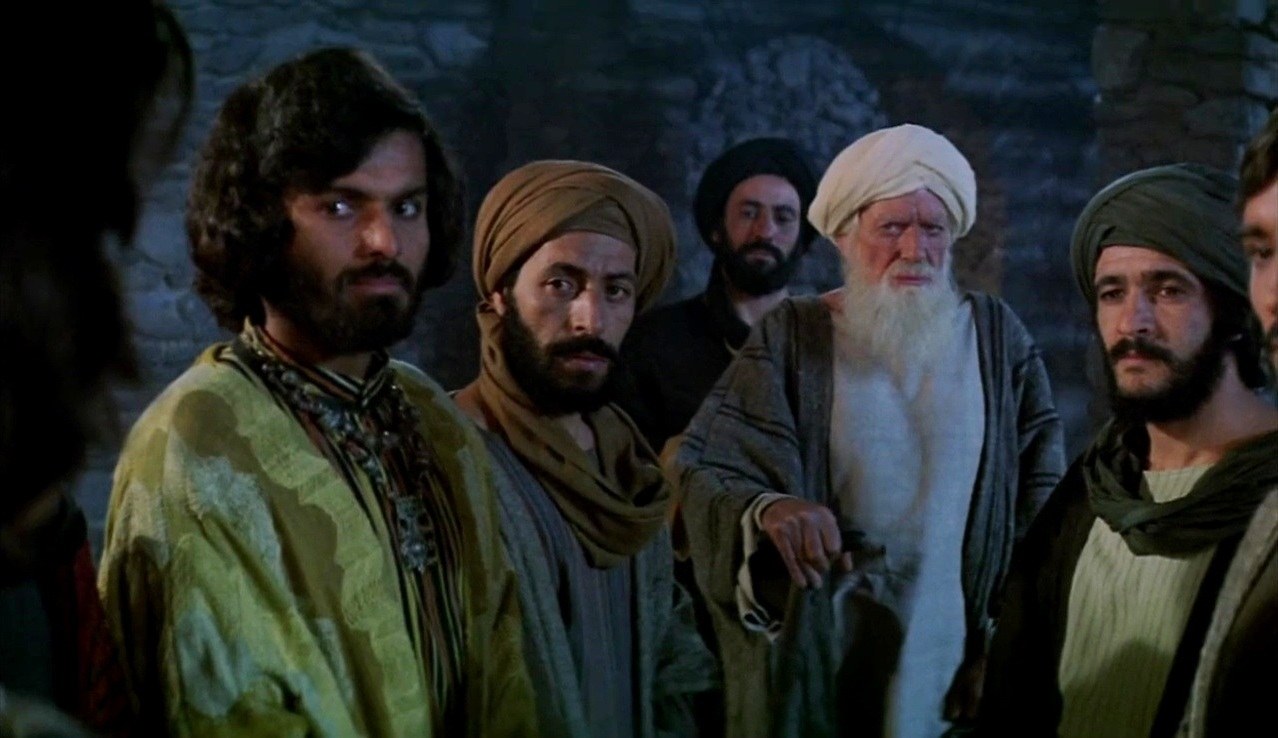
Conversely, some secondary characters—particularly in the Quraish camp—suffered from limited dramatic development, appearing more as symbolic archetypes than complex psychological beings.
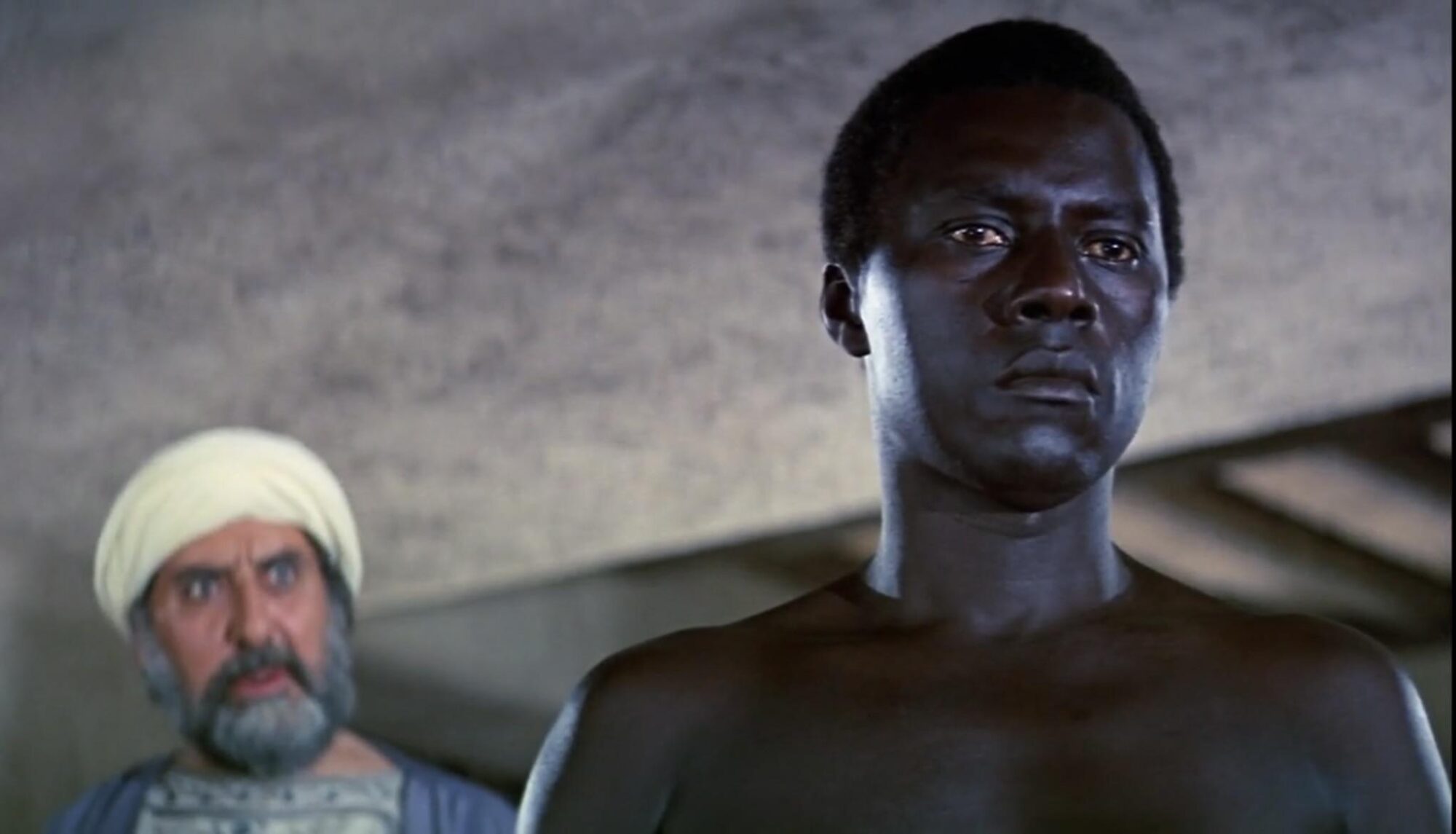
Notably, Libyan actor Ali Ahmed Salem recorded an honorable presence in the film through his portrayal of Bilal ibn Rabah. He delivered the role with profound human sincerity, showcasing the character’s suffering and steadfast adherence to principle. His performance stood as a testament to the ability of Libyan artists to integrate seamlessly into major historical works and contribute to immortalizing Islamic icons through high-caliber art.
Directorial Vision and Technical Mastery
To Akkad’s credit, he produced a religious film with world-class production standards at a time when Arab cinema lacked such technical capabilities. Filmed across Morocco and Libya, the production utilized thousands of extras to reconstruct the historical environment, granting the viewer distinct visual credibility.
Technically, the musical score was pivotal in building the film’s emotional landscape. The melodies were a blend of spiritual solemnity and historical epicness, supporting the narrative without overpowering it. The camera work was largely calm and balanced, fitting for the subject, with calculated intensity during scenes of conflict.
The artistic excellence of the film reached a global level, and its soundtrack received widespread critical acclaim during the Academy Awards season, as one of the most prominent cinematic musical works of that period.
Between Historical Accuracy and Advocacy
Since its premiere, The Message sparked wide debate—less about its historical accuracy and more about the representation of Islam in Western cinema. Akkad was meticulous in adhering to approved Islamic sources, consulting committees from Al-Azhar and other Islamic bodies to ensure the integrity of the content.
However, the film is not devoid of simplifying certain historical complexities. This simplification is understandable given the desire to address a non-specialist global audience; the film does not claim academic comprehensiveness but seeks to present the essence of the message: monotheism, justice, and human dignity.
Premiere and Reaction
Released in the mid-1970s amidst a politically and religiously tense atmosphere, the film faced bans and objections in several countries on both religious and political grounds. Despite this, it eventually received a warm reception across the Islamic world and is considered a precedent-setting step in introducing the West to Islam through the “Seventh Art.”
A Balanced Critical Reading
While The Message holds high intellectual and artistic value, it is not a flawless work. The pacing drags in certain chapters, and the dialogue is occasionally declarative and direct, serving the idea more than the drama. Furthermore, the focus on the educational aspect sometimes diluted the psychological depth of certain characters.
Yet, these observations do not diminish the film’s value; rather, they place it in its natural context. It was a foundational work that opened a door never before knocked upon, succeeding in combining the sanctity of the subject with the demands of cinematic imagery.
It must be emphasized that any artistic reading of the film does not touch the sanctity of the religious text nor the truth of the Prophetic biography, but rather addresses the cinematic work as a visual medium.
Legacy and Importance
Today, The Message is an indispensable cinematic reference for Islamic history. It has transcended its status as a mere movie to become a cultural document, broadcast during religious occasions and studied in media and film departments. Following Moustapha Akkad’s death in 2005, interest in the film was renewed as the pinnacle of his intellectual and artistic project.
Akkad succeeded in making cinema an ethical platform and the camera a tool for “soft advocacy.” The Message remains an exceptional work in the history of cinema because it did not content itself with narrating an event, but presented a value. It did not display religion as the past, but as an ethical project valid for all times.
If Akkad believed that a camera could be a message, his film proved that honest cinema is capable of being a bridge for connection, not a battleground.
Muhammad Ben Saoud