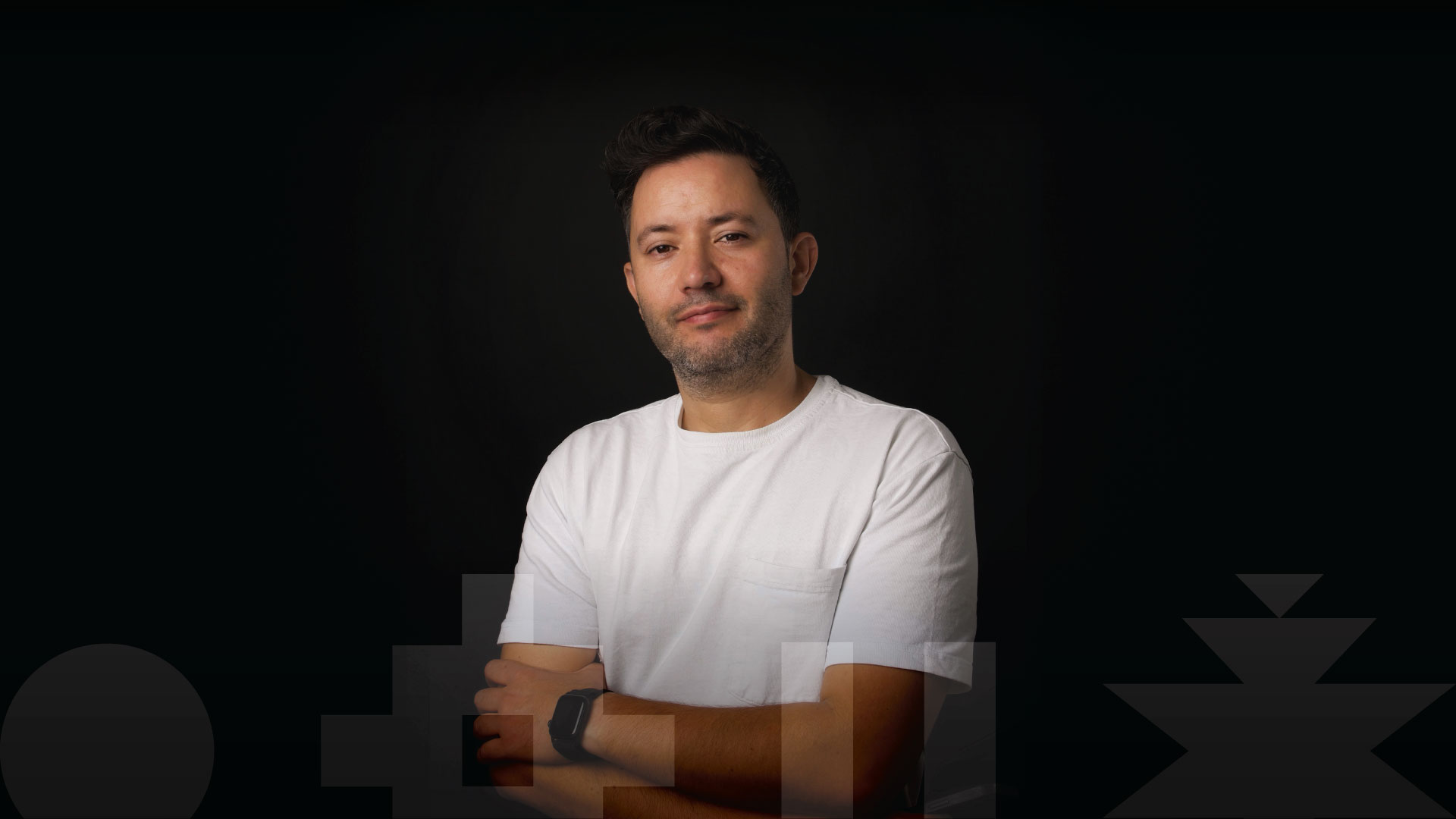
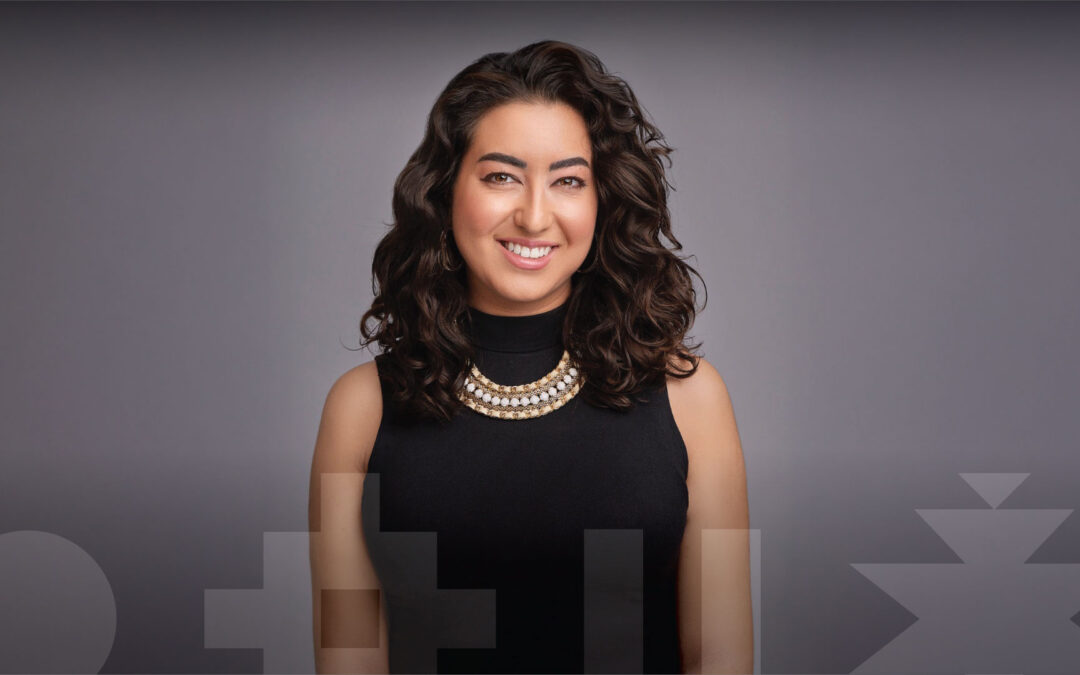
For the second time I trace the path of “Diaspora Cinema” and its concerns, its proximity and distance from the question of identity. Here I chat with Sara Ben-Saud, the Libyan-Tunisian-Canadian, about these three countries in relation to cinema and her life story that clung to her films. Sara speaks a little Tunisian dialect, but we chose to conduct the conversation in English, so I translated some of what was said.
Q: Except for 5:1, I haven’t seen any of your previous films before À toi Jeddi, which, as far as I know, are short films. Tell us a little about the beginnings.
A: I started as a photographer from a young age, so I approached photography when I joined university. I chose cinema and discovered documentary filmmaking at that time. The competition among students was fierce, they were constantly playing with light and shadow, so I pitched both a documentary and a fiction film. I was annoyed when the teacher preferred the documentary and I objected to his decision. Our main concern then was playing with the aesthetics of the image, but one of the professors explained to me that in documentary I could do whatever I wanted, that it wasn’t limited to boring interviews. I was convinced by the argument and fully immersed myself in the world of documentary film. I was lucky when the film was screened at a student festival, which encouraged me to continue.
Around the age of nineteen, I asked my father if he had kept anything about his father. He told me that my grandfather had given him his memoirs decades earlier, and I was astonished to find that document hidden in our basement. Given my young age, I didn’t understand much of what my grandfather had written about politics in Libya, a country I knew nothing about. After years of reading the memoirs, I decided at university to make a documentary about my grandfather, through which I would tell him my story. In the midst of serious thought about filming, I encountered again things I didn’t understand, but I also found an album of photographs he had taken, and I thought to visit the places he had photographed and see how they had become, to trace his footsteps.
Q: What difficulty did you face in reading the memoirs; was language the main reason? We know he wrote them in Arabic, English, Italian, and other languages.
A: It wasn’t about language, but about the complexity of political topics. For example, he wrote about his conversation with someone and about that person’s corruption, and many other entanglements of names and events, so I didn’t fully grasp his intentions in that regard.
Q: This reminds me of Marcus Aurelius’s digressions in Meditations. Scholars believe those texts were his diaries, not intended for publication. In the documentary, we see that your grandfather dreamt of publishing his memoirs. Do you think these details were written to be published? Perhaps he wrote them for himself, which is why they became obscure.
A: Perhaps. That’s why I wondered for years how to use these memoirs. That’s how I began thinking, as I told you, about working on the photo album and becoming part of the documentary myself, echoing his experiences. I pitched the idea to a producer who was interested, but he told me filming in Libya wasn’t possible because the insurance company wouldn’t cover production costs there. It was a production company in Quebec that didn’t specialise in documentaries in war zones and the like. Moreover, the film was my first work, so I listened to the guidance.
Q: They would have allowed filming without taking responsibility if anything went wrong.
A: Yes. We had a filming crew, so an insurance company had to be present, which is why we filmed in Tunisia instead of Libya, the country the film is about.
Q: What about the films before À toi Jeddi?
A: I directed series written by other artists. À toi Jeddi was my first project, from proposal to grants, preparation, and direction. The only personal film that preceded it I shot in the midst of the project. Covid happened and I didn’t leave Canada. I then filmed 5:1, a short documentary about my family. We had been apart for years, and during lockdown we gathered for nearly two years. The title refers to my family members; I have a brother and a sister. Our relationship in the early days was tense, so we worked hard to understand each other as a family and as individuals, to coexist in one space and be honest. That’s how I wanted to capture this evolution by interviewing each family member and being present myself in each interview through a plexiglass, as the DOP suggested. Through the interviews I questioned my relationship with my family in nine minutes. What intrigued me about the film was that it was shot before À toi Jeddi, because it was about family and about my father in particular.
Q: It’s fair to say À toi Jeddi is a film about identity, since you are Canadian, your father is Libyan-Tunisian but also Canadian, and your mother is Canadian-Canadian, whatever that means. As for your grandfather, he was Libyan who spent the last part of his life in Tunisia, married to a Tunisian. To what extent does identity matter to you as a filmmaker? The film answers, but let’s consider, for example, that Tunisians see you as Canadian, Libyans see you as Tunisian, and in Canada, I don’t know what they consider you.
A: The concept of identity never leaves me. It’s worth noting that it began with my work on other documentary series about Indigenous peoples in their attempts to revive their culture, so the work extended to my own identity. The matter became more complicated with my distance from Libya and Tunisia. So, I had to force my father to teach me so I could understand who I am. That’s why I explored it myself without relying entirely on my father’s stories.
Q: Did the film change your father’s perspective, do you think he asked himself whether he should have been “Libyan”/“Tunisian” with his daughter? Or do you think things went as they should?
A: Perhaps he now feels some regret. But he also told me that as soon as he arrived in Canada, he was keen on integrating into society and didn’t care much about connecting his heritage with his children. I think things have changed now, as we see migrants more at ease in passing on their language and culture to their children, which perhaps wasn’t available to my father’s generation, where integration was the priority.
Q: Or perhaps the reason was political, to protect the family from persecution by the regime, since he was the son of a political dissident. I may be mistaken.
A: I think he couldn’t do anything about that, as we had no relatives here. Perhaps if my grandmother had been present, I would have learnt some things, but he was alone. This was unlike my mother’s family.
Q: Were you involved in the editing?
A: Yes, I was present with the editor two or three days a week, and the editing took about eight months.
Q: I felt the one-hour length was suitable for the screening. You didn’t stick to the ninety-minute or two-hour format, or the short film format. I felt the film length came naturally and you didn’t regret cutting any scene. Am I right?
A: What made it difficult was that the producer’s vision didn’t match mine. He wanted the film to be shown on television, between 50 and 52 minutes, while I wanted to show the longer version, and producing two versions was costly. So, I decided with the editor to cut out an entire chunk for the television version, instead of trimming each scene.
Q: So, you’re satisfied with the cinematic version you shared with LFI, which is 61 minutes long.
A: Yes, that’s the longer version. There were difficult choices in removing certain parts, but I don’t remember any of them.
Q: How did the audience receive the film?
A: It was fascinating. I loved the comments from viewers from countries other than Canada, and I recall the response of a Moroccan-Canadian father, if I remember correctly, who told me the film encouraged him to encourage his children to explore their identity and that it was fine to embrace more than one identity. On the other hand, Canadians (non-migrants) loved the exploration experience, and were drawn to my father’s character in particular, especially his conversations with me online.
Q: It’s wonderful to see a film that touches people from different cultures, moving away from narrow identity politics. In this context, do you have future projects you find difficult? You know that in Libya even the simplest projects become difficult. Is it the same in Montreal?
A: Yes, yesterday I received a grant to produce a short narrative film, and I often feel that obtaining grants is harder elsewhere. I always want to film in Tunisia and the best opportunities for grants are here. For example, this film was initially rejected because it was a migrant story and nothing new, but for me it wasn’t simply a migrant story, rather that’s the label they attach to such stories. So, I decided to submit the project in other provinces. For example, Toronto is a more inclusive city but may view Montreal projects differently. But yesterday my project was accepted from Ontario (Toronto province).
In À toi Jeddi, I made a film about my grandfather. This time, I want to make a fiction film about my grandmother, inspired by my visit to Tunisia and the time I spent with her as a child. But it’s a narrative film that adds a great deal of fiction to reality, in the course of a week or two that the granddaughter spends with the grandmother and then returns home.
Saad Elasha