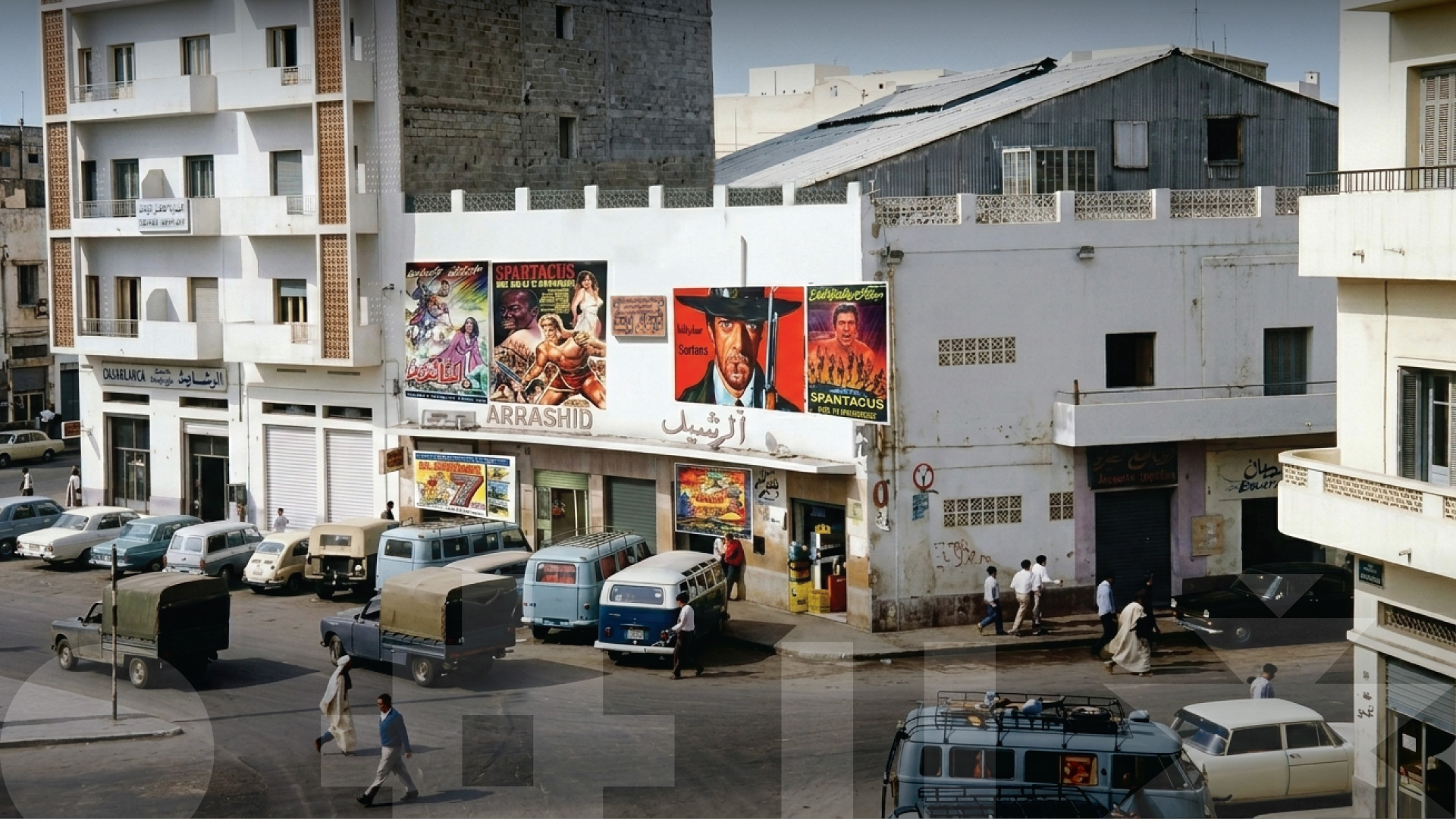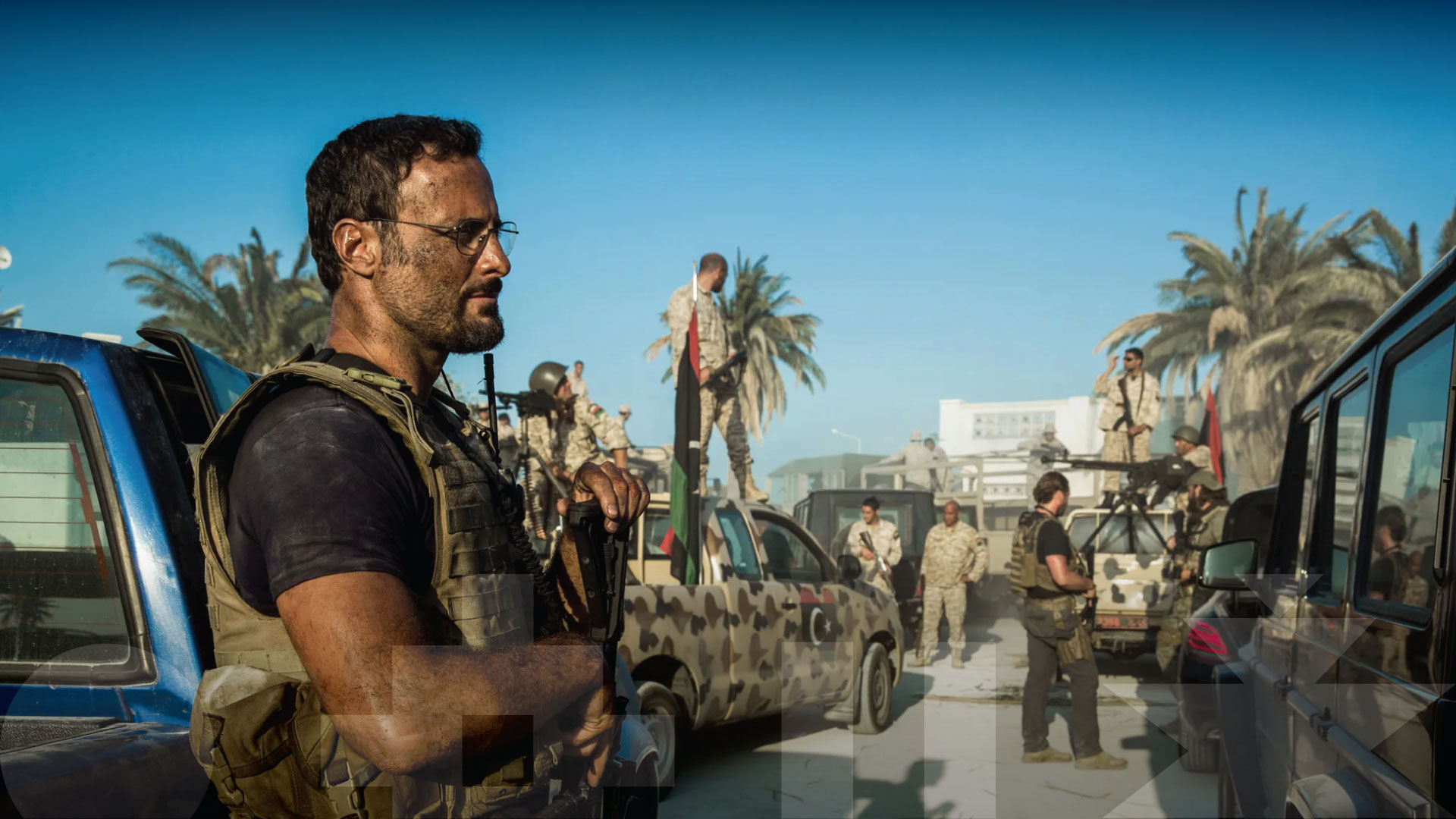
Although Libya was historically a pioneer in cinema, with origins tracing back to 1908, the past few decades have been affected by political, social, cultural, and economic volatility. These obstacles effectively stalled the art form, leading to its absence for many years.
However, in recent years, specifically since 2011, a new generation of young filmmakers has emerged. They are striving to revive cinema in a country that lacks a comprehensive infrastructure: there are no major production companies, no institutes for film or drama education, and a distinct lack of cinemas, theaters, and established local or international festivals.
Despite these odds, these creatives continue to work. They produce films at their own expense and showcase them at international documentary and narrative film festivals, often winning awards. In this report, we highlight the origins of these young filmmakers: How did their relationship with the camera begin? What difficulties do they face? And how have they used modern technology to reach a wider audience?
Director Mohamed Masli says: “The political and social shifts Libya has witnessed in the past years have created a significant gap in the cultural landscape, clearly impacting cinema. Years of ceased production have led to the loss of a ‘collective viewing culture’ among the public. With the disappearance of theater pioneers and the closure of screening halls, real cinematic production ceased to exist. When the industry disappears, so does the environment that nurtures a new generation of filmmakers. Every field requires continuity to create an incubator. As long as there is no infrastructure or a supportive cinematic and societal culture, this industry will not evolve. Consequently, the number of filmmakers remains limited, and their attempts are largely individual and independent. In reality, we are carving a path through stone, trying to establish a new foundation for this industry so that the next generation has something to build upon. We are still at step one, but we believe that the beginning, no matter how modest, is essential for the journey to continue.”
The Complexities of Film Marketing
The creator of the film Champion (Batala) notes that he has not yet released his work on social media. “I work within the framework of independent cinema,” he explains. “My goal is to market films to television channels to at least recoup the production capital, which enables me to produce new work.”
He adds, “I used social media solely to distribute the trailer, share behind-the-scenes photos, and post news about the film’s participation in regional and international festivals. To some extent, this has helped shine a light on an industry trying to make a comeback and has introduced society to issues that deserve discussion.”
According to the creator of Lost Rights (Huquq Ta’iha), one of the most difficult challenges facing the new cinema industry is funding and the absence of specialized production entities. Most companies focus on Ramadan season productions or commercials because they guarantee a quick financial return.
“For films, the marketing plan is long and complex,” he notes. “A film might tour festivals for a full year if it is a narrative, or two years if it is a documentary, before commercial marketing begins. While some documentaries are produced specifically for TV channels, every channel has its own contracting policies. Therefore, funding remains our biggest challenge. What we are doing today is mostly independent work relying on personal effort, not organized production institutions.”
Personal Experience Leading to the Camera
Director Malek Elmaghrebi launched his documentary filmmaking project through volunteer work with displaced people from Tawergha in 2011, specifically at the camp on the Airport Road in Tripoli. Being close to them and feeling their suffering, he sought a way to transmit their voices beyond the camp.
“The idea of visual documentation began to form there,” Al-Mughairbi recalls. “I later had the opportunity for practical training in filmmaking. I worked on eight documentary films within a project aimed at achieving peace, stability, and peaceful coexistence between communities. That experience was my true launchpad in this field.”
The creator of The Way Back (Tariq Al-Awda) noted that he benefited greatly from modern technology, particularly during the COVID-19 pandemic in 2020. When a planned film festival shifted to a virtual space on social media, it gave the filmmakers a chance to reach a broader audience, engaging not just with cinephiles, but with everyday viewers.
“The most beautiful moments were when the audience started asking questions about the behind-the-scenes process and the fate of the characters we featured,” he says. “This interaction reveals the true impact of documentary filmmaking and makes us feel that the story made a difference in society.”
A Hostile Local Environment
The filmmaker behind Khtawat – steps – says: “The difficulties are numerous, starting with the lack of financial support. I worked completely independently, covered all expenses from my own pocket, and traveled at my own expense. I received no support from the entities that trained me or anyone else. I feel I’ve put myself on the track, but I still need someone to stand with me to complete the journey.”
When asked if the local environment offers enough opportunities for new talent, he replies: “Unfortunately, opportunities in our society are extremely limited and confined to a specific class that holds power and money. The controlling elite is content with a limited number of known names and often treats any newcomer as a competitor that must be ‘stopped.’ This makes work difficult, especially for those trying to start from zero.”
He adds, “I tried applying for grants outside Libya after failing to find local support, but that wasn’t easy either. There is a lack of trust in Libyan creatives, almost as if Libya is not a priority for international film institutions. I reached advanced stages in grant applications only to be rejected in the end under the pretext that ‘other stories were better.’ This recurring rejection makes the next attempt psychologically harder. I believe my story needs to be told now, because delaying it means it might never be told. That is what gives me the drive to continue despite the difficulties.”
A Challenging Landscape
Director Osama Al-Fitori points out that more than a decade after Libya’s changes, the cinematic and media scene is still suffering from the aftershocks of political and social transformation. Long years of interruption have eroded the culture of collective viewing. He explains that he doesn’t actively follow films (narrative or documentary) produced in Libya, making it hard for him to objectively judge their quality.
“Most filmmaking attempts in Libya tend to focus on technical aspects like cameras, lighting, and makeup, while neglecting the essence of the film: the story and how to connect with the audience,” Al-Fitouri observes. He emphasizes that good preparation requires a long time for research and gathering material, whereas filming and editing represent the shorter part of the process.
Al-Fitouri describes the filmmaking and media environment in Libya as “extremely difficult,” especially for those coming from abroad. The lack of acceptance of criticism, political division, and security fluctuations between the East and West make fieldwork fraught with risk. This is compounded by bureaucratic complexities; photographers need multiple permits for airports, cameras, and locations. Furthermore, journalists and directors face widespread hesitation from the public regarding sharing information or speaking on camera, necessitating the building of strong trust and relationships before work can begin.
He notes that while the post-2011 media landscape saw unprecedented openness in freedom of expression, breaking the “One Channel” era and allowing for independent channels and production companies, the subsequent security and political regression weakened this continuity, returning the scene to a state of caution and hesitation.
Technology as a New Tool of Expression
The creator of The Deminer of Benghazi believes technology plays a major role in reshaping the media landscape. With smartphones, filming and production capabilities have become accessible to everyone at a low cost.
He adds: “This shift represents a new form of filmmaking. Phones allowed individuals to tell their stories freely during the Arab Spring events; indeed, some of the most powerful images shown on global channels were shot by ordinary citizens. Today, any young person can start their career with simple equipment and editing software available on the phone itself. The biggest challenge remains the nurturing environment, not the tools.”
Meanwhile, the filmmaker behind Was the NATO intervention in Libya a mistake? mentions that his work today is more journalistic than artistic. He benefits from being outside Libya, as his work is showcased on global platforms. However, he admits to a fear of conducting critical or investigative work inside the country, dreading political or security repercussions.
A New Cinematic Consciousness
Director Muhannad Lamin champions the camera and the image, which have always been part of his family memory. “My father was passionate about photography and drawing, trained with the cartoonist Mohamed Al-Zawawi, and worked at Al-Amal magazine before dedicating himself to engineering,” Lamin recalls. “In my childhood, the camera was always present at home, documenting small family moments. Through it, I began to understand that an image is not just a souvenir, but a way to see the world differently.”
Lamin continues: “Over time, the camera turned into my means of understanding reality and expressing things I couldn’t say with words. It is a tool for research, for questioning, and for reconstructing personal and collective memory. For me, the image is an honest space between what is real and what is internal, between what I see and what I feel.”
When asked if these new cinematic experiences can be considered the start of a Libyan film industry or merely individual attempts, he says: “I believe it is the beginning of an industry, even if it looks like scattered individual attempts right now. Every industry goes through a phase like this, where early experiences are built on the passion of people working despite the lack of infrastructure or support. What is happening in Libya today is a slow but real birth of a new cinematic consciousness; a generation trying to tell its stories with simple means but with an honest and conscious vision.”
He adds, “Beginnings don’t have to be perfect or fast. What matters is that they continue, that the habit is created, and that the dream turns into consistent practice. With time, these attempts will turn into a foundation, from which an actual industry can form.”
Cinema is Not a Luxury
The creator of the film Donga believes the biggest challenge facing filmmakers in Libya is the absence of cinematic infrastructure, no production institutions, no funding bodies, and not even theaters to connect with an audience. Every project is an independent adventure relying on personal effort and the support of friends and partners who believe in the idea.
“The difficulty isn’t just funding,” he continues. “It extends to the absence of an environment that respects artistic work as a career path and understands it. Sometimes the biggest challenge is convincing people that cinema is not a luxury, but a means for understanding, documenting, and expressing reality in a deeper way.”
The filmmaker behind The Prisoner and the Jailer notes that after 2011, a new window for expression opened, and many began to see cinema as a tool to document and analyze their surroundings. However, a collective suspicion of the camera also emerged. “Its presence in the street became associated with ideological press or social media, creating a kind of fear toward it, as if it were a tool for surveillance rather than expression.”
He concludes: “This suspicion coincided with a general climate of rejection toward culture and art. Yet, a new generation of directors and photographers has appeared, trying to overcome this fear and carve out a free space within the chaos. I think this paradox between openness and fear, between the desire to express and the dread of it, is what has shaped the new cinematic consciousness in Libya. It has made cinema, for us, not just an art, but a necessity.”
In conclusion, we believe that these individual attempts are but the first step toward reclaiming the cinematic scene from its long absence. This step will be followed by others that will tell our stories as they are, with all their transformations, conflicts, and big dreams.
Kholoud Elfallah