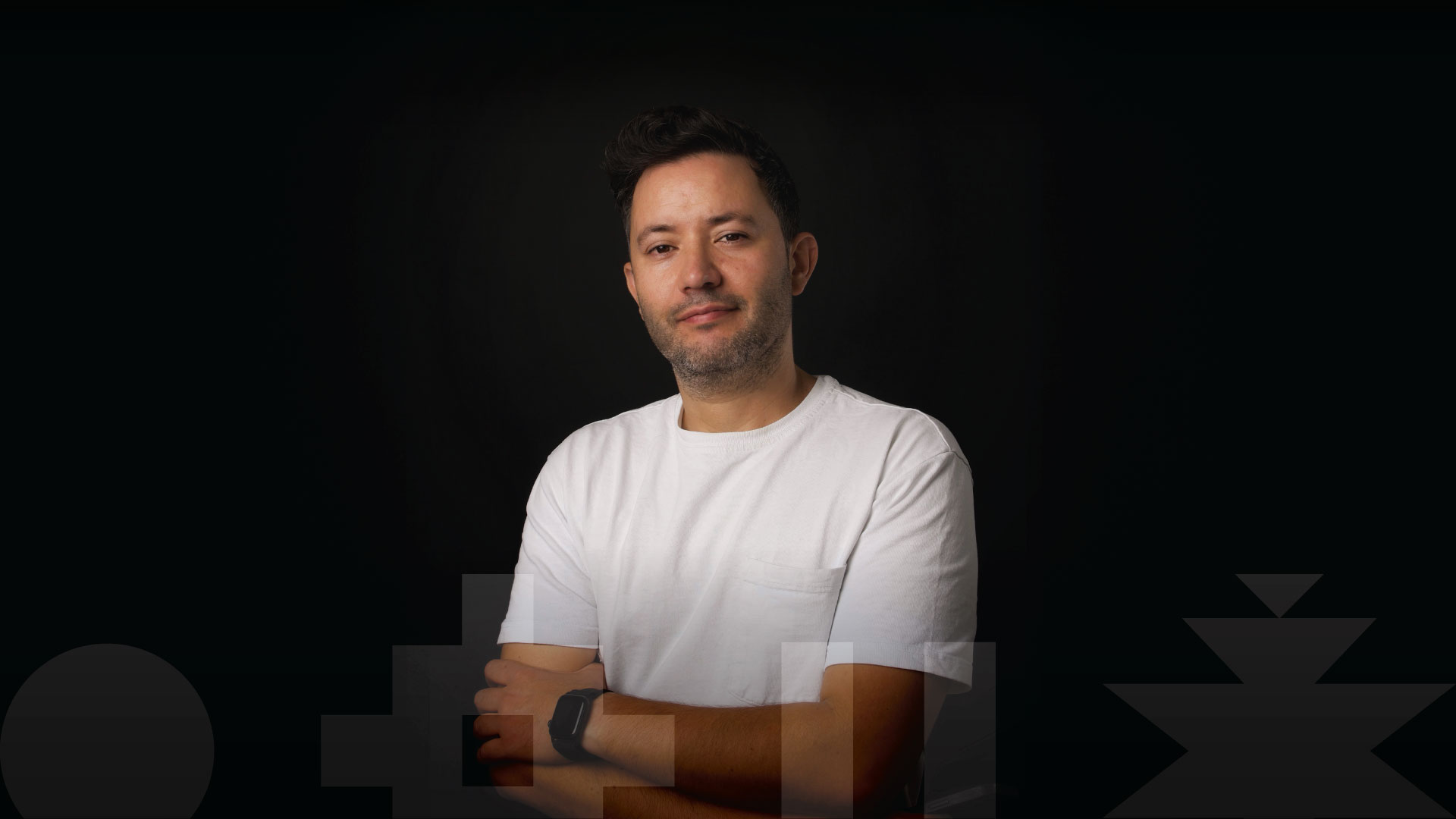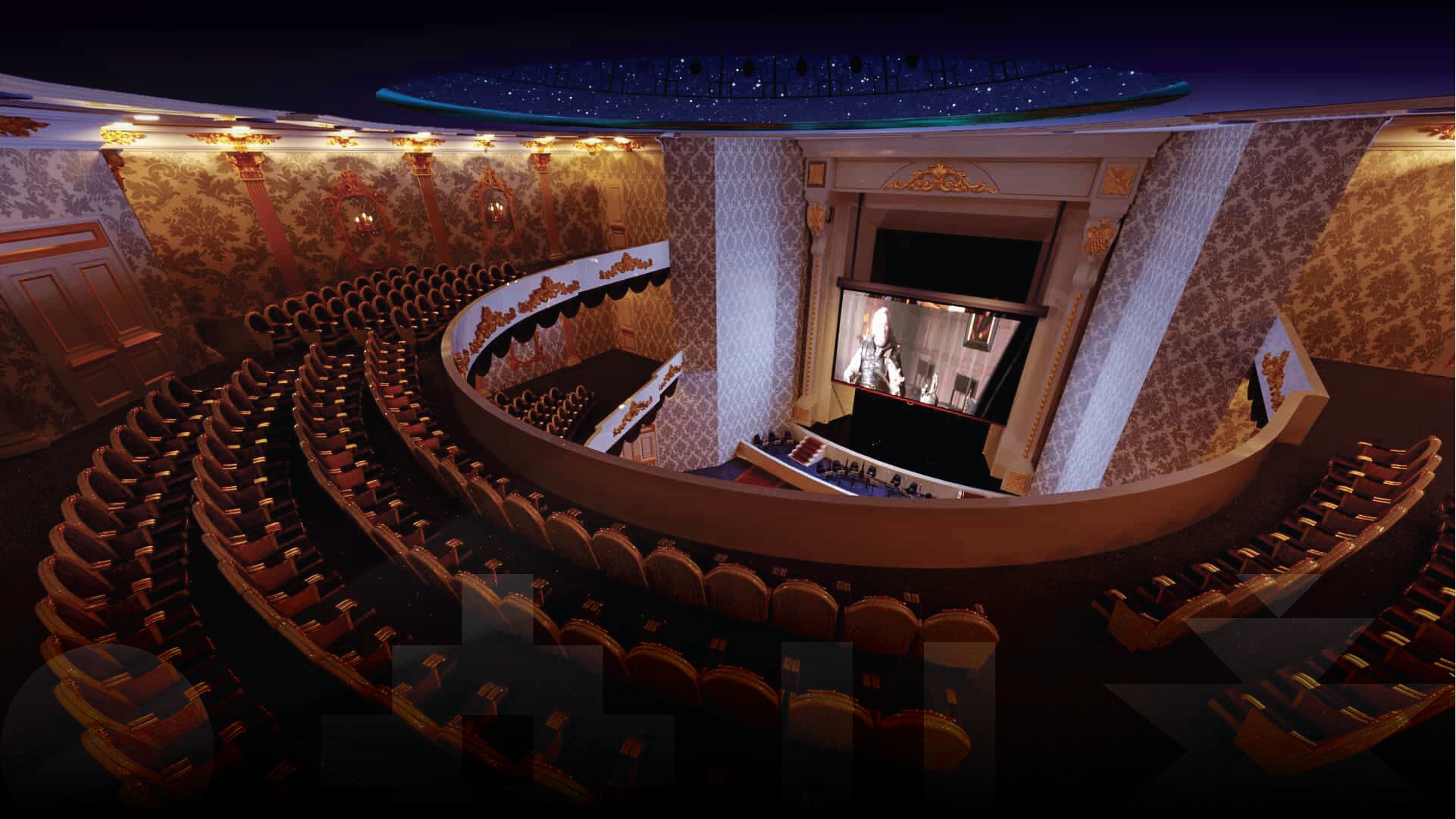

In a previous article, I reviewed a documentary on the former Libyan dissident, Ashour Shamis. The director of the film discussed here is his son, Khalid Shamis, who graciously shared his film with the Libya Film Institute blog. After watching it, I asked Khalid to share his previous film, The Imam and I (2011), so that I could include a private link and showcase his directorial filmography.
From this rare generosity, I gathered threads to begin a conversation about his artistic and personal biography, two paths that blend together as a documentation of his own condition and that of his family. We spoke for an hour and a half about Libyan cinema abroad and the process of cinematic documentation between the personal and the public. Khalid does not speak Arabic, and we touched upon that in the dialogue. Here, I have translated and condensed some of what was said.
Our chat ended, yet many questions remained unasked. I did not wish to exploit Khalid’s generosity, as he had given his time without a set end-point, so I preferred to leave the remaining questions for the reader to ask themselves. This is some of the dialogue—the details are many and complex—and the rest remains in the audio recording for those interested.
-
I believe that the most suitable biographies are autobiographies. Could you summarize your upbringing for the reader?
I was born in London in 1975. My father is Libyan, from Gharyan, and my mother is from Cape Town, South Africa. She belongs to the Cape Malay community in Cape Town, which was racially classified as the Muslim community there. Most of them were descendants of slaves, indentured laborers, and prisoners brought by colonialists from Indonesia. My Libyan father and South African mother met in London, and I was born there with my siblings.
I visited Libya for the first time very late, in 2012. I did not consider myself a Libyan filmmaker until I filmed my father. My cinematic career began when I left London and started working on the continent; starting from South Africa, I consider myself an African filmmaker more than a Libyan or South African one.
-
We might say, then, that you are not a “Libyan filmmaker” in the traditional sense, because you did not grow up in Libya, where the role of cinema—and cinema itself—was absent. Let’s talk a little about cinematic influences; how did you move from being a viewer to a maker?
I grew up in London in the eighties, where popular culture was dominated by American and English cinema. We had no other options, not even documentaries, with the exception of some David Attenborough programs and Panorama. I favored discovering other worlds, so I studied film theory at university and learned what a narrative is. However, the content of the studies revolved around classical Western narratives and schools and did not touch upon the “how-to” of the film industry.
In the period between graduating in 1997 and emigrating to Cape Town, I worked in television in Soho, London, in production and editing. It was there that I studied the inner workings of production and acquired the necessary confidence for filming and montage. It was there that I became a documentary filmmaker concerning my grandfather (The Imam and I). Everything I have in my pocket—intention, idea, and relationships—enabled the filming. Since then, I became a filmmaker. I started by collecting information and archives to discover the life of my grandfather first, then the life of my father second.
-
In The Imam and I, there wasn’t a pre-determined direction in your opinion, or you didn’t want to clarify it beforehand; the filming itself determined the path of the film, especially since your grandfather wasn’t honored by the state until recently, in 2014.
Imam Haron was a dominant icon in the Muslim imagination in South Africa. People referred to him as “The Imam.” The Muslim community at the time felt safe relative to the Apartheid system, and thus no opposition arose from the notables of the community. However, Apartheid was one of the worst entities of the twentieth century, and the Muslim community did not align with the teachings of Islam which aim to uphold the word of truth and revolution in the face of the usurper. Even if the Imam went against the current, he did not find a welcome among his fellow Imams. He sacrificed his life back then, and the notables added that what they were warning about had come to pass.

-
At some stage in your life, you realized that your father had been an opponent of Gaddafi since the eighties, and that your mother’s father was killed in prison during Apartheid. How did this realization impact your consciousness as a filmmaker later on?
I learned about my father in the mid-eighties, when I was ten. After the events at the Libyan Embassy in London, we lived in hiding under police protection, and from there I became certain of my father’s opposition to the Gaddafi regime. With my simple understanding, I knew that Gaddafi was the reason my father could not return to Libya. Yet, he did not remain the sole reference for Libya; I learned about my grandmother through her tattoos, Bazin, Couscous, and how to say Ga’amiz (sit down) and similar words, but a Libyan identity was not fully formed for me.
As for my grandfather, we used to travel to Cape Town constantly since the seventies to visit my grandmother and the rest of the family. Aside from the book mentioned in the film, photos of my grandfather filled our house, so his presence overwhelmed my consciousness early on. When I visit Cape Town, everyone knows me as the Imam’s grandson.
After completing the documentary about my grandfather, I thought about undertaking the experience of investigating my father’s past… the theme of the struggling spy who lived a double life. But I did not think about filming until after the revolution because the opportunity then became available.
-
Most Libyans know what the phrase “Stray Dogs” means. In your film The Colonel’s Stray Dogs, do you think your interview with your mother was the most appropriate way to reveal your father’s past?
Perhaps. I would like to talk a little about my mother, Shamela Haron, and her role in the two documentaries.
The documentary was the medium for sitting with my father in my capacity as his son, you know the character of the Libyan man. I believe I subconsciously filmed this to connect with my father.
I also believe that without my mother, I would not have filmed the film to communicate with my father.
My mother plays a pivotal role in the film, as I filmed her in the kitchen, which represents her private space, and she appeared in the middle of the film. I did not plan for that, but I discovered it in editing. All the specific symbols appearing in the film point to her and the kitchen. She is also the “guardian of secrets” just as she was the daughter of her father, a guardian of secrets. She contained the secrets of her father for long years, so she became the entrance to my film about my grandfather and the entrance to my second film about my father.
-
Let us talk a little about filmmaking in Libya. Fortunately, you did not grow up as a filmmaker in Libya. For the filmmaker in Libya, the scene appears as chaos, and the challenges repeat themselves in the Jamahiriya era. I do not favor this question, but do you have free tips for those struggling in filmmaking inside the country? Even simple documentary films have become difficult.
I believe the beginning lies in letting your naivety and curiosity guide you. I believe the matter is the same between documentary and fiction, especially from my work as an editor. In a documentary, it depends on gathering materials, so the moment of filming a bird perched on a branch might become part of your film. Gathering materials ends with the decision to stop searching and start editing.
Amidst this curious momentum, one must acquire the principles of production: “Cut and Paste,” and what accompanies that in blending sounds and music. All of that is available in free programs. The rest depends on your understanding of the world and your intuition… capturing the stories of grandmothers while they are present, even with a mobile camera. In the moment where the “engineering of the story” begins, you produce a third meaning, and the meaning branches out by adding music and sounds. A voice inside you will become clear later, and then you proceed to think about the complexities of the narrative; that only comes at a later stage. What matters fundamentally is the composition of the story in your mind.
-
That is impossible without reading and watching the world’s films.
Of course.
-
In fiction films, there is an ongoing debate regarding the “author’s intent”… what he means by that shot or that dialogue… Do you think the director’s intent is important in a documentary film?
Yes and no. If you respect the subject of the film and are honest, but without sanctifying the subject, I believe the viewer will respect your film. But if you do not care about the viewer’s reaction, why produce films at all? Respect for the viewer comes from respecting their intelligence; so ask yourself, “Is what I am installing in the montage logical? Am I satisfied with this composition?” These are questions that cross the mind of the filmmaker during editing. The questions become more complex in fiction films. Fiction filmmakers suffer more in the issue of accepting their visions. In documentary film, the shot often comes to you without intention during the editing phase. As an editor, I see no difference between documentary and fiction, because the elements of composition are the same, and thus I prefer working as an editor because it carries fewer burdensome responsibilities than preparation and directing.
-
In your two films, there is a political orientation; you are loyal to the February revolution and loyal to the organized struggle against Apartheid. How do you present your subject without insulting your opponents?
The trick lies in making a personal film; you reveal a statement related to you personally and to your family. These are all tools that help you in making a personal film.
-
Meaning you do not work as a journalist…
Yes, you can say what you like. But the matter has consequences. The film was to be screened at the Luxor African Film Festival, for example, but the government banned the film. The Egyptians loved the film, but their government didn’t.
-
I did not favor the question about your advice to filmmakers in Libya because the society does not welcome the idea to begin with, or let us say is not eager for a “Libyan cinema.”
For this reason, Muhannad Lamin produces his films outside Libya, as does Naziha Arebi. I am also outside Libya.
-
Is it possible to say that there is a Libyan “new wave” abroad?
Yes, why not?
-
The common factor between you, Muhannad Lamin, Naziha Arebi, and others, is making documentaries… Fiction remains a mirage even in the conditions available outside Libya. Perhaps the wave begins with documentaries abroad, then fiction abroad, then documentaries inside Libya, and finally fiction inside Libya…
Yes. Stories do not end, and we do not know what tomorrow hides in terms of films and directors.
Saad Elasha