When we look at the Arab world’s relationship with cinema, we realize that this art form has never been merely a means of entertainment; it has been a mirror for society and a tool for shaping public discourse. Egypt turned its cinema into a grand school for debating social and political issues. Algeria transformed it into an instrument for preserving the memory of its resistance. Tunisia and Morocco have used it to explore questions of freedom and modernity.
In contrast, Libya has remained distant from this path, which raises a critical and unavoidable question: What does it mean for an entire society to be deprived of a screen that reflects its own identity and helps it rethink its past and present?
The absence of cinema in Libya cannot be reduced to a lack of theaters or weak production. It extends to depriving society of a tool for collective analysis and a cultural medium capable of turning big questions into living images. This absence forces us to reconsider cinema’s place within a national project that seeks to rebuild both the individual and society, even if a robust local industry doesn’t exist at this moment.
Cinema: A Force for Shaping Consciousness
At its core, cinema is not entertainment; it is a medium for collective thinking. In Egypt, Salah Abu Seif tackled issues of poverty and social justice, while Youssef Chahine became famous for his philosophical vision of the individual’s relationship with power and society. These films weren’t confined to theaters; they shaped public discourse and reached broad segments of the population.
In Algeria, the film The Battle of Algiers was not just a work of art but a historical document that introduced the entire world to the experience of a people resisting colonialism. Meanwhile, Morocco and Tunisia have invested in cinema to spark bold conversations about society, the individual, and identity, making their films part of an ongoing societal dialogue.
These examples show that cinema is not a luxury but a popular school that opens people’s eyes to their own issues and pushes them to re-evaluate their positions.
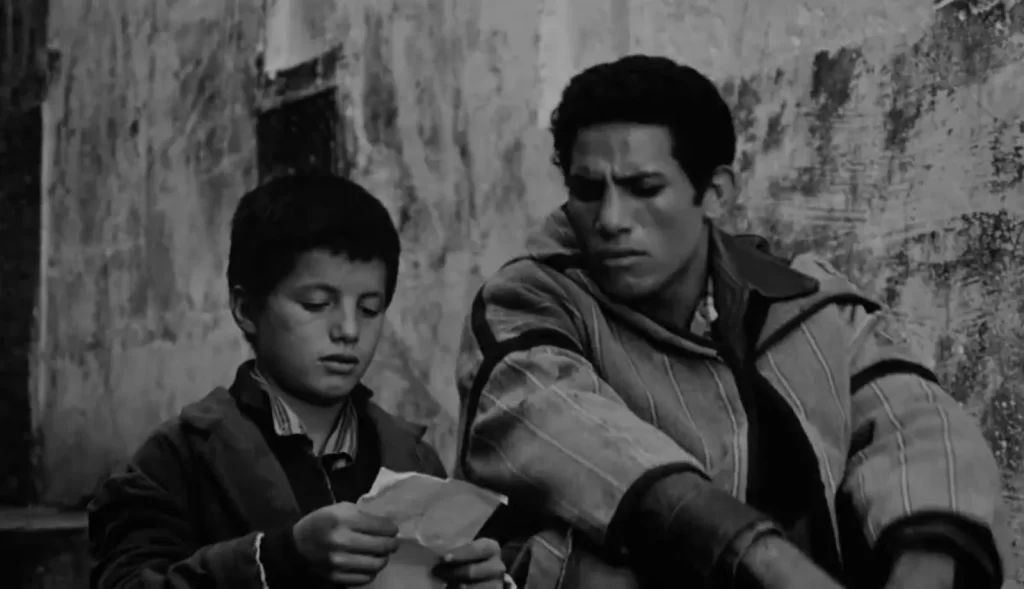
A frame from the film The Battle of Algiers (1966)
Libya and the Visual Void
In the Libyan case, this role has never been fully realized. Libyan society has relied on alternative means to tell its stories: poetry, popular councils, and, more recently, traditional media and social networks. But these mediums, however important, lack the power of the cinematic image, which combines artistic creativity with the ability to document.
The absence of cinema has meant that Libyans consume the narratives of others. They watch foreign or other Arab films that express the concerns of different societies, while their own story remains without a visual archive to preserve it. This means the national memory is built on written texts and political speeches, but it lacks the powerful visual dimension that makes an experience more present in the consciousness of future generations.
Cinema as a Tool for Analyzing Reality
For decades, Libyan society has been living through overlapping crises: political divisions, conflicts, and cultural shifts. In such contexts, cinema can play a pivotal role in bringing these issues into the public sphere and helping to build a collective critical consciousness. A film can pose questions of identity in a way that reaches audiences that academic research or political speeches cannot. It allows people to see themselves within a larger picture and contemplate their problems from a new angle.
The absence of this medium has kept debates on crucial issues confined to political or academic elites, without finding their way to the general public. This explains why many Libyans feel that their biggest challenges are discussed in closed-off spaces that do not directly touch their daily lives.
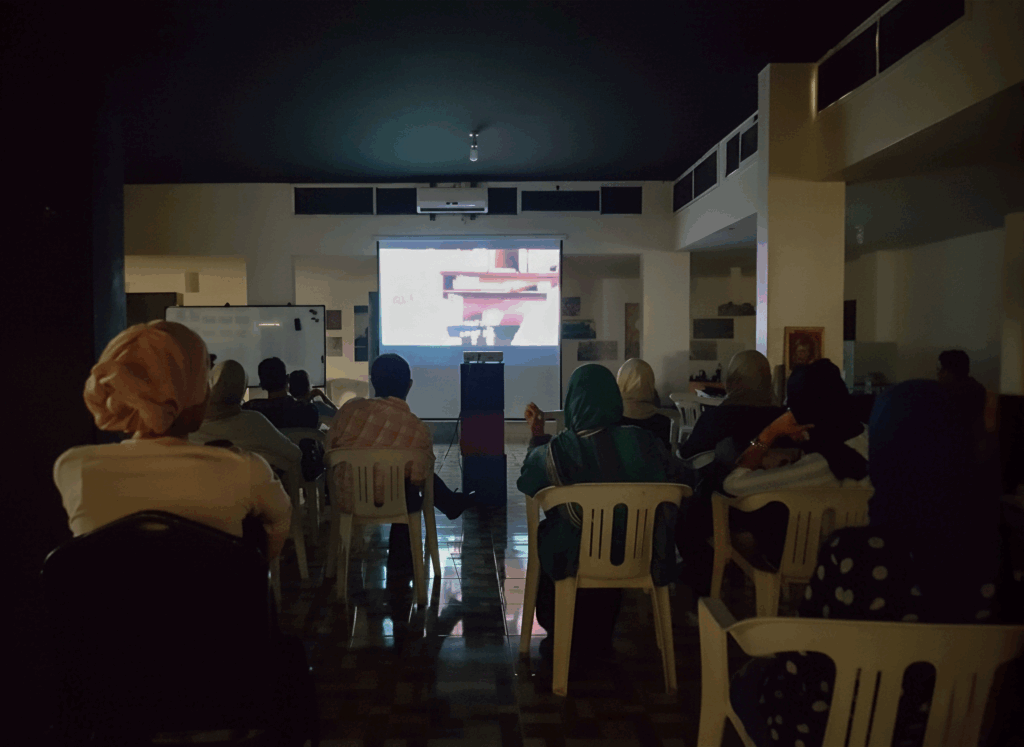
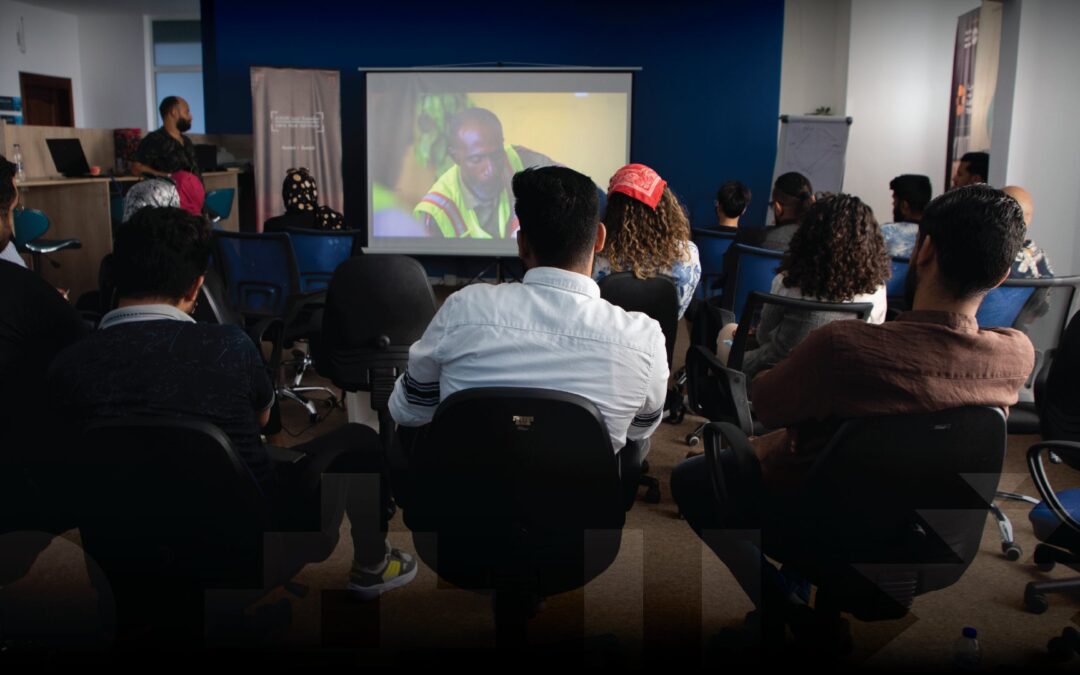
From one of the film screenings at the Tanarout Collective, Benghazi (2018)
Inspiring Arab Examples
When we return to the Algerian experience, we find that the film Chronicle of the Years of Fire, by director Mohammed Lakhdar-Hamina – the first Arab and African artist to win the Palme d’Or at the Cannes Film Festival – was not just a cinematic work but a message to the world that Algeria possesses a living memory that cannot be erased.
In Tunisia, the Carthage Film Festival evolved into a space that expresses and enables discussion of the entire region’s issues. In Egypt, cinema has addressed undocumented migration, poverty, and illiteracy, reaching villages and working-class neighborhoods and opening up conversations among the people. These models confirm that cinema is capable of reaching deep into a society and stirring its consciousness, in my opinion surpassing the role of literature or journalism.
Libyan Examples: “Freedom Fields” and “Champion”
Recent experiences confirm that Libyan cinema is about more than entertainment. The film Freedom Fields (2018), by director Naziha Arebi, documents the journey of three female football players in post-revolution Libya over years of transformation, revealing the intersection of athletic dreams and social constraints. The film received significant international attention and screenings.
Similarly, the short documentary Champion (2024), by director Mohamed Musalli, follows the story of Suad, a weightlifter with a disability from Tawergha. It shows how a film can have a direct social impact — solving problems related to her government benefits and securing transportation for her training — turning the screen into a space for civic action, not just storytelling. The importance of these two works lies in their ability to broaden societal awareness of issues facing women, sports, and people with disabilities. Their message was not limited to artistic documentation; it evolved into a contribution to tangible change.
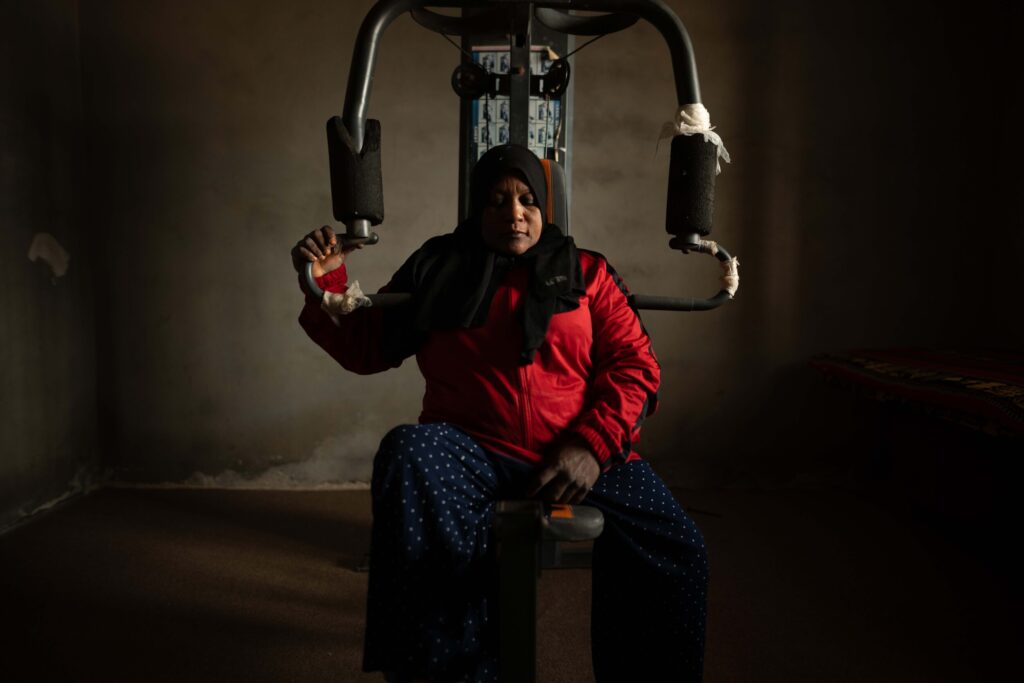
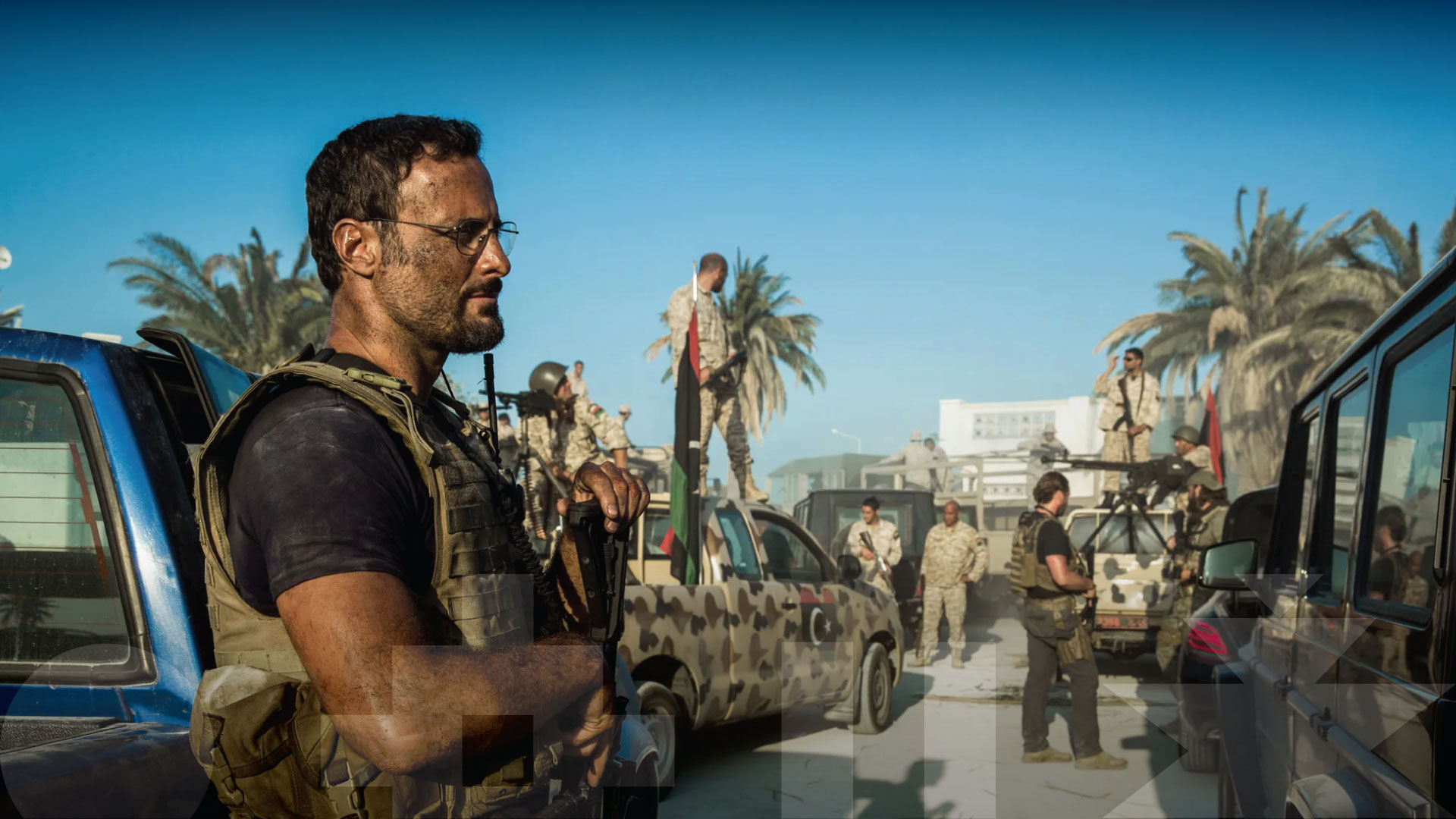
A frame from Champion (2024)
Thus, it can be said that depriving a society of cinema is, at its core, depriving it of a way to understand itself. Libya has lost more than just movie theaters; it has lost the opportunity to see itself in a unifying mirror that preserves its memory and debates its issues.
Cinema is not a luxury; it is a necessity for building awareness, documenting history, and shaping the future.
Perhaps future generations will keep asking: Why didn’t we have a visual archive to tell our story? Why was the screen that could have united us around a shared narrative so absent?
These are questions that carry the bitterness of our reality, but at the same time, they open the door to hope and reflection. They remind us that the absence of cinema in Libya was not inevitable, but the result of choices that could have been different, had we only believed in its power to build a collective consciousness.
Muhammad Ben Saoud