
1
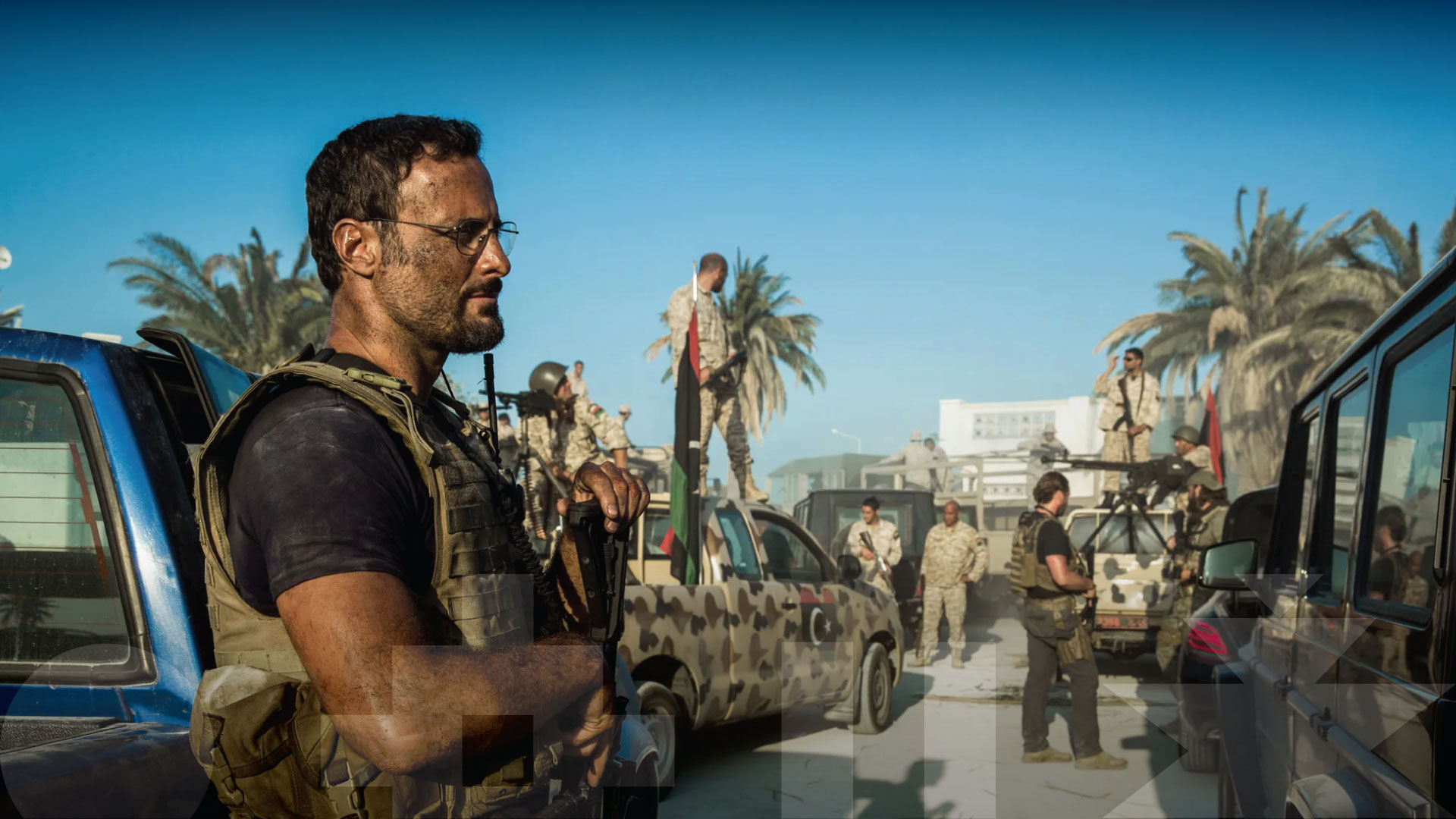
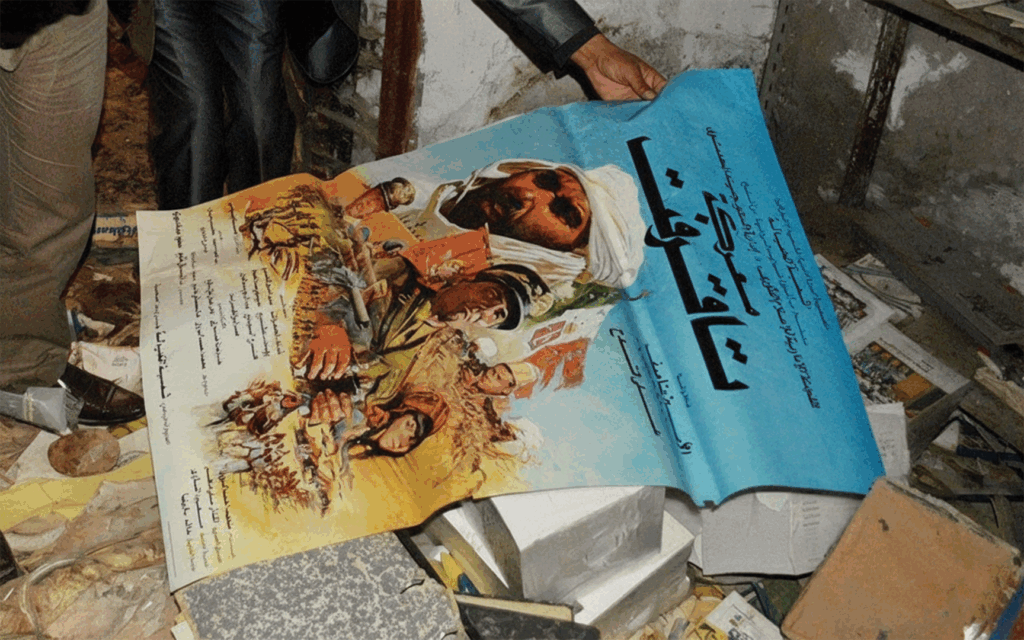
In the winter of 2022, as football fans awaited the Qatar World Cup, an old yet persistent thought crossed my mind: how can one watch Libyan feature films? I had previously watched “Ma’arkat Tagrift” (The Battle of Tagrift) and “A’shaziyya” (The Shrapnel) on YouTube shortly after the uprising in February. But where are the other five/six/seven films we keep hearing about? I didn’t expect to find masterpieces after bearing the brunt of having to watch both films — but my desire to seek them out didn’t come from expecting to find hidden treasures; rather, it was like someone searching for a lost sock, simply to know how it got lost.
I kept having the same thought as the World Cup approached, although this wasn’t entirely a coincidence. My passion for cinema began just as my addiction to football waned in my late teens, when I began to discover films from around the globe, from Georges Méliès to a multitude of contemporary filmmakers. We obviously exclude some countries from “The Cinema of the World”, especially one in particular.
I rang my film companion and friend Abdulmajid Djerbi, to shoot a short documentary that would humorously investigate the fate of lost films. I had the title in mind: “The Hunt for the Six” I used the term “missing film” instead of “lost film,” which is internationally used for movies that have vanished from cinematic history. The number didn’t matter, since there’s little difference between five or eight feature films produced by a country in a century.
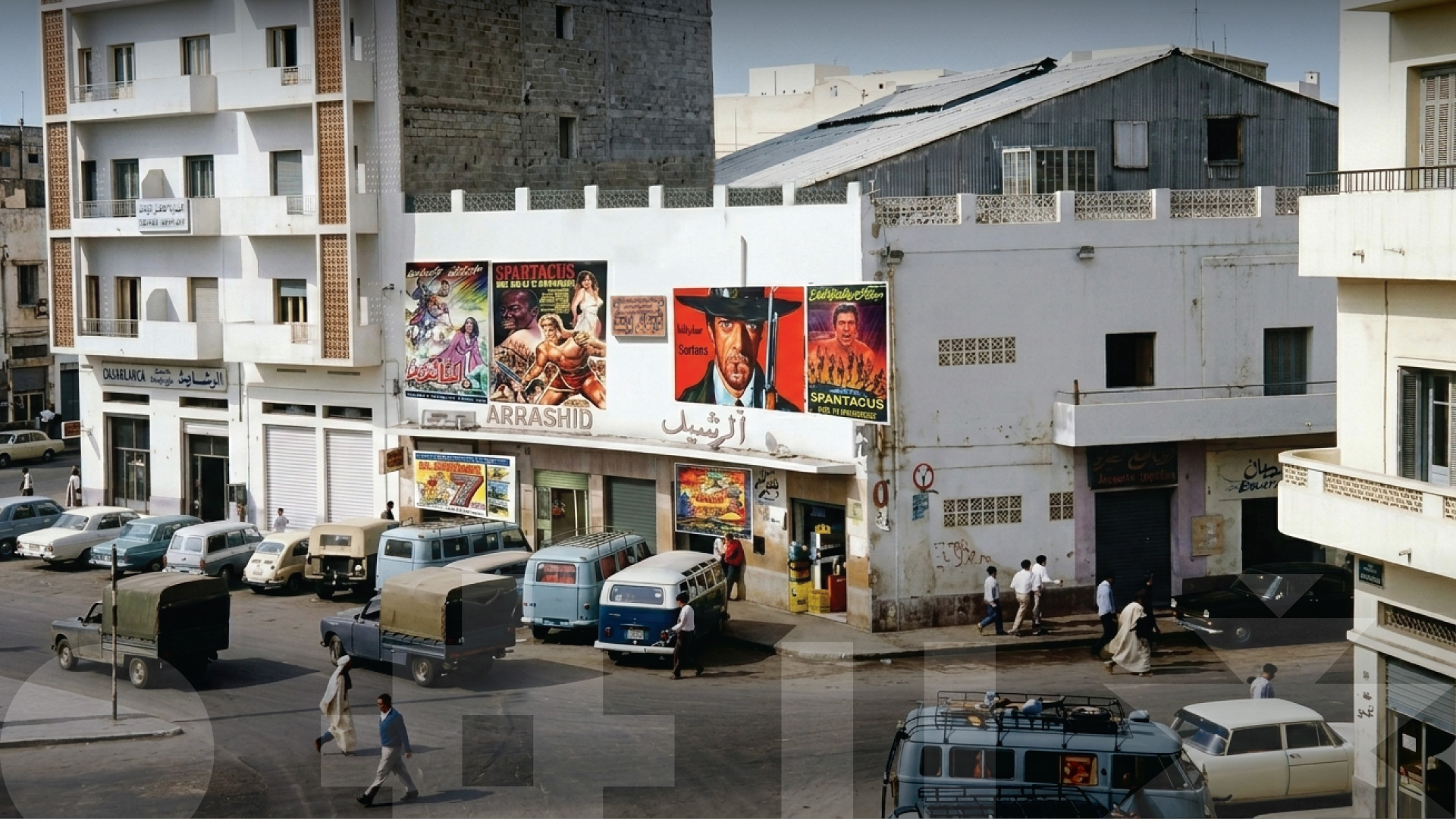
Abdulmajid owned a car and a good camera; more importantly, he was eager to take part in the experiment. I flew from Al-Bayda to (The Mermaid of the Mediterranean) Tripoli that had lost its cinemas decades ago (for those who don’t know, Alexandria also bears the same nickname, but unlike Tripoli, it hasn’t lost its cinemas). We began shooting without “development,” funding requests, or even a filming permit (we’ll return to that later). Years earlier, I had already accepted that I would never be able to make my own feature films — so I decided to make a documentary about the reasons.
I’m still dissatisfied with the film; sometimes I even hate it. The reasons are obvious: scarce material, weak editing, and the inevitable consequences of inadequate production. The film, however, was screened at several festivals without a producer, distributor, or promoter. It was shown, for instance, at the Ismailia Documentary Film Festival, and it received a “Special Mention” award at the Casablanca Arab Film Festival, where the jury noted “the uniqueness of the director’s style” — a phrase that helped me laugh at myself.
2
Abdulmajid and I graduated from Visual Arts from the Faculty of Arts and Media at the University of Tripoli. Naturally, we thought of meeting and including our old mentors. We contacted Mohamed Al-Mesmari and Dr. Nour Al-Din Al-Werfali.
Mohamed, himself a filmmaker, spoke to us about his films and those of his colleagues, while Dr. Nour Al-Din discussed Fascist cinema in Libya (notably “Alfirqa Albayda”(The White Squadron) and the semi-Libyan cinema of Mustafa Akkad.
We also met Ahmed Bilal, Libya’s first film sound engineer, who began his career in 1968 and retired in early 2000’s. I began my film with our meeting in the silent film style to create an ironic contrast that embraced both sound and image. I had planned to film the interview at the “Sound Studio” in the Damascus District of Tripoli, using that same approach, but like most institutions, the studio was closed at the time. I wasn’t aware until our meeting that Mr. Ahmed had lost his sight years ago as a result of daily exposure to studio equipment without protection. The memory of his death last year still hurts especially since I hadn’t prepared the audio version of his interview for him to hear.
We were referred to filmmaker Salah Gwaider by our friend Faraj Mayouf, also a filmmaker, to talk about his experience in short films, which received a lot of attention. One of his works won an award at the Carthage Film Festival a year before the uprising. We sat down with Abdallah Zarrouk to delve deeper into independent cinema beyond the state-run ‘Foundation of Cinema’ “Al Khayala Foundation/Company“. He began his career with the film “When Fate Hardens” in 1971. We discussed in detail the hopes of those beginnings and the harshness of their endings.
Our investigation wasn’t limited to filmmakers — we also spoke with cinephilic intellectuals. The final conversations were with novelist and playwright Mansour Bushnaf and the poet Khaled Mattawa. The first offered his perspective as an observer and critic, while the second founded the Arete Cinema Club, which was the first to screen films from the aforementioned ‘Cinema of the World’ in Libya. (In the film, I included a note: a moment of silence for the souls of the women who weren’t here for these interviews).

3
What hit me the most in all the interviews was the graciousness and the open-mindedness of the people I spoke to, some of them didn’t know who I was or what would become of the documentary and yet, they all sat for hours to discuss everything without any refreshments. I remember that we didn’t even offer Abdallah Zarrouk a glass of water, and yet after the interview he asked: “Do you want me to help you find someone — a number, an address…?
But all of those we interviewed were helpless to “The Hunt for the Six”. Salah Gwaider told me that he had lost the negatives of his first film are, and Zarrouk too didn’t have a single negative of any of his feature films.
The tragedy of the archive lies at the very heart of Libyan cinema. It is through it that our scarce “national” film material can be released — to lay a foundation for what might come after. Today, that archive is divided among gangs (in the literal sense), each holding part of it. Every member of the group keeps a portion of the material in his house or on his “farm,” as Gwaider told me.
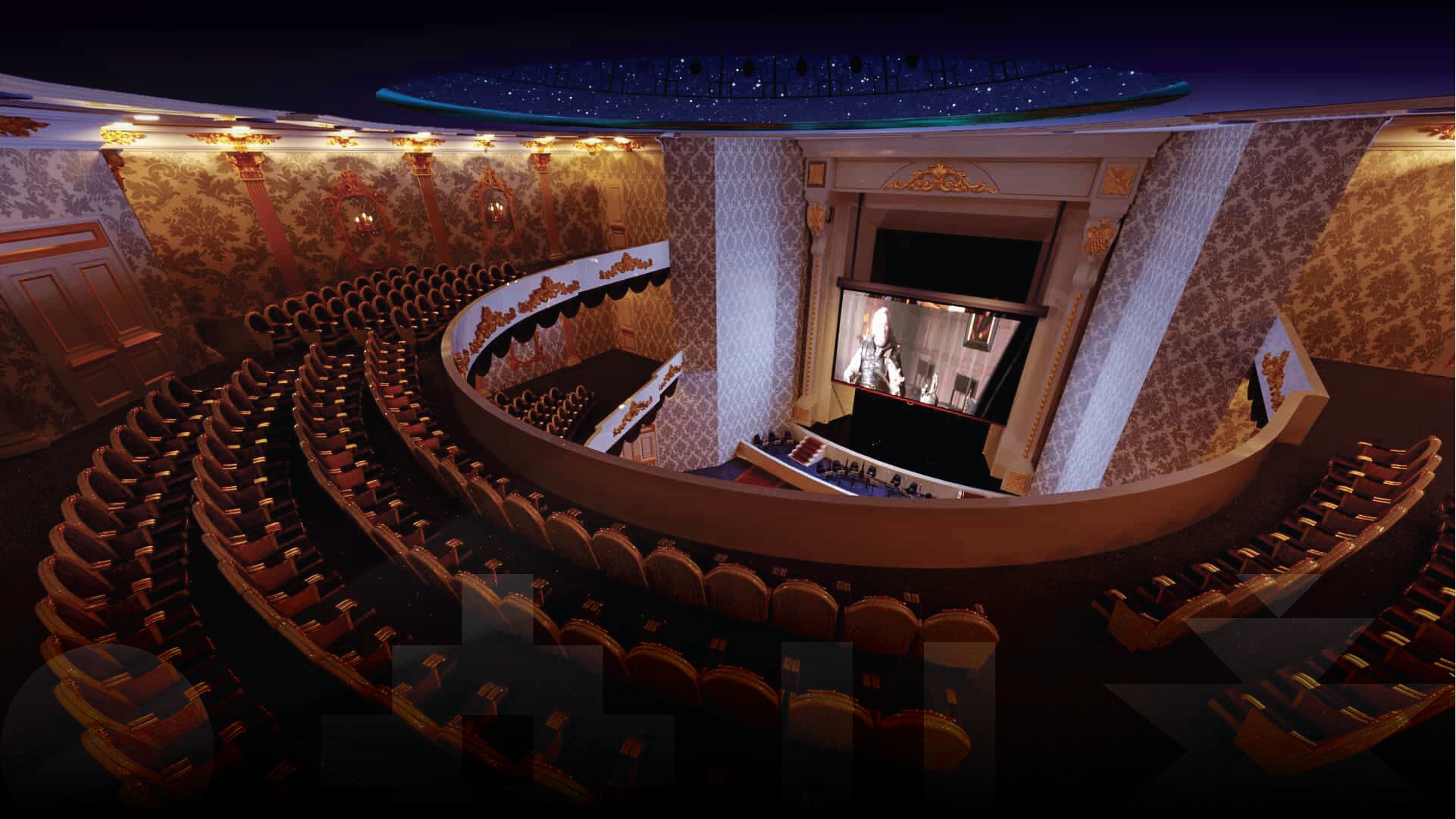
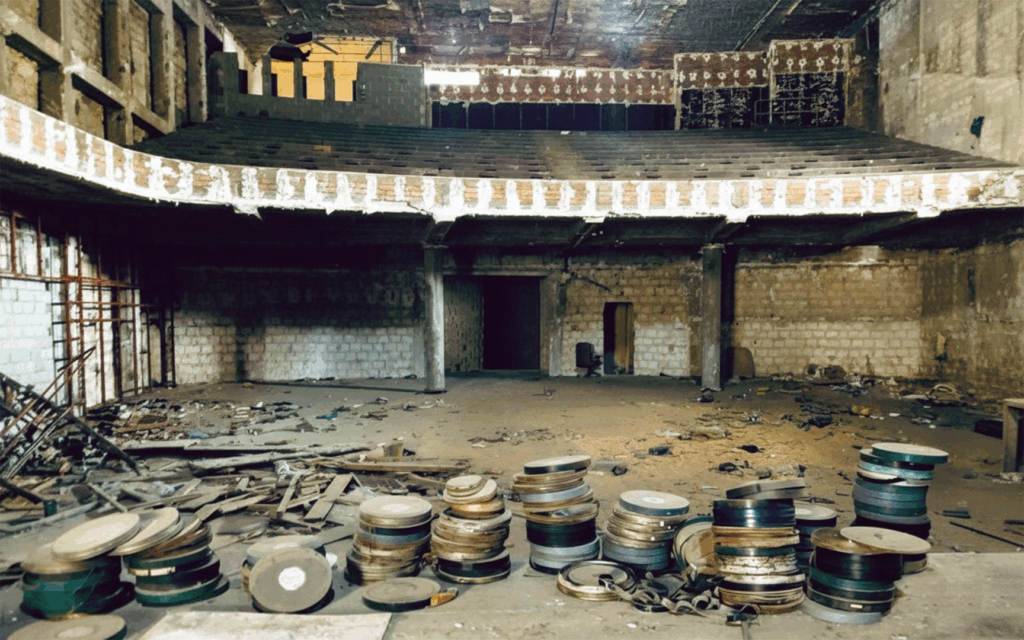
As for the cinema halls themselves, we dedicated our last day of filming — in Tripoli — to visiting theatres that were closed, demolished, or repurposed. Our colleague and fellow filmmaker, Saqr Al-Hawat, joined us.
Since we didn’t have filming permits, a mischievous idea crossed my mind:
First, to close the camera lens and use only the microphone — to record the answers we wanted to capture. (If the authorities succeed in suppressing the freedom of image, they can’t suppress the flow of sounds.)
Second, to throw Abdulmajid “into the line of fire” — let him ask the questions and hold the camera. After all, he’s from Tripoli; if his camera got confiscated, his family and friends could get him out.
Our audio investigation managed to document some of the repurposed cinemas, and Saqr – owning the same skill most Libyan cameramen often develop to avoid being noticed by Big Brother — managed to capture a few quick video shots. Rarely does repression produce such talents.
By coincidence, that day was a Friday — a “Black Friday,” imported from our “mother America,” with crowded malls and heavy shopping discounts. The city was almost free of police, luckily.
We found Cinema Al-Hamra completely sealed off, no way in. Cinema Odeon had its dark entrance open to pedestrians behind iron-meshed gates, under renovation by the “General Authority for Cinema (Al Khayala), Theatre, and Arts.” (We got rid of Gaddafi, but not the word Al Khayala.)
Cinema Lux had turned into small shops.
On my way back to Cyrenaica, I filmed Benghazi’s Berenice Cinema with my friend Khaled Mattawa’s phone, only months before it was demolished — just like Rex Cinema and Al-Khums Cinema in Al-Khums.
In Al-Bayda, one old theatre still keeps its seats and screen — behind locked doors, for obvious reasons.
At the end of that miserable shoot I titled the film, “Cinema, and Nothing More”, inspired by Abbas Kiarostami’s masterpiece “Life, and Nothing More”, which blends reality and imagination in a village destroyed by an earthquake — inseparable from the filmmaker’s and his crew’s history. Here, too, lies the same destruction and the same determination.
4
I believe that cities, like humans, have a life cycle that end with death. I do not mourn the ruins of the Berenice Cinema (already destroyed by the war), or over the ruins of the opera houses built by the fascist ruler and never open to public. This remark does not stem from a postcolonial stance that dismisses all things Italian in Libya; on the contrary, it is always possible to transform Italian occupation facilities into vital institutions, and examples abound. The ultimate goal is to build the present, regardless of the ruins of the past. Libya does not have cinematic ruins, whether we like it or not.
When we call for state intervention in building a national cinema, it’s not out of hollow patriotic fervour, but from a clear-eyed awareness that the state lacks the will to act on such projects. The society itself doesn’t care about cinema -otherwise public pressure would have at least brought about a single functioning movie theatre.
That’s why change must come “from above” — from those with financial means, namely the state. Yet that state is represented by the “Cinema Authority,” which employs thousands -while, as Mansour Bushnaf told me, you’d be lucky to find two or three actual directors among them.
In conclusion, we mustn’t compromise with the sceptics—those who question the economic value of cinema and its ‘industry.’ Cinema must be embraced in its entirety, not à la carte: with all its challenges, provocations, and ‘controversial’ audacity, as well as its capacity to entertain.
We shouldn’t think of cinema or art, only in terms of utility or purpose. Everything that touches the soul is essential — and therefore “useless.” Especially when “usefulness” is measured by a nation’s GDP.
“These are things money can’t buy.”
Saad Elasha